Want to practice this with a native Korean teacher?
100-min free trial — no card required.
There's a moment in nearly every K-drama: the whole table goes quiet after someone says the wrong thing. One character keeps cheerfully talking — totally oblivious. Everyone else exchanges glances. Then someone hisses, "눈치 좀 봐!" The subtitle says something like "Read the room!" — but that doesn't quite capture it.
You've just met 눈치 (nunchi), one of the most important and most untranslatable concepts in Korean social life. It became the subject of a bestselling English book — The Power of Nunchi by Euny Hong — precisely because English has no single word for it.
What 눈치 Literally Means
눈치 breaks down into 눈 (nun, "eye") + 치 (a suffix implying measure or gauge). Literally, it's "eye-measure" — the act of gauging a situation with your eyes and instincts.
In practice, 눈치 is the subtle art of sensing what other people are thinking and feeling — their mood, their unspoken needs, the real temperature of a room — and adjusting your behavior accordingly. It's emotional radar. It happens fast, silently, and constantly.
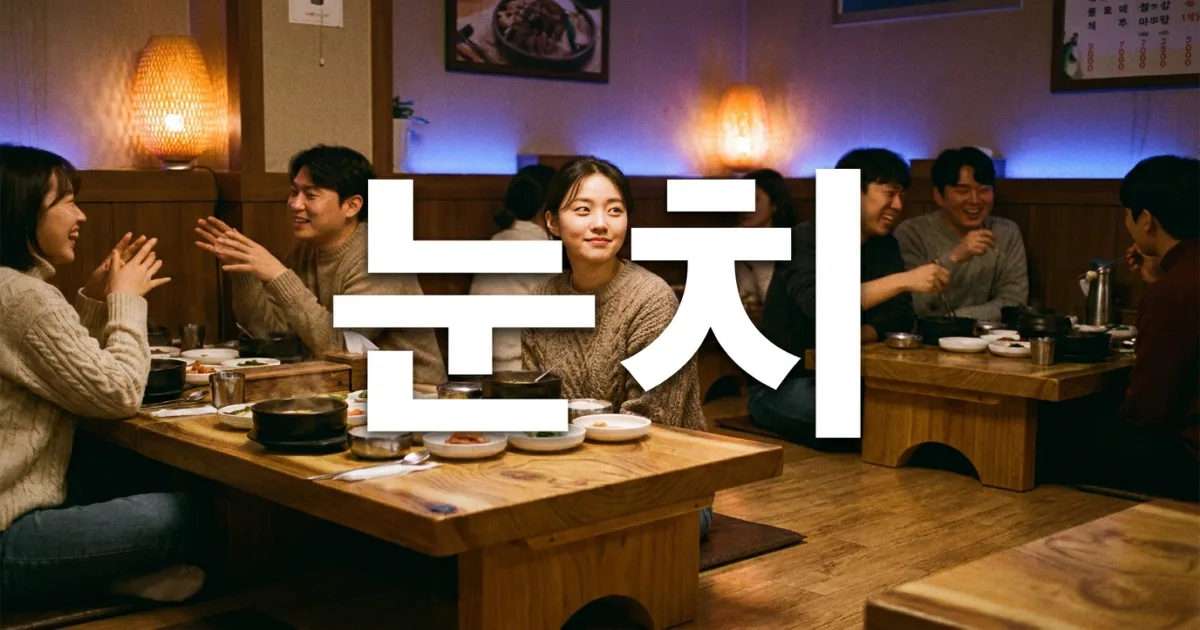
눈치
"nunchi" — eye-measure: sensing the room before words are spoken
read the mood · catch the subtext · adjust quietly · act before being told
The 4 Phrases You Actually Need
눈치 almost never appears alone — it lives inside a handful of verb phrases. Learn these four and you can use the word like a native.
| Phrase | Romanization | Meaning |
|---|---|---|
| 눈치(를) 보다 | nunchi(-reul) boda | To read the room / gauge someone's mood (often anxiously) |
| 눈치(가) 빠르다 | nunchi(-ga) ppareuda | To be quick-witted / perceptive — "fast nunchi" |
| 눈치(가) 없다 | nunchi(-ga) eopda | To be clueless / socially oblivious — "no nunchi" |
| 눈치(를) 채다 | nunchi(-reul) chaeda | To catch on / notice what's really going on |
눈치 보다 — Reading the Room
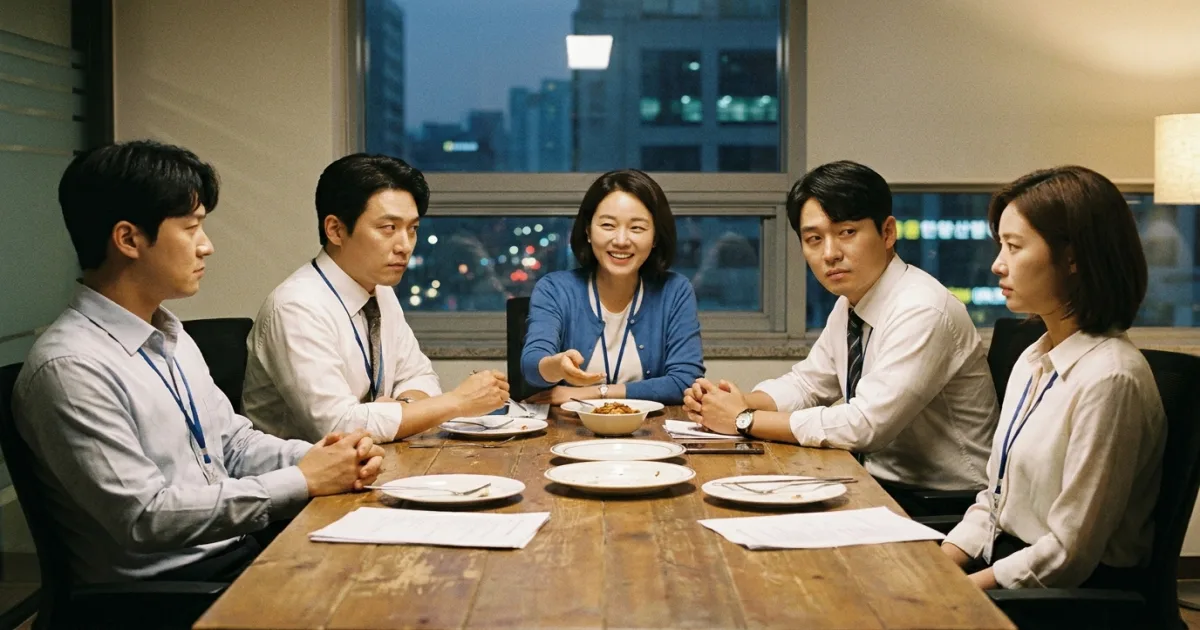
The most common phrase. 눈치 보다 means to watch someone carefully and gauge their mood, often to figure out how to act. It carries a hint of caution — you're being careful not to upset the situation.
- 사장님 눈치 보느라 일찍 못 가요. (I can't leave early — I have to read my boss's mood.)
- 눈치 보지 말고 편하게 먹어. (Don't worry about reading the room — just eat comfortably.)
- 동생이 부모님 눈치를 봐요. (My younger sibling is being careful around our parents.)
This is the version you hear in workplace K-dramas constantly — the junior employee who can't go home until the boss leaves, because leaving first would show no 눈치.
눈치 빠르다 vs 눈치 없다 — The Compliment and the Insult
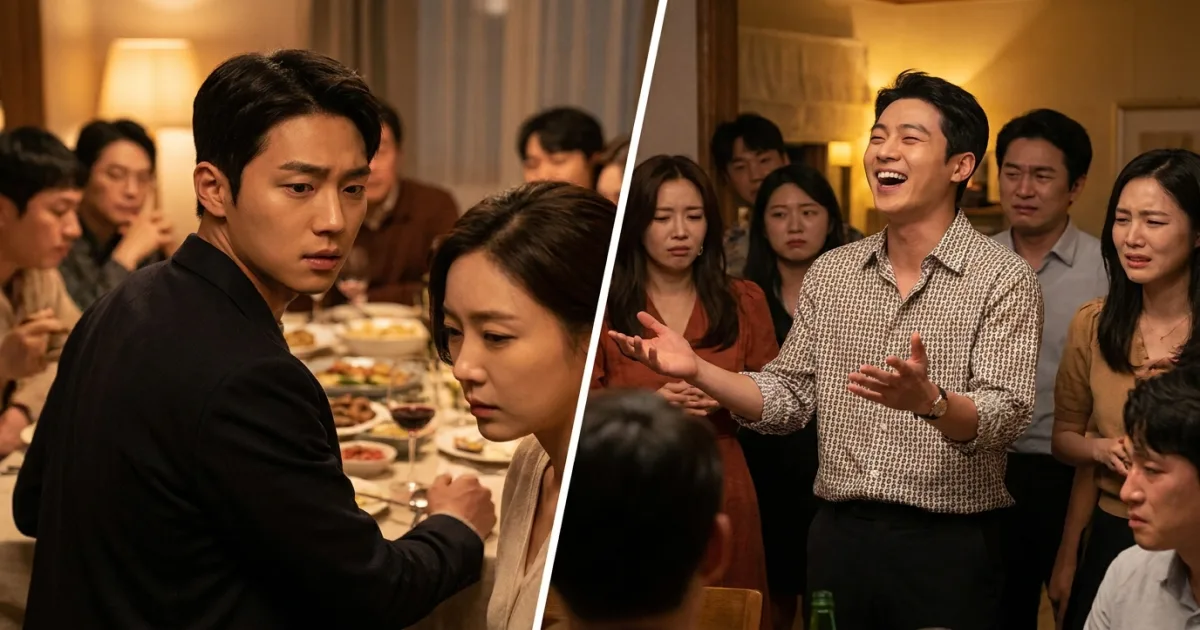
These two are opposites, and Koreans use both all the time to describe people.
눈치(가) 빠르다 — "quick nunchi" — is a genuine compliment. It means you pick up on subtle cues instantly: you notice a friend is upset before they say so, you sense a guest is hungry and offer food, you read that a meeting has turned tense and change your approach.
- 그 친구는 눈치가 정말 빨라. (That friend is really perceptive.)
눈치(가) 없다 — "no nunchi" — is a real criticism. It describes someone who misses social cues: keeps joking when the mood has turned serious, overstays their welcome, asks the exact wrong question at the worst time.
- 걔는 진짜 눈치가 없어. (He's genuinely clueless about reading situations.)
In variety shows, the cast member with 눈치 없다 is often the comic relief — but in real Korean social life, being called 눈치 없는 사람 stings.
눈치 채다 — Catching On
눈치 채다 is the moment of realization — when you catch what's really happening beneath the surface. A surprise party being planned, a couple secretly dating, a lie not quite adding up.
- 그들이 사귀는 걸 눈치챘어요. (I caught on that they're dating.)
- 엄마가 눈치 채기 전에 숨겨. (Hide it before Mom notices.)
Nunchi in K-Dramas and Variety Shows
Once you know the word, you'll see 눈치 everywhere in Korean media:
- Office dramas: the entire hierarchy runs on 눈치 — who speaks first, who leaves last, who refills the senior's glass.
- Variety shows: idols are quietly judged on their 눈치 — a member with great 눈치 knows when to set up a joke, when to defer to a senior, when to step back from the camera.
- Romance: the slow-burn tension often hinges on one character lacking the 눈치 to realize the other has feelings.
There's even a popular game show concept built entirely on the idea — players have to time an action perfectly by reading everyone else, pure 눈치.
Why Nunchi Isn't Just "Reading the Room"
English speakers reach for "read the room" or "emotional intelligence," and those are close — but 눈치 has features they don't:
- It's continuous, not occasional. Westerners "read the room" at key moments. In Korea, 눈치 is an always-on background process in group settings.
- It's tied to hierarchy. Much of 눈치 is about correctly sensing the needs and moods of people above you — elders, bosses, seniors — and acting before being asked.
- It's a measurable trait. You can have a lot or a little. People are openly described as having fast 눈치 or none at all — it's treated like a real, trainable skill.
That last point is why The Power of Nunchi resonated with Western readers: it reframed "reading the room" as a learnable superpower, not a fixed personality trait.
How to Pronounce 눈치
- Hangeul: 눈치
- Romanization: nunchi
- IPA: [nun.tɕʰi]
- Sound: "NOON-chee" — the 눈 is like English "noon," and 치 is a soft aspirated "chee."
It's a noun, so it pairs with a verb (보다, 빠르다, 없다, 채다). You almost never say 눈치 by itself.
Common Phrases Using 눈치
| Phrase | Translation | When you'd hear it |
|---|---|---|
| 눈치 봐 | "Read the room" | Warning someone they're missing the mood |
| 눈치 빠르네 | "You're quick / sharp" | Praising someone who caught on fast |
| 눈치 없어 | "You're clueless" | (Half-)joking about someone missing cues |
| 눈치 챘어? | "Did you catch on / notice?" | Asking if someone figured out a secret |
| 눈치가 보여요 | "I feel watched / pressured" | Feeling others' silent expectations |
Common Mistakes Foreigners Make
- Using 눈치 as a verb on its own. It's a noun — you need 보다, 빠르다, 없다, or 채다 with it.
- Translating it only as "tact." Tact is part of it, but 눈치 is more about perception than politeness — you can have great 눈치 and still choose to be blunt.
- Thinking 눈치 보다 is always negative. Anxiously watching a boss is one use, but reading a friend's mood to cheer them up is the same skill used kindly.
- Confusing 눈치 with 센스. Koreans also use the Konglish 센스 (sense) for social savvy, but 센스 leans toward thoughtful gestures (good gift, good timing), while 눈치 is the underlying perception that makes those possible.
Putting It All Together
눈치 is the quiet engine of Korean social life — the constant, instinctive reading of mood and subtext that English splits across "reading the room," "tact," and "emotional intelligence." Master the four phrases and you'll understand a huge amount of what's happening between the lines in any K-drama or variety show.
Three takeaways:
- 눈치 = "eye-measure" — sensing what people feel and need before they say it.
- Quick 눈치 is praised, no 눈치 is criticized — it's treated as a real, trainable skill.
- It always pairs with a verb — 보다 (read), 빠르다 (quick), 없다 (none), 채다 (catch on).
Next: explore more untranslatable Korean concepts with our guide to 오빠 (oppa), or learn the emotional vocabulary behind 시원하다 (siwonhada).
Want a native speaker to show you how 눈치 actually plays out in real conversation — when to read the room, when to speak up? Free trial with KTalk Live pairs you one-on-one with a native teacher who can walk you through the social cues no textbook explains.
Ready to stop reading and start speaking?
Practice what you just learned with a native Korean teacher — free for 100 minutes. No card, no commitment.