
Want to practice this with a native Korean teacher?
100-min free trial — no card required.
Ever felt like your Korean sentences were a bit plain? Like a sketch without colour? That’s where the magic of descriptive adjectives comes in. Learning how to describe the world around you is a huge step toward sounding more natural and expressive in Korean. It’s the difference between saying “I saw a flower” and “I saw a beautiful, vibrant flower.” One adds detail and emotion, while the other is just a simple statement.
This guide is designed to give you the tools to paint vivid pictures with your words. We will explore essential descriptive adjectives examples in Korean that will immediately transform your speaking and writing. We'll break down their meanings, show you exactly how to use them in real sentences, and provide practical tips so you can start using them confidently today. By the end of this list, you'll have a rich vocabulary to describe everything from a serene landscape to a decadent meal. Ready to make your Korean more colourful, engaging, and precise? Let’s dive in! 🚀
1. 아름다운 (areumdaun) – Beautiful
Perhaps one of the most classic descriptive adjectives examples you'll encounter, 아름다운 (areumdaun) describes a profound, often moving type of beauty. It goes beyond the simple 'pretty' to convey a deeper sense of aesthetic appreciation.
This adjective is best reserved for things that are truly breathtaking or impressive. Think of a majestic mountain range, a powerful piece of classical music, or a masterfully painted work of art. Using 아름다운 (areumdaun) signals a more sophisticated and nuanced understanding of beauty, distinguishing it from the more common term for 'pretty,' 예쁜 (yeppeun).
How to Use It
- Emotional Depth: The core strength of this word is its emotional weight. It’s not just about visual appeal; it’s about the feeling the beauty inspires. This makes it a powerful tool in storytelling.
- Context is Key: While 예쁜 (yeppeun) can describe a person or a dress, 아름다운 (areumdaun) is often used for grander subjects. Using it for a simple object might sound overly poetic.
- Cultural Nuance: In Korean culture, describing a person’s spirit or action as 아름다운 (areumdaun) is a high compliment, signifying inner beauty and grace.
Practical Examples
To use this adjective effectively, focus on the scale and impact of what you are describing.
Use it for:
- Stunning Scenery: 아름다운 풍경 (areumdaun punggyeong) - A beautiful landscape.
- Moving Art: 아름다운 음악 (areumdaun eumak) - Beautiful music.
- Inner Character: 아름다운 마음 (areumdaun maeum) - A beautiful heart/mind.
By choosing 아름다운 (areumdaun), you add a layer of depth and sincerity to your descriptions.
2. 선명한 (seonmyeonghan) – Vivid
When searching for Korean descriptive adjectives examples, 선명한 (seonmyeonghan) stands out for its ability to convey intensity and clarity. It describes something that is bright, striking, and produces powerful mental images, much like the English word 'vivid'.

This adjective is best used to make a description pop, moving it from a simple statement to a sensory experience. Think of the sharp, unforgettable colour of autumn leaves, or a memory that feels as clear as yesterday. Using 선명한 (seonmyeonghan) signals that the subject is not just present but memorable and impactful.
How to Use It
- Sensory Activation: The primary strength of 선명한 (seonmyeonghan) is its power to engage the senses, particularly sight and imagination. It transforms a passive description into an active mental picture.
- Context is Key: While it often relates to colour, its true power is in describing the intensity of an experience or memory. Reserve it for elements you want to highlight.
- Emotional Nuance: A vivid memory (선명한 기억 - seonmyeonghan gieok) isn't just clear; it often carries a strong emotional charge, whether positive or negative.
Practical Examples
To use this adjective effectively, focus on details that leave a lasting and powerful impression.
Use it for:
- Striking Colours: 그 붉은 꽃은 아주 선명해요. (geu bul-geun kkoch-eun aju seonmyeonghaeyo) - That red flower is very vivid.
- Clear Memories: 어릴 적 선명한 기억이 있어요. (eoril jeok seonmyeonghan gieog-i iss-eoyo) - I have a vivid memory from my childhood.
- High-Definition Images: 이 TV는 화질이 선명해요. (i TV-neun hwajil-i seonmyeonghaeyo) - This TV has a vivid/clear picture quality.
By choosing 선명한 (seonmyeonghan), you are telling your listener that this detail is important and memorable.
3. 고요한 (goyohan) – Serene
A truly evocative entry in any list of Korean descriptive adjectives examples, 고요한 (goyohan) describes a state of profound calm, peacefulness, and untroubled tranquility. It moves beyond simple quietness (조용한 - joyonghan) to paint a picture of an environment completely free from stress or disturbance.

This adjective is perfect for creating a powerful mood, particularly when depicting peaceful settings. The word 고요한 (goyohan) captures a special kind of stillness, making it a beautiful and poetic word to add to your vocabulary.
How to Use It
- Atmospheric Power: The core strength of 고요한 (goyohan) is its ability to instantly establish a peaceful atmosphere. It works on an emotional level, suggesting not just a lack of noise but a deep, restorative calm.
- Context is Key: While you might describe a library as 조용한 (joyonghan - quiet), 고요한 (goyohan) is better suited for a lakeside retreat at dawn, a secluded temple, or the dead of night. It implies a natural, almost spiritual, stillness.
Practical Examples
To use this adjective effectively, focus on describing a deep sense of peace in a place or moment.
Use it for:
- Peaceful Environments: 고요한 호수 (goyohan hosu) - A serene lake.
- Tranquil Times: 고요한 아침 (goyohan achim) - A serene morning.
- Quiet Spaces: 그 절은 정말 고요했어요. (geu jeol-eun jeongmal goyohaess-eoyo) - That temple was truly serene.
By choosing 고요한 (goyohan), you are not just describing a quiet place; you are invoking a feeling of deep peace.
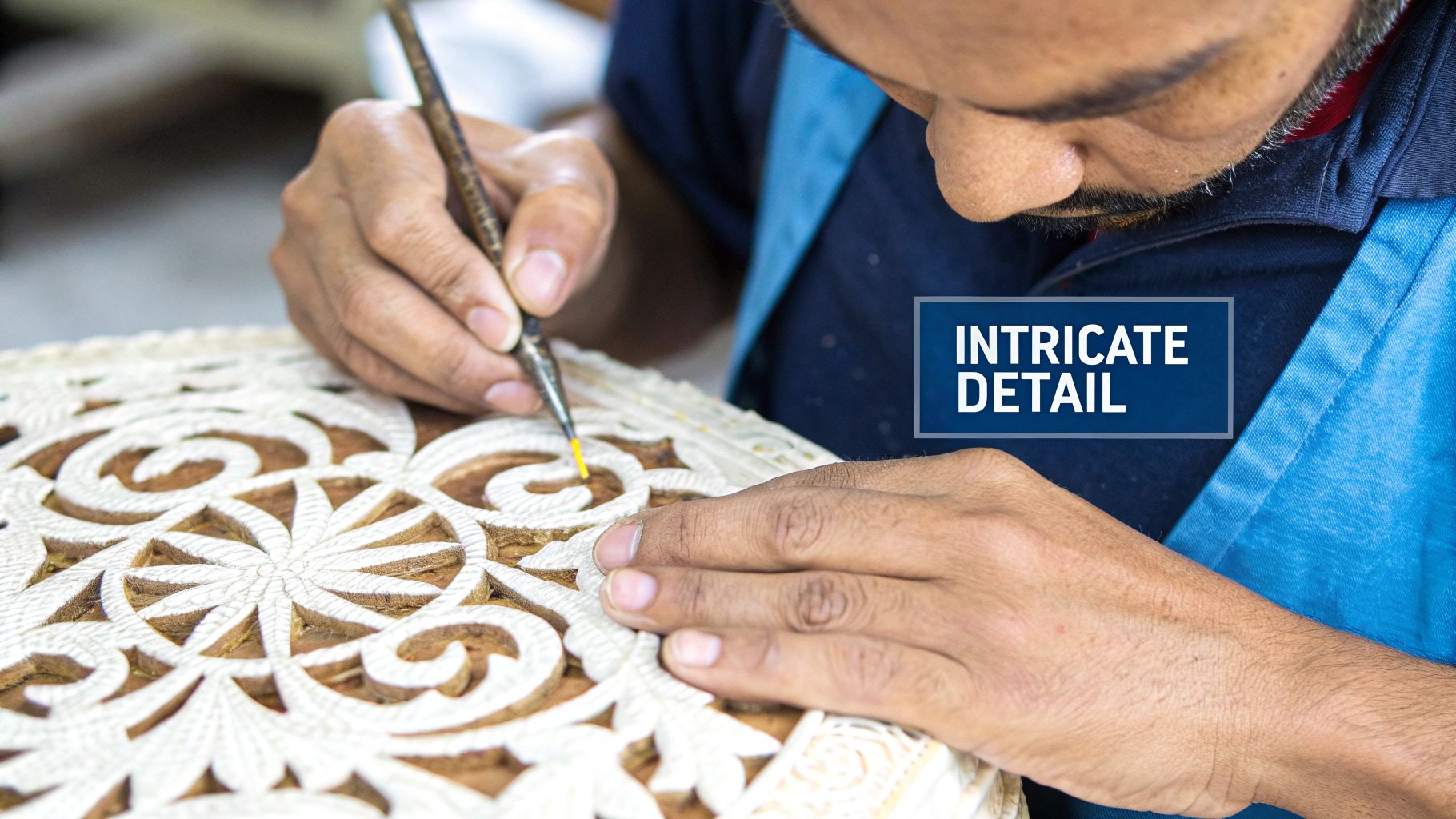
4. 섬세한 (seomsehan) – Intricate / Delicate
Among the most useful Korean descriptive adjectives examples, 섬세한 (seomsehan) describes something with many complex, interrelated, and finely detailed parts. It moves beyond simple complexity to suggest a level of sophisticated craftsmanship or emotional sensitivity.
This adjective is perfect for describing the delicate artistry of traditional Korean crafts, the layered emotions of a character in a drama, or the sophisticated inner workings of a machine. Using 섬세한 (seomsehan) signals an appreciation for detail, skill, and thoughtfulness.
How to Use It
- Conveys Sophistication: The primary power of 섬세한 (seomsehan) lies in its ability to elevate a description. It implies high value, quality craftsmanship, and intelligent design.
- Highlights Detail: This word draws attention to the fine details and complexity that might otherwise be overlooked. It encourages the audience to appreciate the skill involved.
- Describes Personality: It can also describe a person who is thoughtful, sensitive, and detail-oriented. A 섬세한 사람 (seomsehan saram) is someone who notices the little things.
Practical Examples
To use this adjective effectively, pair it with specific examples that illustrate the complexity you are describing.
Use it for:
- Detailed Designs: 섬세한 자수 (seomsehan jasu) - Intricate embroidery.
- Sensitive Emotions: 그의 섬세한 감정 표현 (geu-ui seomsehan gamjeong pyohyeon) - His delicate expression of emotion.
- Skilled Artistry: 그 장인의 솜씨는 정말 섬세해요. (geu jang-in-ui somssi-neun jeongmal seomsehaeyo) - That artisan's skill is truly delicate/intricate.
By choosing 섬세한 (seomsehan), you effectively communicate not just complexity but also the artistry and deliberate design behind it.
5. 눈부신 (nunbusin) – Dazzling / Radiant
눈부신 (nunbusin) literally means "blinding to the eyes" but is used to describe something so bright, beautiful, or brilliant that it's dazzling. This is one of the most expressive descriptive adjectives examples in Korean, perfect for conveying a sense of awe and wonder.
눈부신 (nunbusin) is best applied to subjects that possess a powerful, almost overwhelming radiance. Think of a K-pop idol’s beauty on stage, the brilliant success of a new company, or the shimmering sun on the ocean. Using 눈부신 (nunbusin) elevates a description from simply 'bright' to something truly spectacular and impressive.
How to Use It
- Evokes Awe: The primary power of this word is its ability to convey a strong positive impression. It immediately suggests that the subject is exceptional and worthy of admiration.
- Literal vs. Metaphorical: 눈부신 (nunbusin) works beautifully in both literal and figurative contexts. You can describe a 눈부신 햇살 (nunbusin haessal - dazzling sunlight) or a 눈부신 성공 (nunbusin seonggong - dazzling success).
- High-Energy Word: This adjective carries a lot of positive energy. It’s perfect for compliments and describing achievements or moments of great beauty and joy.
Practical Examples
To use this adjective for maximum impact, pair it with subjects that are exceptionally bright, beautiful, or successful.
Use it for:
- Spectacular Beauty: 그녀의 미모는 눈부셨다. (geunyeo-ui mimo-neun nunbusyeossda) - Her beauty was dazzling.
- Brilliant Light: 눈부신 햇살 아래 (nunbusin haessal arae) - Under the dazzling sunlight.
- Great Achievement: 그는 눈부신 활약을 펼쳤다. (geuneun nunbusin hwalyag-eul pyeolchyeossda) - He showed a dazzling performance.
By choosing 눈부신 (nunbusin), you paint a picture of something profoundly impressive, adding a layer of excitement and admiration to your descriptions.
6. 소박한 (sobakhan) – Rustic / Simple
The term 소박한 (sobakhan) is a fantastic Korean descriptive adjective that evokes a specific mood and aesthetic. It describes something simple, humble, and charmingly unrefined, often connected to a down-to-earth lifestyle or traditional charm. Its power lies in painting a picture of authenticity and simple pleasures.
This adjective is perfect for describing a cozy, traditional Korean restaurant, a simple but heartfelt gift, or a person who lives a humble and contented life. Using 소박한 (sobakhan) suggests a quality that is genuine, warm, and free from artificiality. Think of a hearty bowl of homemade soup or a small, cozy home in the countryside.
How to Use It
- Emotional Connection: The core strength of 소박한 (sobakhan) is the warm, comforting, and authentic feeling it creates. It taps into a desire for simplicity and genuine connection.
- Context is Key: The adjective works best with objects, lifestyles, and environments where simplicity and humility are seen as virtues. A 소박한 꿈 (sobakhan kkum) is a simple, humble dream.
- Aesthetic Specificity: 소박한 (sobakhan) is more than just 'simple'. It specifically points to a lack of pretension and a focus on what is essential and heartfelt.
Practical Examples
To use this adjective effectively, focus on highlighting natural, simple forms and a sense of genuine, unpretentious quality.
Use it for:
- Charming Food: 소박한 집밥 (sobakhan jipbap) - A simple/rustic home-cooked meal.
- Humble Dreams: 저의 꿈은 소박해요. (jeo-ui kkum-eun sobakhaeyo) - My dream is simple/humble.
- Simple Charm: 그 카페는 소박한 매력이 있어요. (geu kape-neun sobakhan maeryeog-i iss-eoyo) - That cafe has a rustic/simple charm.
By using 소박한 (sobakhan), you can instantly convey a sense of comfort, authenticity, and timeless charm.
10 Korean Descriptive Adjectives: Quick Comparison
| Korean Adjective | English Meaning | Best For Describing... | Feeling / Vibe |
|---|---|---|---|
| 아름다운 (areumdaun) | Beautiful | Scenery, art, inner character | Deep, profound, moving |
| 선명한 (seonmyeonghan) | Vivid, Clear | Colors, memories, images | Striking, intense, memorable |
| 고요한 (goyohan) | Serene, Tranquil | Nature, mornings, temples | Peaceful, calm, still |
| 섬세한 (seomsehan) | Intricate, Delicate | Crafts, emotions, personality | Detailed, thoughtful, sensitive |
| 눈부신 (nunbusin) | Dazzling, Radiant | Beauty, sunlight, success | Awe-inspiring, brilliant, spectacular |
| 소박한 (sobakhan) | Rustic, Simple | Food, lifestyle, dreams | Authentic, humble, heartwarming |
| 화려한 (hwaryeohan) | Glamorous, Fancy | Fashion, parties, design | Luxurious, extravagant, showy |
| 따뜻한 (ttatteushan) | Warm | People, weather, hearts | Cozy, kind, comforting |
| More adjectives to be added soon! |
Your Journey to Expressive Korean Starts Now
We've explored a landscape of powerful Korean descriptive adjectives that can transform your communication from simple to stunning. By moving beyond basic vocabulary and embracing words like 고요한 (goyohan - serene) and 화려한 (hwaryeohan - glamorous), you begin to paint with words, sharing not just what you see, but the precise feeling it evokes. The descriptive adjectives examples we’ve analysed are more than just vocabulary; they are tools for connection and deeper expression.
The key takeaway is not simply to memorize these words, but to understand their nuance and context. Remember how 섬세한 (seomsehan) implies delicate craftsmanship, or how 소박한 (sobakhan) captures a humble, rustic charm. These details are what separate functional language from truly fluent, native-like expression. Mastering these adjectives allows you to add layers of meaning and emotion to your conversations, making your Korean more engaging and authentic.
Actionable Next Steps to Master Adjectives
To truly learn these concepts, you must put them into practice. Here’s a clear plan:
- Choose Two Words: Select just two adjectives from our list to focus on this week. Don't overwhelm yourself. Perhaps 선명한 (seonmyeonghan - vivid) and 소박한 (sobakhan - rustic).
- Active Listening: As you watch K-dramas or listen to K-pop, actively listen for these two specific words. When you hear one, pause and note the context. This builds your intuitive understanding.
- Create Simple Sentences: Next, write three simple sentences for each chosen adjective. For example, "The autumn leaves are vivid" (가을 단풍이 선명해요 - gaeul danpung-i seonmyeonghaeyo). This active recall solidifies the word in your memory.
- Speak It Aloud: The final step is to use the word in conversation. Try to describe something using your target adjective with a language partner or tutor. This bridges the gap between passive knowledge and active skill.
Every word you learn brings you one step closer to confidence. Keep going—your Korean journey starts now!
🌟 Ready to start your Korean journey? Join K-talk Live — where global learners connect, speak, and grow together
Ready to stop reading and start speaking?
Practice what you just learned with a native Korean teacher — free for 100 minutes. No card, no commitment.