Want to practice this with a native Korean teacher?
100-min free trial — no card required.
Ever wondered why the scenery in K-dramas changes so dramatically from one series to the next? That's the magic of Korea's four distinct seasons! Learning about the seasons in Korea is a fantastic way to connect more deeply with the culture and, of course, the language. It might seem like a small detail, but understanding the rhythm of the year is key to sounding more natural when you speak.
This guide will walk you through the unique charm of each season—from the explosion of cherry blossoms in spring to the quiet, snowy landscapes of winter. Think of it as your cultural roadmap. Ready to dive in?
Why Understanding Korea's Seasons Matters
Learning about the seasons in Korea is about so much more than just the weather. It’s your window into the rhythm of daily life and conversation.
Each season brings its own cultural events, seasonal foods, and special phrases that you'll hear all the time. For a Korean learner, this context is gold—it makes the language feel alive and relevant. We'll cover:
- The vibrant renewal of spring (봄, bom)
- The sizzling heat and monsoon rains of summer (여름, yeoreum)
- The breathtaking colors of autumn (가을, gaeul)
- The quiet, snowy beauty of winter (겨울, gyeoul)
This handy graphic gives you a quick snapshot of the four seasons and what makes each one special.
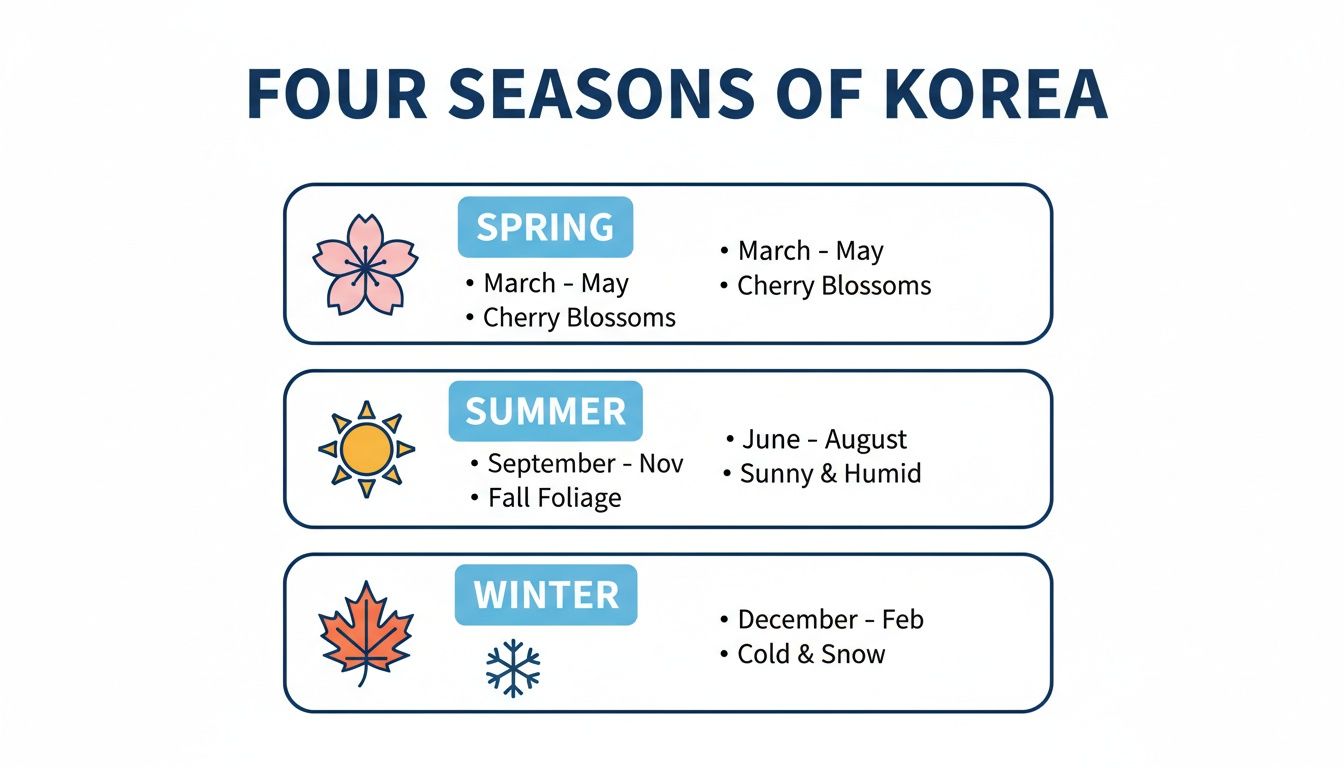
As you can see, every few months bring a totally new experience, from the scenery you'll find to the things people are doing.
Spring (봄): Cherry Blossoms and New Beginnings
When winter’s grip finally loosens, Korea explodes into life. This is spring (봄, bom), a vibrant season from March to May defined by an almost electric sense of renewal. The star of the show is, without a doubt, the arrival of the cherry blossoms (벚꽃, beot-kkot).
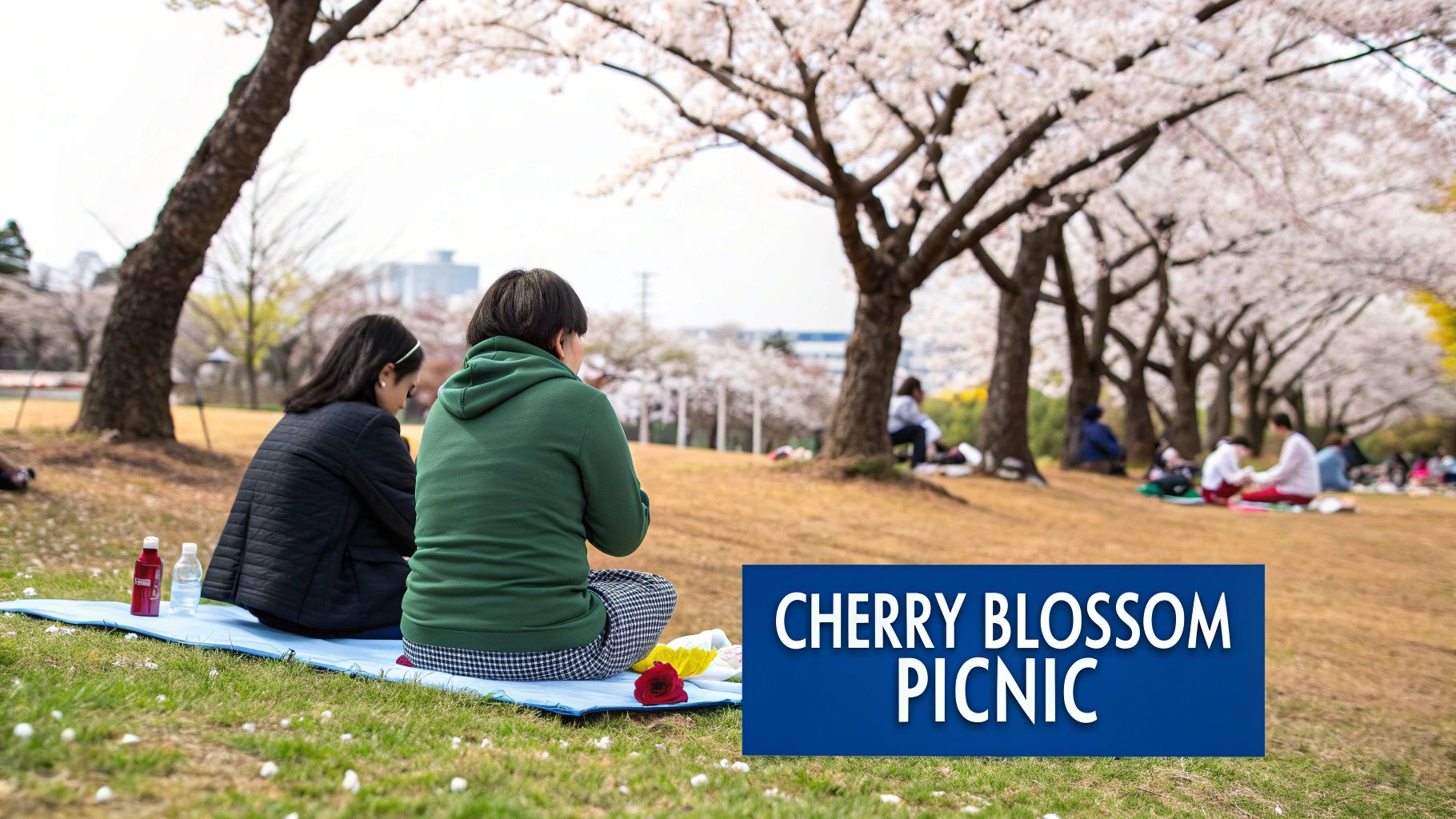
Across the country, parks and streets are transformed into tunnels of pale pink and white. It’s a magical sight that pulls everyone outdoors. Imagine packing a picnic and joining the crowds at Yeouido Park in Seoul, sitting under a full canopy of blooming cherry trees. This experience is what makes spring one of the most cherished seasons in Korea—a time for fresh starts and enjoying beautiful weather after a long, cold winter.
Navigating Spring Weather
Spring weather can be a bit of a mixed bag. Temperatures are generally mild, around 10–20°C, but there are a couple of quirks to know.
You might experience a sudden cold snap called 꽃샘추위 (kkotsaem-chuui), or "flower jealousy cold." It’s a surprise dip in temperature right as the blossoms are about to open.
Another feature of spring is 황사 (Hwangsa), or yellow dust, that blows in from mainland Asia. On these days, you'll see many people wearing masks. Don't be too surprised if you see a light dusting of snow in early March, either! For a deeper dive, check out this insightful climate overview.
Essential Korean Vocabulary for Spring
Using seasonal vocabulary makes your Korean sound so much more natural. A perfect spring conversation starter is, "우리 벚꽃 구경하러 갈까요?" (Uri beot-kkot gugyeonghareo galkkayo?), which means, "Shall we go see the cherry blossoms?" It's a friendly and common way to make plans.
Here are a few key words to get you started.
| Korean (Hangul) | Romanization | English Meaning |
|---|---|---|
| 봄 | bom | Spring |
| 벚꽃 | beot-kkot | Cherry blossom |
| 꽃샘추위 | kkotsaem-chuui | Spring cold snap |
| 황사 | Hwangsa | Yellow dust |
| 따뜻해요 | ttatteut-haeyo | It's warm |
| 소풍 | sopung | Picnic |
| 공원 | gong-won | Park |
Summer (여름): Surviving Heat and Monsoon Rains
Just as you get used to the pleasant spring weather, summer (여름, yeoreum) arrives with a bang. From June to August, this season is a full-on sensory experience, defined by intense heat and the famous monsoon rains.
The season kicks off with 장마 (Changma), the East Asian monsoon. This isn't just a few afternoon showers; it's a period of persistent, heavy downpours paired with sky-high humidity. Umbrellas become a permanent accessory, and it pays to keep travel plans flexible. This weather system influences everything from farming to city planning.
The Monsoon and the Heatwave
The monsoon, or Changma, usually settles in around late June and lasts four to five weeks. In this short window, the peninsula gets a massive chunk of its yearly rainfall—Seoul receives a whopping 63% of its annual precipitation in the summer. For more climate details, this detailed weather data for Seoul is a great resource.
Then, just when the rain recedes, the heatwave begins. Temperatures consistently push past 30°C, but it's the humidity that really gets you. This is when you'll see everyone finding creative ways to stay cool.
Beating the Summer Heat, Korean Style
Koreans are masters of staying cool. When the city feels like an oven, many people head for the coast.
- Beach Trips: This is peak season for famous beaches like Haeundae in Busan.
- Cooling Desserts: Nothing says "summer" like a giant bowl of 빙수 (bingsu), a beloved shaved ice dessert.
- Essential Gadgets: You'll see portable, handheld electric fans everywhere—they're an absolute must-have.
Summer in Korea is a test of endurance, but it’s also a season buzzing with energy. Don’t worry if the heat feels intense at first—embracing the rain and sun is all part of the adventure!
Autumn (가을): Clear Skies and Fiery Foliage
After the sticky days of summer, autumn (가을, gaeul) sweeps across Korea like a welcome sigh of relief. From September to November, this season is widely considered the most beautiful time of year. The air becomes crisp and dry, the humidity disappears, and the sky turns a brilliant, cloudless blue.
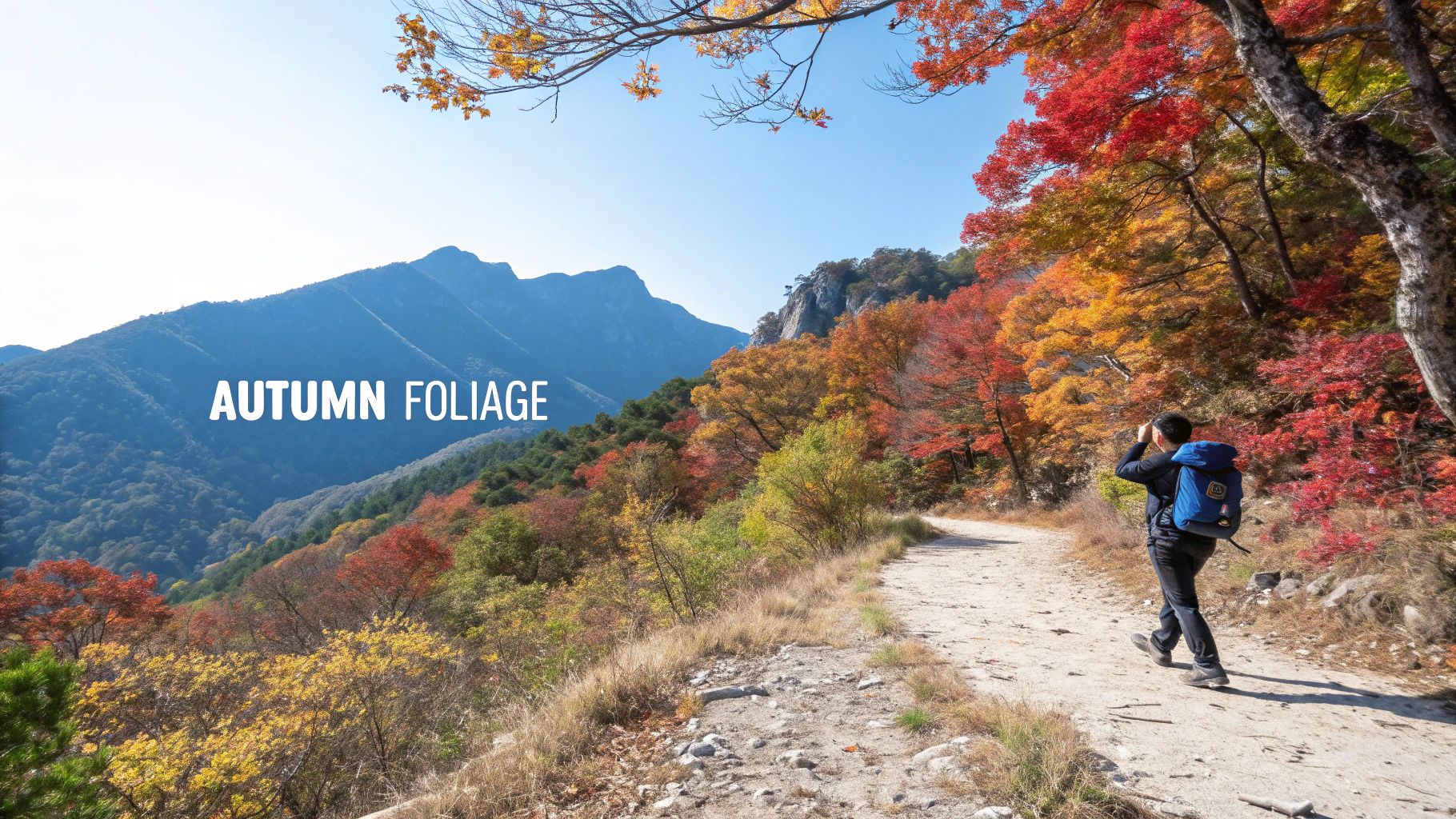
But autumn in Korea is all about the colors. The main event is 단풍 (danpung), the breathtaking autumn foliage that paints the mountains in stunning shades of fiery red, orange, and gold. It's a photographer's paradise and the absolute best time for hiking.
Chuseok and Iconic Foliage Spots
Beyond its visual splendor, autumn holds a special place in Korean culture. It's the season of 추석 (Chuseok), the Korean harvest festival, one of the most important holidays of the year. It's a time for families to gather, pay respect to ancestors, and feast on delicious food like songpyeon (송편), half-moon shaped rice cakes.
Of course, this is also prime time for hiking. To see the danpung in all its glory, head to one of Korea's magnificent national parks:
- Seoraksan National Park: Legendary for its jagged, rocky peaks that provide a dramatic backdrop for the vibrant colors.
- Naejangsan National Park: Famous for its "baby maple" trees, which turn an incredibly deep crimson.
- Bukhansan National Park: Right on the edge of Seoul, this is the perfect spot to get your foliage fix without traveling far.
Essential Korean Vocabulary for Autumn
A fantastic conversation starter is, "가을은 날씨가 정말 좋아요" (Gaeul-eun nalssi-ga jeongmal joayo), which means, "The weather in autumn is really nice." It’s something everyone can agree on and a perfect, natural way to open a chat. Here are a few essential words for the season.
| Korean (Hangul) | Romanization | English Meaning |
|---|---|---|
| 가을 | gaeul | Autumn/Fall |
| 단풍 | danpung | Autumn foliage |
| 추석 | Chuseok | Korean harvest festival |
| 시원해요 | siwon-haeyo | It's cool/refreshing |
| 등산 | deungsan | Hiking |
| 하늘 | haneul | Sky |
Winter (겨울): Embracing the Cold and Snow
As autumn's vibrant colors fade, winter (겨울, gyeoul) settles in from December to February, transforming the landscape into a quiet, snowy wonderland. The air turns crisp and cold, with temperatures often dipping below freezing. This is the season for bundling up in warm coats and embracing a different kind of Korean beauty.
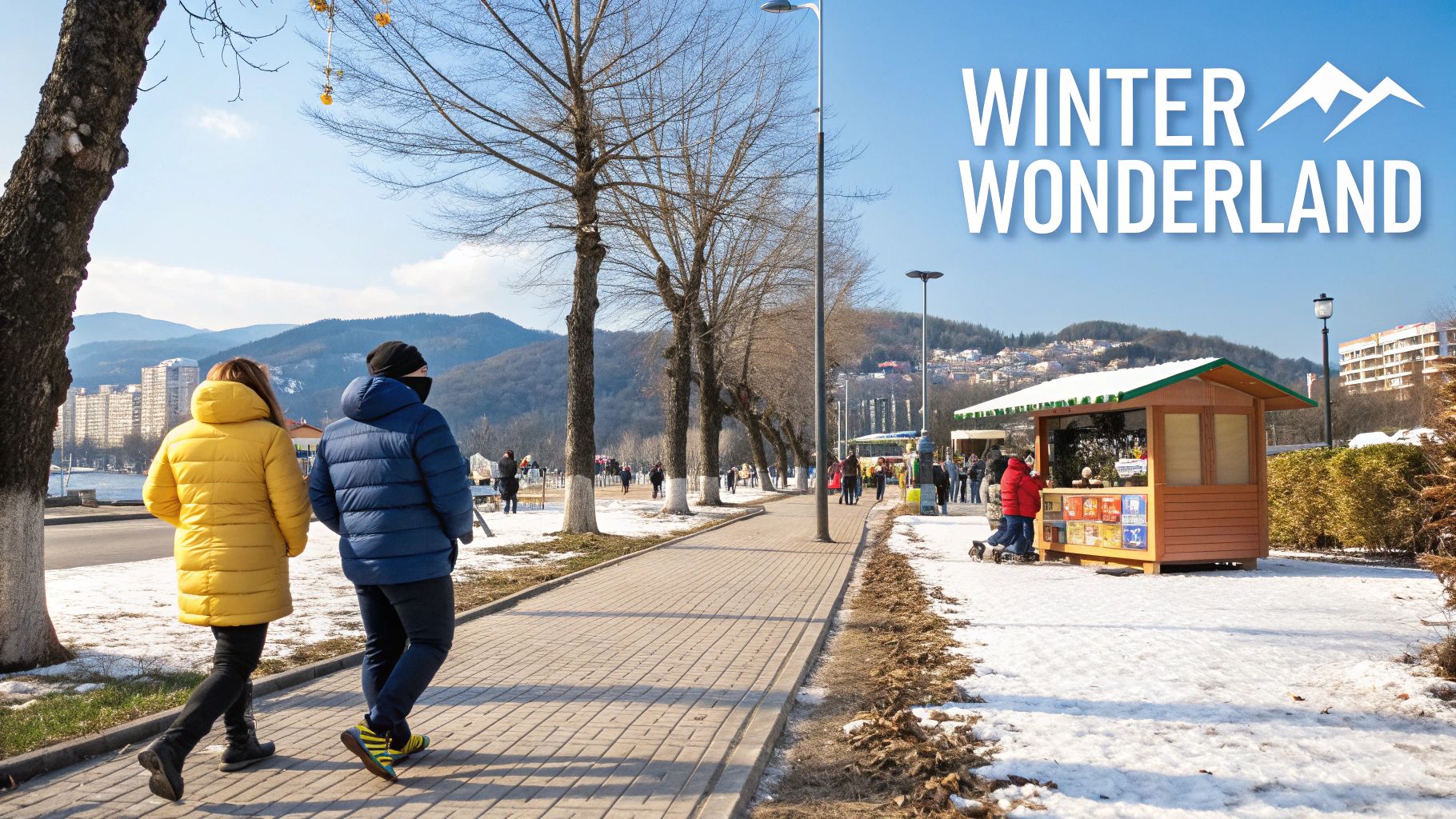
A fascinating aspect of Korean winter is the weather pattern known as 삼한사온 (samhan-saon). This old saying describes a rhythm of three cold days followed by four slightly milder ones. While not a perfect science, this observation captures the fluctuating temperatures you can expect during the winter seasons in Korea.
Winter Activities: From Ski Slopes to Spas
Winter offers a fantastic mix of exhilarating outdoor adventures and cozy indoor escapes.
- Skiing and Snowboarding: Gangwon province becomes a paradise for winter sports fans.
- Ice Skating: Many cities, including Seoul, open magical outdoor ice rinks.
When the chill gets to be too much, Koreans have perfected the art of staying warm:
- Jjimjilbang (찜질방): A visit to a traditional Korean spa is the quintessential winter activity.
- Cozy Cafes & Street Food: Ducking into a warm cafe or grabbing some 붕어빵 (bungeo-ppang)—a fish-shaped pastry with sweet red bean filling—from a street vendor is a cherished pleasure.
Winter Traditions: Kimjang and Seollal
Winter is also steeped in rich cultural traditions. Just before the coldest months, communities come together for 김장 (kimjang), the communal making of kimchi. Later, the country celebrates 설날 (Seollal), the Lunar New Year, one of Korea's most important holidays.
A simple and common phrase is "오늘 너무 추워요" (Oneul neomu chuwoyo), meaning "It's so cold today." It's an instant conversation starter that everyone can relate to. What matters most is progress, not perfection!
Start Your Korean Journey with Ktalk.live
Reading about the seasons in Korea is a great first step, but the real magic happens when you start talking about them. That’s how you go from knowing words to actually using them in conversation. This is where our small-group classes at Ktalk.live can help you grow.
Imagine chatting with classmates and your tutor about your dream trip to see the cherry blossoms or discussing your packing list for a winter getaway. These are the kinds of authentic conversations that make the language stick. Ready to give it a try? Here are a few conversation starters you can bring to your next Ktalk Live class.
가장 좋아하는 계절은 뭐예요? 왜요?
(Gajang joahaneun gyejeoreun mwoyeyo? Waeyo?)
What's your favorite season? Why?한국의 가을에 무엇을 하고 싶어요?
(Hangugui gaeure mueoseul hago sipeoyo?)
What do you want to do in the Korean autumn?
Every word you learn brings you one step closer to confidence. Keep going—your Korean journey starts now!
🌟 Ready to start your Korean journey? Join Ktalk.live — where global learners connect, speak, and grow together
Ready to stop reading and start speaking?
Practice what you just learned with a native Korean teacher — free for 100 minutes. No card, no commitment.