
Want to practice this with a native Korean teacher?
100-min free trial — no card required.
Ever dreamt of ordering a coffee in a bustling Seoul café or navigating the subway system like a local? Knowing the essential vocabulary for common places in Korean is your first step toward turning those dreams into reality. This isn't just about memorising nouns; it’s about unlocking the ability to explore independently and immerse yourself in daily Korean life. Don't worry if it seems challenging—every word you learn is a rewarding step forward on your language journey!
This guide is your practical roadmap to mastering key locations. We’ll go beyond simple translations, giving you practical example sentences, cultural insights, and tips you can apply immediately. Mastering this vocabulary will empower you to ask for directions, make plans, and handle everyday tasks with confidence. Let's start building that foundation together so you can explore Korea with ease. Your adventure starts now!
1. 카페 (Kape) - Café
A 카페 (kape), or café, is one of the most essential places in Korean life. More than just a spot to grab a coffee, it's a social hub where people meet, work, and study. From global chains to thousands of unique themed cafés, you’ll find them everywhere. This makes the café a perfect, low-pressure environment for beginners to practice their Korean.
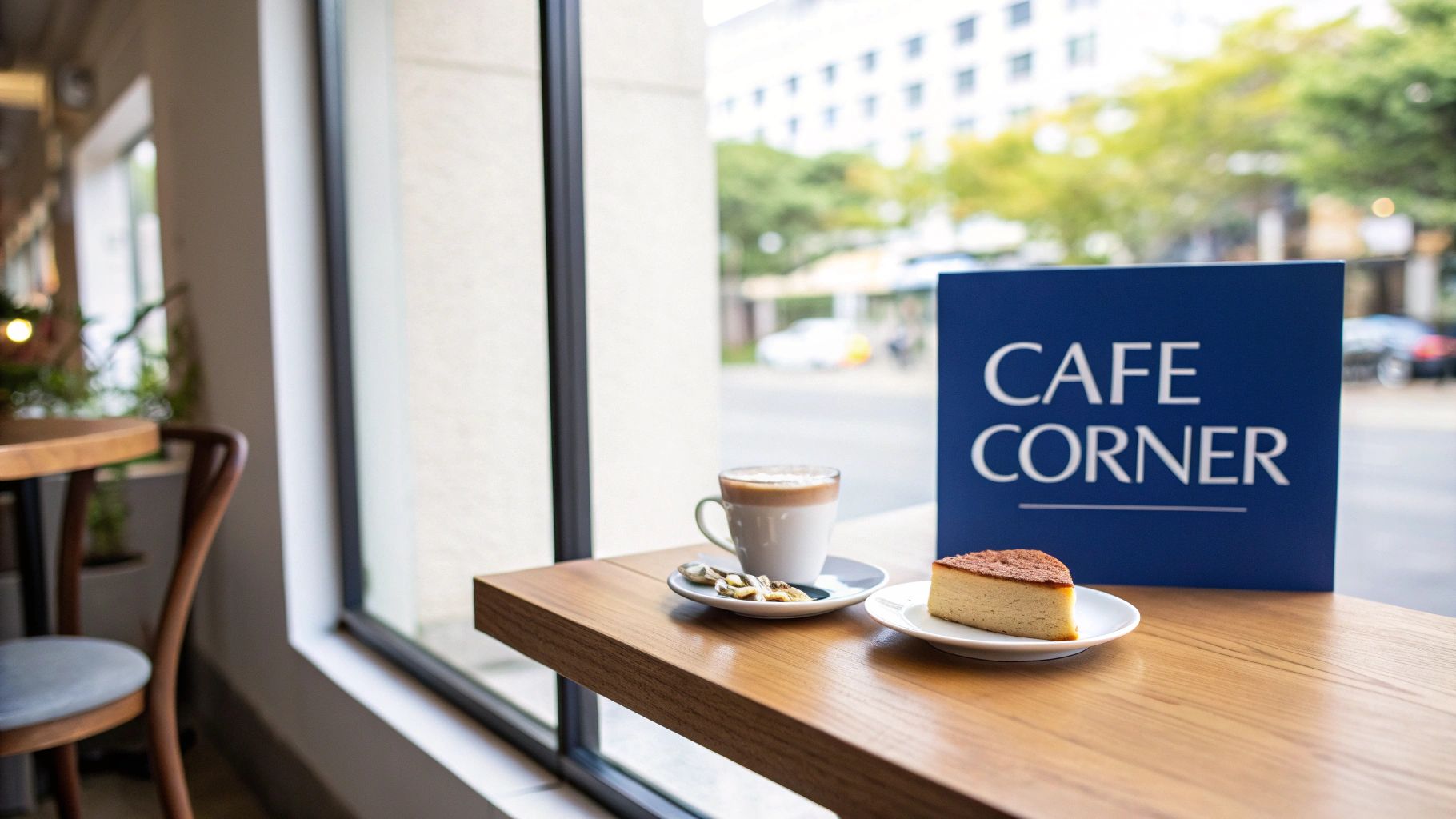
How to Practice at a Café
Use your next coffee run as a language mission! The interactions are usually short and predictable.
Ordering Your Drink: Start with this simple phrase.
"아메리카노 한 잔 주세요." (Amerikano han jan juseyo.) - "One Americano, please."
Essential Café Vocabulary: Learn these terms to navigate any situation.
- 테이크아웃 (teikeuaut): Takeout
- 매장 이용 (maejang iyong): For here / Dine-in
- 진동벨 (jindongbel): Vibrating pager/buzzer
Practical Tip: Cafés are also great spots to review your lessons or chat with a language partner. The ambient noise helps you practice listening in a realistic setting.
2. 역 (Yeok) - Station (Train/Subway)
A 역 (yeok), or station, is a vital transportation hub. Whether it's the sprawling Seoul Metro or the high-speed KTX, stations are the arteries of daily life for millions. They are also fantastic classrooms for learning real-world Korean, as you’re surrounded by repetitive announcements and clear signs.
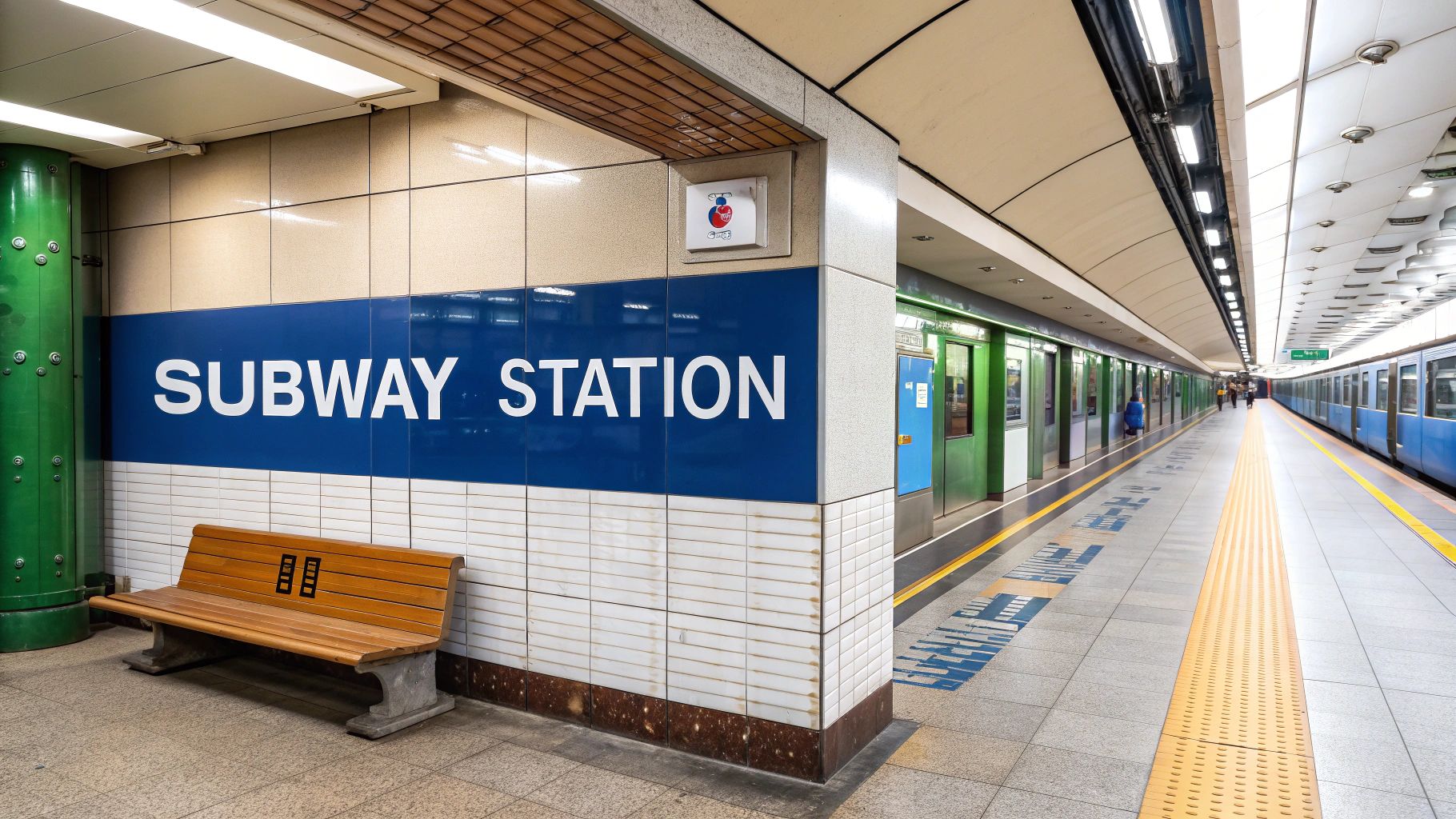
How to Practice at a Station
Turn your commute into a focused language-learning session by actively listening and reading.
Asking for Directions: Master this key question to navigate with confidence.
"이 열차는 어디로 가요?" (I yeolchaneun eodiro gayo?) - "Where does this train go?"
Essential Station Vocabulary: Learn these terms to understand your surroundings.
- 출구 (chulgu): Exit
- 환승 (hwanseung): Transfer
- 승강장 (seunggangjang): Platform
Practical Tip: Listen for announcements like "이번 역은 강남, 강남 역입니다." (This stop is Gangnam, Gangnam station). This practice makes real-life situations far less intimidating.
3. 도서관 (Doseowan) - Library
A 도서관 (doseowan), or library, is an invaluable and quiet public space for language learners. Korean libraries are modern, organized, and ideal for immersing yourself in written Korean without the pressure of a classroom. Many libraries also offer free language resources and even organize language exchange meetups.
How to Practice at a Library
Turn your visit into a targeted language practice session with these key phrases.
Registering for a Card: Begin by becoming a member.
"회원가입하고 싶어요." (Hoewongaip-hago sipeoyo.) - "I want to register as a member."
Essential Library Vocabulary: Learn these terms to navigate the space confidently.
- 대출 (daechul): Borrowing / Loan
- 반납 (bannap): Returning (a book)
- 열람실 (yeollamsil): Reading room
Practical Tip: Borrow children's books to start with simple grammar and vocabulary. The focused, silent atmosphere is perfect for concentrating on your study materials.
4. 병원 (Byeongwon) - Hospital/Clinic
A 병원 (byeongwon), meaning hospital or clinic, is one of the most practical places in Korean vocabulary to know. While nobody plans to get sick, understanding how to communicate in a medical setting is crucial for your safety and well-being. Knowing key terms can make a potentially stressful situation much more manageable.

How to Practice at a Hospital
Prepare yourself with targeted vocabulary before you ever need it.
Describing Your Symptoms: Learn how to explain what's wrong.
"어디가 아프세요?" (Eodiga apeuseyo?) - "Where does it hurt?"
"머리가 아파요." (Meoriga apayo.) - "My head hurts."Essential Hospital Vocabulary: These terms are fundamental for any medical visit.
- 증상 (jeungsang): Symptoms
- 약 (yak): Medicine
- 처방전 (cheobangjeon): Prescription
Practical Tip: Before an appointment, write down your symptoms and any questions in Korean. This helps you organize your thoughts and ensures you don’t forget anything important.
5. 학교 (Hakgyo) - School
A 학교 (hakgyo), or school, offers deep insight into Korean culture and its emphasis on education and social hierarchy. Understanding vocabulary related to this place in Korean is essential for anyone involved in education or simply interested in Korean societal structures.
How to Practice School-Related Korean
The school setting is perfect for learning formal language and honorifics.
Talking About Your Studies: Use these common student phrases.
"숙제가 있어요." (Sukjega isseoyo.) - "I have homework."
"시험 공부 중이에요." (Siheom gongbu jungieyo.) - "I'm studying for an exam."Essential School Vocabulary: Learn these terms to navigate the academic world.
- 선생님 (seonsaengnim): Teacher (honorific)
- 학생 (haksaeng): Student
- 교실 (gyosil): Classroom
Practical Tip: Understanding respectful address forms is key. Always use titles like 선생님 (seonsaengnim) when addressing a teacher to show proper respect.
6. 은행 (Eunhaeng) - Bank
An 은행 (eunhaeng), or bank, is a fundamental place for anyone living or staying long-term in Korea. While interactions at a bank are more formal than a casual café chat, they follow a clear script, making them an excellent environment for practicing specific, high-stakes Korean vocabulary related to financial transactions.
How to Practice at a Bank
Prepare for your visit to ensure a smooth and successful language practice session.
Stating Your Goal: Clearly explain what you need to do.
"계좌를 만들고 싶어요." (Gyejwareul mandeulgo sipeoyo.) - "I want to open an account."
Essential Bank Vocabulary: These terms are indispensable for any banking task.
- 입금 (ipgeum): Deposit
- 출금 (chulgeum): Withdrawal
- 환전 (hwanjeon): Currency exchange
Practical Tip: Use the bank's ATM (현금인출기) for a lower-pressure practice session. The on-screen prompts are a great way to practice reading Hangul and learn transaction-related terms.
7. 음식점/식당 (Eumsikjeom/Sikdang) - Restaurant
An 음식점 (eumsikjeom) or 식당 (sikdang), meaning restaurant, is a cornerstone of Korean social and culinary life. It’s where you experience some of the most vibrant aspects of the culture. From reading the menu to ordering and paying, a single meal offers numerous opportunities for real-world interaction.
How to Practice at a Restaurant
Turn your next meal into a practical language lesson with these key phrases.
Ordering and Making Requests: Use these essential phrases.
"이거 하나 주세요." (Igeo hana juseyo.) - "One of this, please." (while pointing at the menu)
"계산해 주세요." (Gyesanhae juseyo.) - "The bill, please."Essential Restaurant Vocabulary: Learn these terms to feel more confident.
- 반찬 (banchan): Side dishes
- 맵다 (maepda): To be spicy
- 물 (mul): Water
Practical Tip: Practice expressing preferences! You can ask for food to be less spicy by saying "덜 맵게 해 주세요" (Deol maepge hae juseyo).
8. 공원 (Gongwon) - Park
A 공원 (gongwon), or park, is a cherished public space for relaxation and community events. Parks are one of the most accessible places in Korean cities to observe daily life unfold in a natural, unhurried setting. This relaxed environment is perfect for practicing conversational Korean without pressure.
How to Practice at a Park
Turn your next stroll into a productive language practice session.
Making a Simple Observation: Use the scenery to start a conversation.
"날씨가 정말 좋네요!" (Nalssiga jeongmal jonneyo!) - "The weather is really nice!"
Essential Park Vocabulary: Learn these words to describe your surroundings.
- 꽃 (kkot): Flower
- 나무 (namu): Tree
- 벤치 (benchi): Bench
Practical Tip: Use seasonal expressions to connect with others, such as "벚꽃이 피었어요" (beotkkochi pieosseoyo) - "The cherry blossoms have bloomed."
9. 영화관 (Yeonghwagwan) - Movie Theatre
A 영화관 (yeonghwagwan), or movie theatre, is a major entertainment destination and a fantastic place to experience modern Korean culture. For language learners, it offers a unique, immersive environment to practice listening comprehension in a fun, low-pressure setting while enjoying world-class cinema.
How to Practice at a Movie Theatre
Turn your next movie night into a language lesson with these simple steps.
Buying Tickets: Approach the counter with confidence.
"어벤져스, 성인 두 명 주세요." (Eobenjeoseu, seongin du myeong juseyo.) - "Two adult tickets for Avengers, please."
Essential Cinema Vocabulary: These terms will help you navigate the entire experience.
- 표 (pyo): Ticket
- 상영 시간 (sangyeong sigan): Showtime
- 자막 (jamak): Subtitles
Practical Tip: Choose a Korean film to fully immerse yourself. Focus on catching familiar words and observing how characters interact naturally.
10. 시장 (Sijang) - Market/Marketplace
A 시장 (sijang), or market, is a vibrant and bustling hub of commerce and culture. These spaces offer an authentic glimpse into the community's heart and provide an invaluable training ground for language learners. Here, you can move beyond textbook phrases and engage in spontaneous, practical conversations.
How to Practice at a Market
Prepare for your market trip by learning essential vocabulary to help you navigate the lively atmosphere.
Asking for Prices and Haggling: This is a core market interaction.
"이건 얼마예요?" (Igeon eolmayeyo?) - "How much is this?"
"좀 깎아주세요." (Jom kkakkajuseyo.) - "Please give me a little discount."Essential Market Vocabulary: These words will help you find what you need.
- 야채 (yachae): Vegetables
- 과일 (gwail): Fruit
- 생선 (saengseon): Fish
Practical Tip: Challenge yourself to buy ingredients for a Korean meal. This requires you to ask for specific items, understand quantities, and complete multiple transactions.
Mastering these ten essential words for places in Korean gives you the keys to unlock countless daily interactions. You’ve learned more than just a vocabulary list; you now have a foundational map to confidently navigate a Korean-speaking environment. Every word you practice brings you one step closer to moving through the world like a local, turning your language learning journey into a real-life adventure. Every word you learn brings you one step closer to confidence. Keep going—your Korean journey starts now!
🌟 Ready to start your Korean journey? Join K-talk Live — where global learners connect, speak, and grow together
Ready to stop reading and start speaking?
Practice what you just learned with a native Korean teacher — free for 100 minutes. No card, no commitment.