How to Say No in Korean Language Without Being Rude

Homearrow-right-icon

Blogarrow-right-icon

How to Say No in Korean Language Without Being Rudearrow-right-icon

blog-thumbnail

arrow-right-icon2025.12.29

Have you ever felt that a simple word like "no" suddenly becomes tricky in a new language? That’s exactly the case when learning how to say no in Korean language. How you say something often carries more weight than the words themselves, and this is your first step toward mastering this subtle art.

Learning the direct translation is just the beginning; understanding the cultural nuances is what will really make you a confident speaker. In many situations, a blunt "no" can feel abrupt or even rude, especially with elders or in formal settings. This is because Korean culture places a high value on maintaining harmony and making sure everyone feels comfortable.

This guide will walk you through everything you need to know. We’ll cover the direct words, polite phrases, and the subtle art of refusal that will help you connect better with Korean speakers. Let's get started!

A helpful flowchart teaching how to say "no" in Korean, differentiating between informal "ani" and formal "aniyo".

The Basics: Formal vs. Informal 'No'

The first and most important distinction to learn is between the formal and informal ways of saying no. Your choice will depend entirely on who you are talking to.

As the flowchart above shows, this decision boils down to your relationship and the social context of the conversation. Getting these details right is more important than ever.

The language learning market inside South Korea is booming, projected to soar past USD 2.6 billion by 2034. This growth is fuelled by a massive influx of international students and professionals eager to learn. For anyone studying the language, this means there are more resources available than ever to truly dive in. You can discover more insights about this growing market on gminsights.com.

Using Formal and Polite Ways to Say No

In Korea, how you say no is often more important than the word itself, especially when you need to be formal. If you're talking to elders, your boss, or someone you've just met, getting the tone right is crucial. It's a sign of respect and shows you understand the culture, which goes a long way.

A pen on an open spiral notebook on a wooden desk, with a blue sign reading 'START WITH NO' in the background.

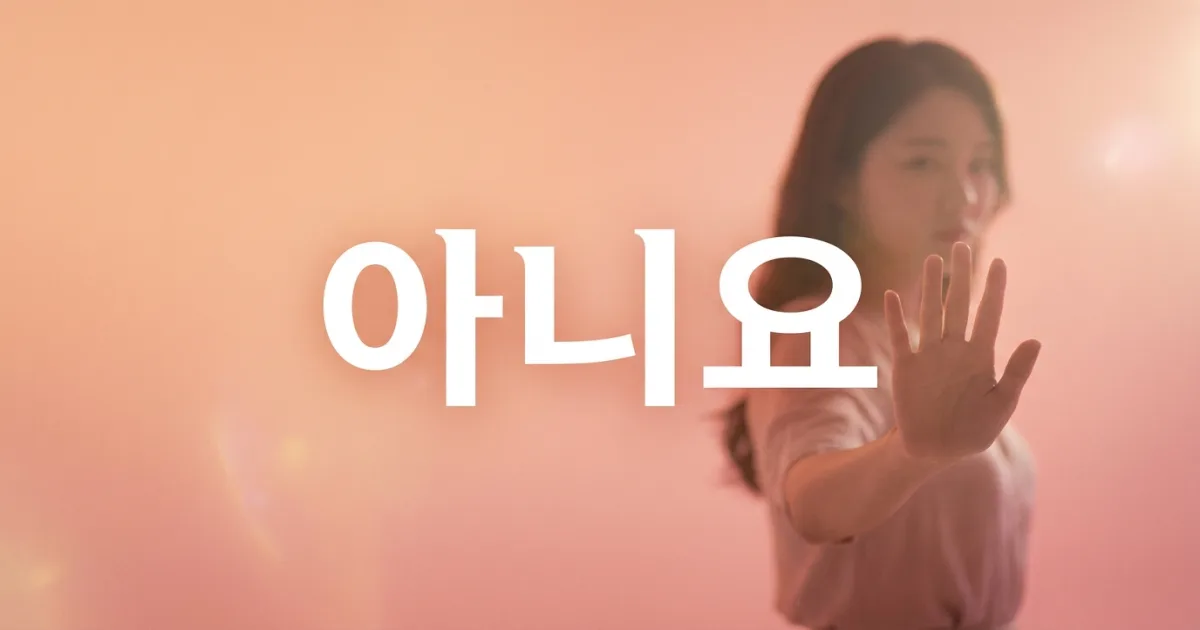
The foundation of any formal refusal is 아니요 (aniyo). This is your standard, polite "no," and it's your safest bet in most situations. Think of it as the direct translation for "no" when answering a simple yes-or-no question.

But just using 아니요 (aniyo) on its own can sometimes come across as a little abrupt, even cold. This is especially true when turning down an offer or an invitation. Korean conversation values harmony, so learning to soften your "no" is a key skill to develop.

Softening Your No with Gwaenchanayo

A brilliant way to politely decline something is with the phrase 괜찮아요 (gwaenchanayo). While its literal meaning is closer to "it's okay" or "I'm fine," in practice, it's the perfect way to say a gentle "no, thank you."

Imagine someone offers you another cup of coffee. A simple 아니요 (aniyo) might feel a bit blunt. But saying 아니요, 괜찮아요 (aniyo, gwaenchanayo)—"No, I'm okay, thank you"—completely changes the feeling. It transforms a direct refusal into a polite and appreciative one.

This little phrase is a lifesaver in so many situations:

  • Declining Food or Drinks: Perfect for when someone offers you a second helping.
  • Refusing Help: Use it if a coworker offers to help with a task you’ve got under control.
  • Turning Down an Offer: Ideal for when a shop assistant offers you a plastic bag for a small purchase.

Cultural Tip: Body language is just as important as your words. When you say 괜찮아요 (gwaenchanayo), try pairing it with a slight bow of the head or a warm smile. This reinforces your politeness and shows you genuinely appreciate the offer.

Practical Dialogue Examples

Let's look at how this plays out in real conversations. You'll notice that people often add a simple reason to make the refusal even softer and easier to accept.

Scenario 1: In a Business Meeting

  • Manager: 이 프로젝트를 맡아줄 수 있어요? (I peurojekteu-reul matajul su isseoyo?)
    • Can you take on this project?
  • You: 아니요, 죄송하지만 지금은 조금 어려울 것 같습니다. (Aniyo, joesonghajiman jigeum-eun jogeum eoryeoul geot gatseumnida.)
    • No, I'm sorry, but it seems a little difficult right now.

Scenario 2: With an Elder

  • Grandmother: 밥 더 먹을래? (Bap deo meogeullae?)
    • Do you want to eat more rice?
  • You: 아니요, 괜찮아요. 정말 배불러요. 감사합니다. (Aniyo, gwaenchanayo. Jeongmal baebulleoyo. Gamsahamnida.)
    • No, I'm fine. I'm really full. Thank you.

By mastering 아니요 (aniyo) and learning to pair it with softer expressions like 괜찮아요 (gwaenchanayo), you can handle formal situations with grace. This thoughtful approach ensures your "no" is understood and respected, without making anyone feel uncomfortable.

Chatting Casually: The Informal Ways to Say No

When you're kicking back with close friends, family, or people younger than you, the formal armor comes off, and your language can relax. This is the natural habitat for the informal version of no in the Korean language: 아니 (ani).

Two smiling businessmen engage in a friendly conversation, with a 'Polite Refusal' text overlay.

If you look closely, you'll see that 아니 (ani) is just 아니요 (aniyo) without the polite 요 (yo) ending. This little trick—dropping the 요 (yo)—is one of the most common ways Koreans switch from polite to casual speech.

Using 아니 (ani) feels right at home in everyday, comfortable chats. But a word of caution: dropping it in a conversation with an elder or your boss would come across as pretty rude. Context is everything.

When Is It Okay to Use 아니 (ani)?

So, how does this actually sound in a real conversation? Let's say you're making plans with a good friend. They ask you a question, and a quick, simple 아니 (ani) is the most natural way to reply. It’s friendly, it's direct, and it’s exactly how a native speaker would do it.

Here are a few situations where 아니 (ani) fits perfectly:

  • Playful Disagreements: Your friend says something silly, and you want to correct them without being serious.
  • Turning Down a Casual Suggestion: They ask, "Want to catch a horror movie?" and you'd rather not.
  • Answering a Quick Question: For simple yes/no questions among equals, like "Are you hungry yet?"

Pro Tip: You'll often hear Koreans use 아니 (ani) as a filler word, a bit like we use "Well..." or "Umm..." in English. Someone might start a sentence with "아니..." before they jump into their main point, especially if they’re about to correct or contradict something.

Informal Dialogues in Action

Let's look at 아니 (ani) in its natural environment. These examples will help you get a real feel for how it's used. Notice how the whole tone of the conversation becomes more relaxed.

Scenario 1: Turning Down a Food Suggestion

  • Friend: 오늘 저녁 피자 먹을까? (Oneul jeonyeok pija meogeulkka?)
    • Should we grab pizza for dinner tonight?
  • You: 아니, 어제 먹었어. 다른 거 먹자. (Ani, eoje meogeosseo. Dareun geo meokja.)
    • No, I had it yesterday. Let's eat something else.

Scenario 2: Correcting a Friend

  • Friend: 너 내일 시험 있지? (Neo naeil siheom itji?)
    • You have that exam tomorrow, right?
  • You: 아니, 다음 주야. (Ani, da-eum juya.)
    • No, it's next week.

Getting the hang of 아니 (ani) is all about reading the room and understanding your relationship with the person you're talking to. Once you start using it correctly with your friends, your Korean will sound so much more authentic, and you'll find yourself building stronger, more natural connections.

If you want some structured practice in a friendly space, you can always join a free trial class on Ktalk.live to chat with tutors and other learners.

Mastering the Art of Indirect Refusal

If you're coming from a Western background, you're probably used to directness being a good thing. A straight "no" is seen as clear and honest. In Korea, however, the social dynamic is a bit different. The concept of 화 (hwa), or group harmony, is incredibly important, and this priority often shapes how people communicate, especially when it comes to declining something.

Saying a flat "no" can sometimes cause the other person to lose face or feel rejected, which disrupts that all-important social harmony. To sidestep this, Koreans often opt for expressions that are less final, giving both people a comfortable way out. It’s a communication style that’s built around cushioning the refusal with politeness.

Think of it this way: instead of slamming a door shut, an indirect refusal leaves it cracked open. The message is the same, but the delivery is far softer and more considerate. This is especially true in the workplace or when you're talking to elders or people you've just met.

Common Phrases for Indirect Refusal

So, what do these polite deflections actually sound like? Usually, they involve expressing that something is difficult, saying you need more time, or mentioning a vague prior commitment. Adding these to your conversational toolkit will make your Korean sound much more natural and thoughtful.

Here are a few must-know phrases:

  • 조금 어려울 것 같아요 (jogeum eoryeoul geot gatayo): "I think it might be a little difficult." This is a go-to, incredibly polite way to turn down a request without being blunt.
  • 생각해 볼게요 (saenggakhae bolgeyo): "I'll think about it." Now, sometimes this can mean the person will genuinely consider your proposal, but more often than not, it's a gentle way of saying 'no'.
  • 다음에요 (daeumeyo): "Maybe next time." This is a friendly and casual way to decline an invitation without closing the door on future plans.

Key Takeaway: When you hear one of these phrases, your best bet is to read it as a polite "no" and not push the matter. Acknowledging the gentle refusal shows a deep level of cultural respect and awareness.

This nuanced communication is a big part of what makes learning Korean so rewarding. It's no surprise that the global fascination with K-culture has sparked a massive interest in the language. In a recent survey, favorability for the Korean language hit an impressive 75.4% among international respondents, with learners dedicating an average of 14 hours per month to Korean content. This passion really underscores why diving into the cultural context is so important. By mastering these indirect expressions, you're doing more than just memorising lines; you're truly connecting with the heart of Korean culture. You can read more about these fascinating global language trends from the Ministry of Culture, Sports and Tourism.

Common Mistakes to Avoid When Saying No

Getting the hang of saying no in the Korean language is a major milestone, but it's surprisingly easy to stumble into little conversational traps. Think of this as your field guide to navigating those tricky social moments. Knowing what to watch out for will help you sound much more natural and respectful.

Two women conversing over a meal, one gesturing, with text 'Indirect NO' about communication.

One of the most common slip-ups is simply using the wrong level of formality. It seems small, but it can completely change the tone of your interaction. It all comes down to your relationship with the person you're talking to.

Using Casual Language in Formal Situations

This is the classic beginner mistake. Dropping a casual 아니 (ani) with your boss, an elder, or someone you just met is a huge cultural misstep. Even if your intentions are good, it can come across as rude or disrespectful.

  • What Not to Do: Imagine your manager asks if you have a moment. Replying with, "아니, 안 바빠요." (Ani, an bappayo.) is far too informal for the situation.
  • What to Do Instead: You need to lean on the polite forms. A much better response would be, "아니요, 괜찮아요." (Aniyo, gwaenchanayo.) It strikes the right professional and respectful chord.

Mentor Tip: My go-to advice is simple: when in doubt, go more formal. It’s always better to be a bit too polite than accidentally disrespectful. You can always relax your language as you build rapport with someone.

Being Too Direct with Your "No"

Even the polite 아니요 (aniyo) can land with a thud if you just say it by itself when declining something. Korean culture places a high value on social harmony, so softening the blow of a refusal is key.

  • What Not to Do: A friend's grandmother offers you a third helping of delicious side dishes (반찬 - banchan). A blunt "아니요." (Aniyo.) could be interpreted as ungrateful.
  • What to Do Instead: Always pad your refusal with a reason and a note of thanks. Try saying, "아니요, 괜찮아요. 너무 배불러요. 감사합니다." (Aniyo, gwaenchanayo. Neomu baebulleoyo. Gamsahamnida.) This translates to, "No, it's okay. I'm too full. Thank you." It's so much warmer and shows genuine appreciation for their kindness.

Misinterpreting an Indirect "No"

This final pitfall is about listening, not speaking. As we've touched on, Koreans often use softer, more indirect phrases to decline something. The mistake here is not picking up on those cues and pressing for a direct answer.

  • What Not to Do: You invite a coworker out after work, and they reply with, "생각해 볼게요." (Saenggakhae bolgeyo.) – "I'll think about it." Pushing them for a "yes or no" right then and there will just make things awkward for everyone.
  • What to Do Instead: Learn to recognise this as a polite "no." The best way to handle it is to accept it gracefully. A simple, "네, 알겠습니다!" (Ne, algesseumnida!) – "Yes, I understand!" – shows that you're clued into the subtleties of Korean communication and respect their indirectness.

Your Korean Journey Starts Here

Mastering how to say no in Korean language is about more than just vocabulary—it's about understanding culture, showing respect, and building genuine connections. By learning when to use a polite 아니요 (aniyo), a casual 아니 (ani), or a softer, indirect phrase, you’re taking a huge step towards speaking Korean with confidence and grace.

Remember, every conversation is a chance to practice and improve. Don’t be afraid to make mistakes; they are just stepping stones on your path to fluency. Keep practicing, stay curious about the culture, and you’ll be navigating these social nuances like a pro in no time.

Every word you learn brings you one step closer to confidence. Keep going—your Korean journey starts now!

🌟 Ready to start your Korean journey? Join Ktalk.live — where global learners connect, speak, and grow together! Find the perfect class for your schedule at https://ktalk.live.

blog-small-image

How to Say No in Korean Language Without Being Rude

arrow-right-icon29 Dec 2025

blog-small-image

Your Complete Guide to the Perfect Greeting in Korean

arrow-right-icon28 Dec 2025

blog-small-image

Your Complete Guide to White Day in Korea: A Romantic Tradition

arrow-right-icon27 Dec 2025

blog-small-image

Your Ultimate Guide to Learning Basic Korean Language

arrow-right-icon26 Dec 2025

blog-small-image

Master the Weekdays in Korean From Monday to Sunday

arrow-right-icon25 Dec 2025

Tags

no in korean language

learn korean

korean phrases

korean etiquette

polite korean