
Want to practice this with a native Korean teacher?
100-min free trial — no card required.
Have you ever wondered about the story behind the Korean alphabet you're learning? The National Hangeul Museum in Seoul isn't just a building with old documents; it's the living story of 한글 (Hangeul), one of the world's most brilliant writing systems. For any Korean learner, visiting this place feels like coming home.
Learning Korean might seem challenging at first, but understanding its origins can make the journey so much more inspiring. This guide will walk you through what makes the National Hangeul Museum a must-visit destination, turning abstract characters into a powerful story of innovation and cultural pride. Get ready to connect with the heart of the Korean language in a way you never expected!
Why the National Hangeul Museum is a Must-Visit for Learners
For anyone learning Korean or just curious about what makes Korea tick, a trip to the National Hangeul Museum is an absolute must. It’s not a stuffy collection of documents but a vibrant celebration of one of the world's most logical and easy-to-learn alphabets.
The museum’s purpose is to honor King Sejong the Great, who created Hangeul in the 15th century, and to showcase the massive impact his invention has had on Korean society. It’s where the very letters you practice, like ㄱ (giyeok) and ㅏ (a), come to life. Imagine seeing how the script you're learning has evolved over centuries—the museum connects the past to the present, making Hangeul's story feel real and exciting.
What Awaits You Inside
The moment you enter, you’re in a space designed to spark curiosity and deepen your appreciation for the Korean language. This isn't a silent, "don't touch" museum; it's a hands-on experience designed to get you involved.
Here's a taste of what you'll find:
- Priceless Historical Documents: See original manuscripts that tell the story of Hangeul's birth and its spread across the nation.
- Interactive Digital Displays: These modern exhibits are a highlight. You can play with letter shapes, grasp the phonetic science behind them, and even try digital calligraphy.
- Engaging Stories: Discover how Hangeul empowered the people, offering a voice to those who couldn't read the complex Chinese characters used before.
- Cultural Artifacts: See how the alphabet is woven into daily life, from art and design to modern technology.
The museum opened on October 9, 2014—Hangeul Day (한글날)—in Seoul's Yongsan District. Covering over 11,322 square meters, it houses permanent exhibits, special exhibition halls, a Hangeul Learning Center, and a fantastic Children's Museum. You can get a good overview on Wikipedia.
For any Korean learner, a visit here makes everything click. It transforms the characters from your screen into a powerful story of innovation and pride.
Exploring the Museum’s Core Exhibits and Treasures
Imagine walking through a story that’s been unfolding for centuries. That’s what the permanent exhibition at the National Hangeul Museum feels like. It’s a beautifully crafted journey that doesn't just show you the history of the Korean alphabet—it lets you feel its soul.
This is where the magic really happens. You're not just peering at old documents behind glass; you're connecting with the very heart of the Korean language.
A Walk Through Hangeul History
The main exhibition guides you chronologically, starting with King Sejong the Great's brilliant vision to give every person the power of literacy. You’ll see tangible pieces of history, like ancient woodblocks used for printing and royal decrees written in the new, accessible script. These items represent a huge shift in society, empowering common people.
This timeline shows the long road from Hangeul's creation in 1443 to the museum's opening in 2014, bridging centuries of linguistic heritage.
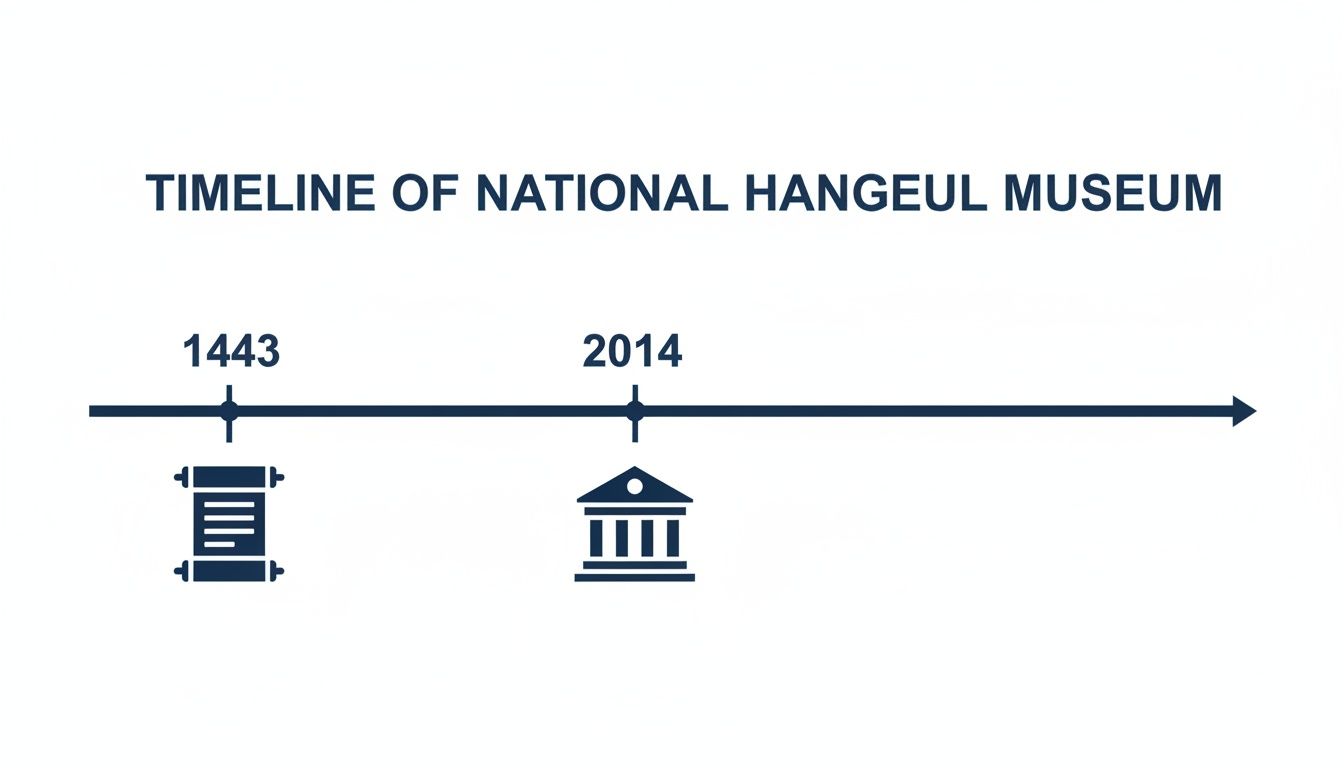
The graphic really drives home the alphabet's deep historical roots and the modern commitment to its legacy.
The museum holds over 10,000 objects tied to the alphabet. The permanent exhibition masterfully shows how Hangeul helped Korea achieve a literacy rate over 97%. You'll see evidence of the publishing boom that followed its declaration as the official script in 1894 and learn about its resilience during difficult historical periods. You can discover more about Hangeul's cultural impact on culture360.asef.org.
To give you a better sense of what to expect, here’s a quick rundown of the main exhibition areas.
Key Exhibits at a Glance
| Exhibition Area | What You Will Discover | Key Takeaway for Learners |
|---|---|---|
| Hangeul’s Journey | The creation, spread, and development of the alphabet from the Joseon Dynasty to today. | Understand the "why" behind Hangeul’s design, making letters easier to remember. |
| Writing Culture | How Hangeul shaped everything from literature and art to science and daily communication. | See how the script is used in different contexts, from beautiful calligraphy to practical documents. |
| Hangeul Playground | An interactive space for children (and adults!) to learn through hands-on activities and games. | A fun, low-pressure way to practice your Hangeul recognition and sound association. |
These exhibits work together to tell a complete story, showing how a simple writing system became a profound cultural force.
Dynamic and Ever-Changing Displays
One of the best things about this museum is that it's always offering something new. Beyond the permanent story of Hangeul, the museum hosts fantastic special exhibitions that keep the experience fresh.
These temporary displays often connect Hangeul's historical roots to contemporary life. You might stumble upon an exhibit on:
- Modern Design: Exploring how Hangeul’s geometric shapes inspire today's graphic designers.
- Technology: Showing the alphabet’s seamless fit in the digital world, from keyboards to smartphones.
- Global Influence: Learning about Hangeul's growing recognition as a brilliantly logical script.
These exhibitions prove that Hangeul isn't just a relic of the past; it's a living, breathing part of Korean culture.
Treasures You Cannot Miss
As you wander the halls, certain items stand out. Spend time with the displays showcasing early examples of Hangeul in literature and personal letters.
Seeing a handwritten letter from centuries ago, penned in the same script you're learning today, creates an unforgettable connection. It reminds you that language is ultimately about people and their stories.
These personal artifacts are incredibly moving. They close the gap between dry historical facts and real human experience, showing how Hangeul allowed everyday people to express their thoughts and feelings. Getting a sense of the exhibits beforehand will help you fully appreciate the rich narrative at the National Hangeul Museum.
Planning Your Visit: A Practical Guide
Alright, let’s get practical so you can focus on enjoying your time at the National Hangeul Museum. A little prep will make your visit totally seamless.
First, the best news: admission to the permanent exhibitions is completely free. That’s right, you can walk right in and start exploring. This reflects the museum's mission to share Hangeul's story with as many people as possible.
Just keep in mind that special, temporary exhibitions might have a separate ticket fee. It’s always smart to check the museum's official website before you go for the latest details.
Opening Hours and Best Times to Go
The museum is open year-round, but the hours do shift slightly.
- Monday – Friday & Sunday: 10:00 AM to 6:00 PM
- Saturday: 10:00 AM to 9:00 PM (extended hours for a great evening option!)
The museum closes for major holidays: January 1st, Seollal (Lunar New Year's Day), and Chuseok (Korean Thanksgiving Day). If you prefer a quieter experience, a weekday morning is your best bet. Weekends and, unsurprisingly, Hangeul Day on October 9th, tend to get quite lively.
Getting to the National Hangeul Museum
Nestled in Seoul's Yongsan district, the museum is easy to get to using the city’s fantastic public transport.
By Subway:
Taking the subway is the most straightforward option. Hop on Line 4 or the Gyeongui-Jungang Line and get off at Ichon Station (이촌역).
Pro Tip: At Ichon Station, use Exit 2. It leads to an underground walkway called the "Moving Museum," connecting you directly to the museum complex. It's a cool experience filled with Hangeul-themed art to get you in the mood.
By Bus:
If you're coming from another part of the city, several buses stop nearby. Hop on bus 400 or 502 and get off at the "National Museum of Korea, National Hangeul Museum" stop.
Museum Amenities and Accessibility
The museum is designed to be a comfortable place for everyone. On the second floor, you’ll find a lovely café—the perfect spot to take a break, grab a coffee (커피), and reflect on everything you’ve seen.
Next door is the museum shop, which you won't want to skip. It has a fantastic collection of thoughtfully designed souvenirs, from beautiful stationery to unique gifts inspired by Hangeul shapes. It's the ideal place to pick up a special memento of your visit.
The National Hangeul Museum is also fully committed to accessibility. The entire building is wheelchair-friendly, with ramps and lifts, ensuring every visitor can enjoy a welcoming experience.
Bringing Your Korean Studies to Life at the Museum
Let's be honest, learning a new language can sometimes feel abstract. That’s where a trip to the National Hangeul Museum can be a game-changer for your Korean studies.
Think of it as the ultimate field trip. It’s a chance to see the letters you practice every day come alive, feel their history, and understand why they look the way they do. This isn't just a museum visit; it's a chance to connect your language journey to its living origins.
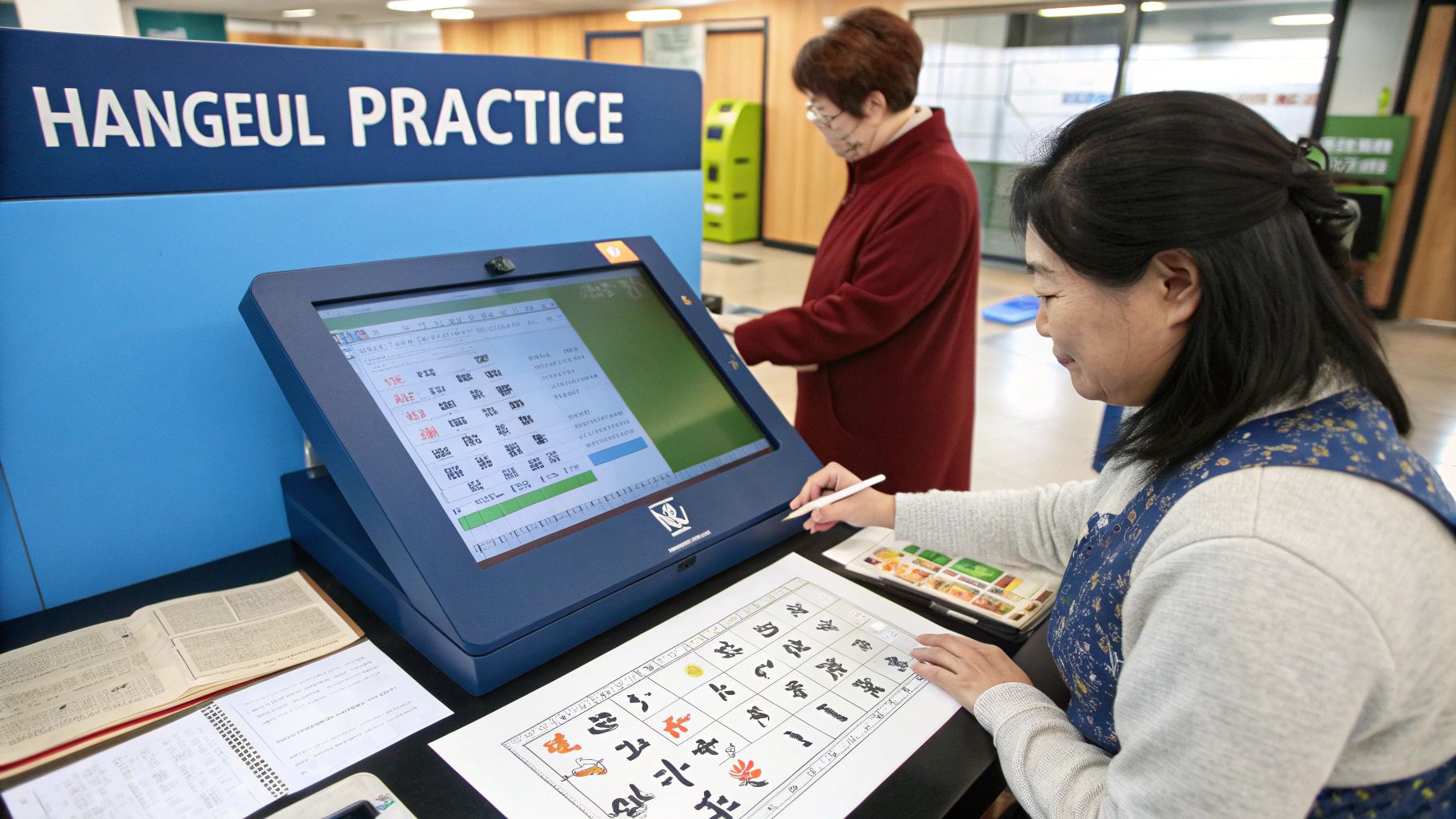
With a bit of intention, you can easily turn your tour into an immersive study session. See the exhibits not just as artifacts, but as direct links to the words you're working so hard to master.
Engage with Interactive Exhibits
One of the best things about this museum is how hands-on it is. They’ve used technology to make Hangeul's story engaging and fun.
This is your chance to really solidify your understanding of the alphabet.
- Trace the Characters: Find the digital calligraphy stations and practice your stroke order. Physically writing the letters builds muscle memory that typing can't replicate.
- Listen and Repeat: Many exhibits have audio components. Listen to the native pronunciation of different sounds and try to mimic them quietly. It’s fantastic, no-pressure practice.
- Play the Games: Keep an eye out for games designed to test your Hangeul recognition. They’re a fun way to reinforce letter shapes and sounds without feeling like you're studying.
When you get involved like this, you’re no longer just a visitor. You're actively applying what you know in a fresh, exciting environment.
The Hangeul Learning Center
For a more focused experience, visit the Hangeul Learning Center (한글놀이터) on the third floor. This area is an educational playground for kids and foreign learners, creating a welcoming, curiosity-driven atmosphere.
Here is where you can have that "aha!" moment. The exhibits brilliantly break down the science of Hangeul, showing how consonant shapes mimic the position of your tongue and mouth. It’s one thing to read about it, but seeing it laid out visually can make everything click.
This center really closes the loop between theory and practice. It helps you see that Hangeul wasn't just created; it was engineered with incredible logic.
Before you go, check the museum's schedule. The center sometimes runs special workshops or educational programs that could be a highlight of your visit.
Create Your Own Museum Homework
To make the experience stick, extend it beyond the museum walls. Think of it as a fun assignment that connects your trip back to your ongoing studies.
Here are a few simple ideas:
- Word Hunting: Snap photos of interesting words you find. Later, look them up and practice writing them.
- Discuss Your Discoveries: Bring your photos and questions to your online class. Sharing what you found can spark great conversations about Korean history and culture.
- Journal Your Experience: Try writing a short entry in Korean about your visit. Describe your favorite exhibit (가장 좋아하는 전시) or a new word you learned (새로운 단어).
This simple approach transforms your day at the National Hangeul Museum from a passive outing into a powerful part of your language learning journey.
Experiencing the Museum from Anywhere in the World
What if you could walk the halls of the National Hangeul Museum without booking a flight to Seoul? Well, you can. The museum offers incredible digital resources that bring its story right to your screen.
This is an amazing opportunity for anyone learning Korean. It provides a rich, visual backdrop to your studies, helping you connect the alphabet to the deep cultural history behind it. Think of it as a way to get inspired and find context from home.
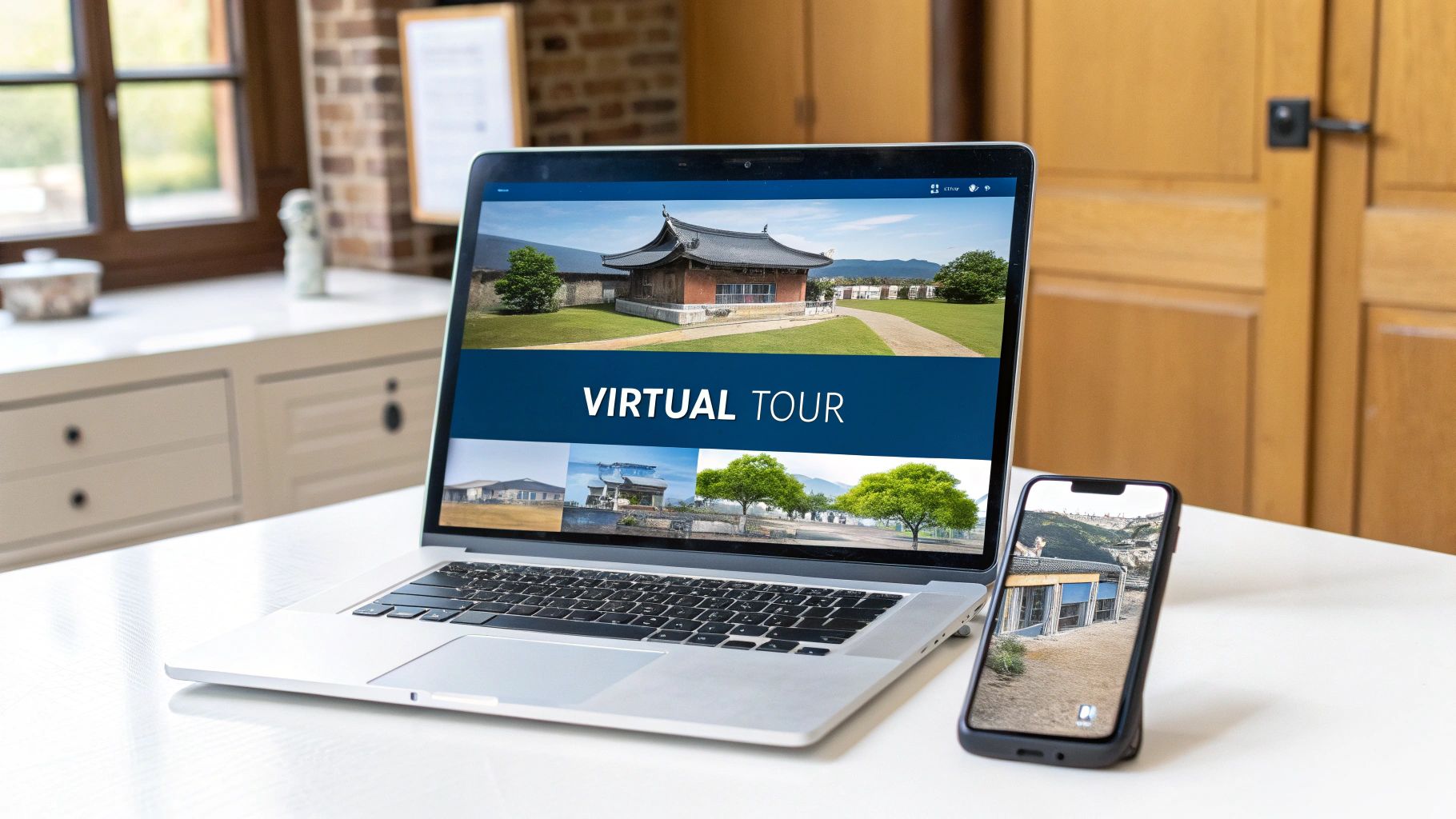
Diving into these online exhibits can make your language journey feel much more real. It's a powerful reminder that you’re not just learning a script—you’re connecting with a piece of living history.
Your Digital Gateway to Hangeul
The museum’s official website is your starting point. It’s cleanly organized and packed with information, so you can easily browse its collections and exhibits.
Here are a few of the best digital features to check out:
- Virtual Tours and Exhibitions: Many past and current exhibitions are archived online, letting you take a virtual stroll through the museum's main halls.
- Digitized Collections: The museum has digitized thousands of artifacts. You can explore high-resolution images of rare manuscripts, ancient woodblocks, and beautiful calligraphy.
- Online Educational Materials: The site hosts a variety of learning resources, including articles and videos that explain the principles and history of Hangeul.
Thanks to this online access, distance is no longer a barrier to experiencing one of Korea’s most important cultural institutions.
Making the Most of Your Virtual Visit
To get the most out of your digital tour, treat it like a real trip. Don't just passively browse—engage with what you're seeing and connect it to your Korean studies.
A great way to do this is to focus on the stories behind the artifacts. When you look at an old document, see if you can spot characters you recognize. Notice how the script may have shifted over time.
A virtual visit lets you explore at your own pace. You can spend as much time as you need with a single artifact without feeling rushed by crowds.
Here’s a practical tip: after exploring the digitized collection, bring a screenshot of an interesting piece to your next online Korean class. Discussing it with your tutor can offer deeper insights and spark fascinating conversations about Korean culture. This simple step turns a virtual visit into a memorable, educational experience.
What to See and Do Near the Museum
Turning your visit to the National Hangeul Museum into a full-day adventure is a breeze. The museum sits in the heart of Yongsan, one of Seoul's most exciting cultural districts, so you're surrounded by other world-class attractions.
Your exploration of Korean culture doesn't have to stop when you leave the museum. Within minutes, you can be standing in front of ancient royal treasures, relaxing in a sprawling park, or diving into one of the city's most famous international neighborhoods.
Explore Korea's Grand History Next Door
You can't miss this one—the magnificent National Museum of Korea is right next door. This is the country's flagship institution, packed with priceless artifacts that tell the story of Korea from ancient times to the modern era.
After focusing on the Korean alphabet, stepping into this museum gives you the bigger picture. You can see how Hangeul was used on historical documents and in art, connecting the language to the people and events that shaped the nation.
Find Peace in Yongsan Family Park
Need some fresh air? Take a short stroll over to Yongsan Family Park. This huge green space is a welcome oasis in a busy city, with serene ponds, lovely walking trails, and plenty of room to stretch your legs.
It’s the perfect spot to find a bench, reflect on what you've learned, and maybe practice a few Korean words. Pack a snack, relax, and watch Seoul life go by. The park offers a wonderful, peaceful contrast to a day spent indoors.
Experience Global Flavors in Itaewon
If you're ready for a change of scenery, the vibrant, multicultural district of Itaewon is just one subway stop away. Known for its incredible food scene, eclectic shops, and buzzing nightlife, Itaewon is where Seoul's international community comes together.
It's a fantastic way to cap off your day. You can grab dinner from almost anywhere in the world, browse quirky boutiques, or just soak up the energetic atmosphere. This neighborhood shows off the modern, global side of Seoul.
A day in Yongsan offers a fantastic mix of history, nature, and modern city life. Here's a quick look at how you can plan your time.
Planning Your Day in Yongsan
| Attraction | Walking Distance from Museum | Why You Should Go |
|---|---|---|
| National Museum of Korea | 1 minute | It's Korea's largest museum and offers the perfect historical context for your Hangeul studies. |
| Yongsan Family Park | 5-10 minutes | A beautiful, relaxing green space to unwind and process everything you've learned. |
| Itaewon | 20-25 minutes (or 1 subway stop) | A vibrant, international hub for amazing food, shopping, and experiencing modern Seoul. |
With so much to do right at your fingertips, it’s easy to see why the National Hangeul Museum is the perfect anchor for a memorable day exploring the best of Seoul.
Frequently Asked Questions About the Museum
Heading to a new place always comes with a few questions. To make your visit to the National Hangeul Museum smooth and stress-free, here are answers to the most common queries from visitors.
Think of this as your quick-start guide to the practical stuff, so you can focus on the fun part.
Do I Need to Know Korean to Enjoy the Museum?
Not at all! The museum has done a fantastic job of making everything accessible to a global audience. You'll find detailed explanations and signage in English throughout all the main exhibits. Many displays are also incredibly visual and interactive, so you can understand the concepts without knowing Korean. The story of Hangeul is told so well through design that its brilliance shines through for everyone.
How Much Time Should I Set Aside for a Visit?
I'd recommend planning for at least two to three hours. This gives you plenty of time to explore the main permanent exhibition without feeling rushed. You'll also have a moment to check out any special exhibitions, play with the digital displays, and maybe grab a coffee at the museum café. If you have kids with you, you might want to add extra time for the Hangeul Playground.
Are There Special Programs for Language Learners?
Absolutely! The museum is an amazing resource if you're actively studying Korean. The Hangeul Learning Center, located on the third floor, is built specifically as an educational space for foreign learners and children.
The Learning Center is where the theory really clicks. Seeing visual breakdowns of how consonant shapes mimic the shape of your mouth when you make the sound can be a real "aha!" moment for students.
It’s always a good idea to check the museum's official website before you go. They often run special workshops, lectures, or guided tours that can give you an even deeper understanding.
Can I Take Pictures Inside the Museum?
Generally, yes. The museum allows photography in most of its permanent exhibition halls, which is perfect for capturing memories or snapping photos of displays to study later.
Just keep a couple of important rules in mind to protect the artifacts:
- No Flash Photography: The harsh light from a flash can damage delicate, centuries-old documents. Make sure your flash is turned off.
- Check for Signs: In certain special exhibition areas, photography might be restricted. Keep an eye out for signs that explain the rules for that specific gallery.
Following these simple courtesies helps ensure the treasures of the National Hangeul Museum will be around for future visitors to enjoy.
Every character you learn connects you to a rich and beautiful history. Visiting the National Hangeul Museum, whether in person or online, is a fantastic way to deepen your passion for the Korean language and find new motivation for your studies. Every word you learn brings you one step closer to confidence. Keep going—your Korean journey starts now!
🌟 Ready to turn your inspiration into real conversation? Join K-talk.live — where global learners connect, speak, and grow together
Ready to stop reading and start speaking?
Practice what you just learned with a native Korean teacher — free for 100 minutes. No card, no commitment.