Want to practice this with a native Korean teacher?
100-min free trial — no card required.
Dreaming of holding seamless conversations in Seoul or finally understanding your favourite K-dramas without subtitles? The journey of how to speak Korean fluently is less about finding a single 'magic' app and more about building a smart, balanced toolkit. Fluency comes from combining structured learning with consistent, active practice. This guide moves beyond generic lists to give you a strategic breakdown of 12 powerful resources, from live, tutor-led classes to innovative practice apps and essential textbook platforms.
We'll explore their specific strengths, practical use cases, and limitations to help you build a personalised learning plan. Each entry includes detailed analysis and direct links, so you can stop searching and start speaking. This roadmap is organised to help you find the right tools that prioritise what matters most: speaking Korean with confidence.
1. K-talk Live
For learners serious about achieving conversational fluency, K-talk Live provides a highly structured and interactive online environment that mirrors an in-person language centre. Its core strength lies in its live, small-group classes, which are strictly capped at six students to ensure every participant gets substantial speaking time and personalised feedback from experienced tutors. This model is ideal for those who thrive on direct interaction and need a consistent schedule to make steady progress.
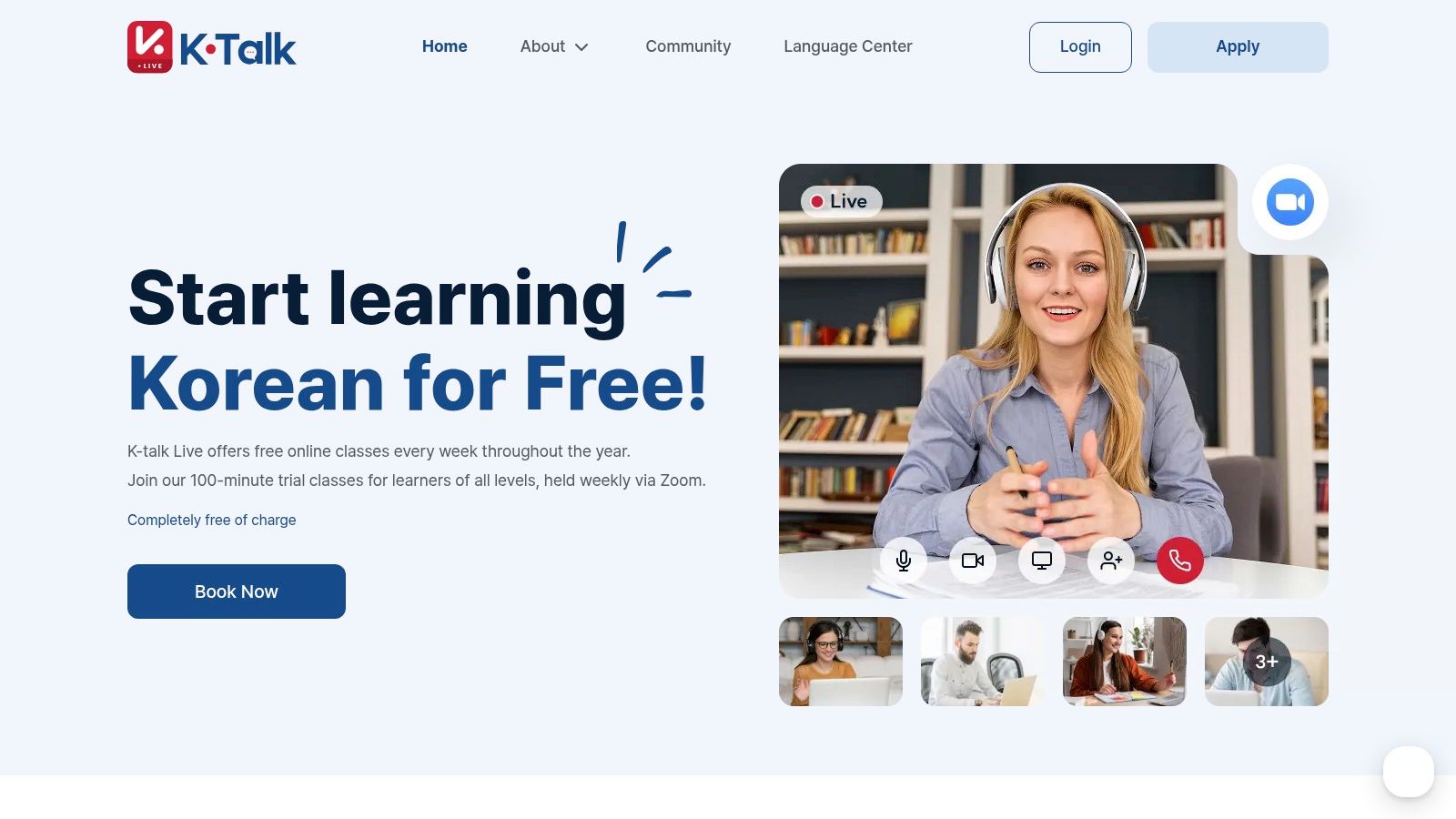
The platform is engineered to remove commitment barriers. You can test the entire learning experience with a free 100-minute trial class before investing. With new cohorts starting weekly, it’s easy to find a group that matches your proficiency and schedule. This structure is a powerful motivator for anyone looking for a clear path on how to speak Korean fluently.
Key Features & User Experience
K-talk Live focuses on what matters most for speaking practice: direct, live interaction. The small class size is a significant advantage, fostering a comfortable atmosphere where you can build confidence speaking Korean.
- Structure: Classes are organised into four-week blocks, with three 50-minute sessions per week. This consistent routine helps build momentum.
- Pricing: The cost is straightforward and affordable at US$144 per four-week block, offering excellent value for live, tutor-led instruction.
- Access: Simply register on the website to book your free trial and join a cohort. The entire process is managed through their site and classes are conducted via Zoom.
While the website lacks individual student testimonials, the high enrolment figures (1,765+ students) and large tutor pool (25+ tutors) provide strong social proof of its effectiveness and reliability. This makes it a top-tier choice for structured conversational learning.
Website: https://ktalk.live
2. Talk To Me In Korean (TTMIK)
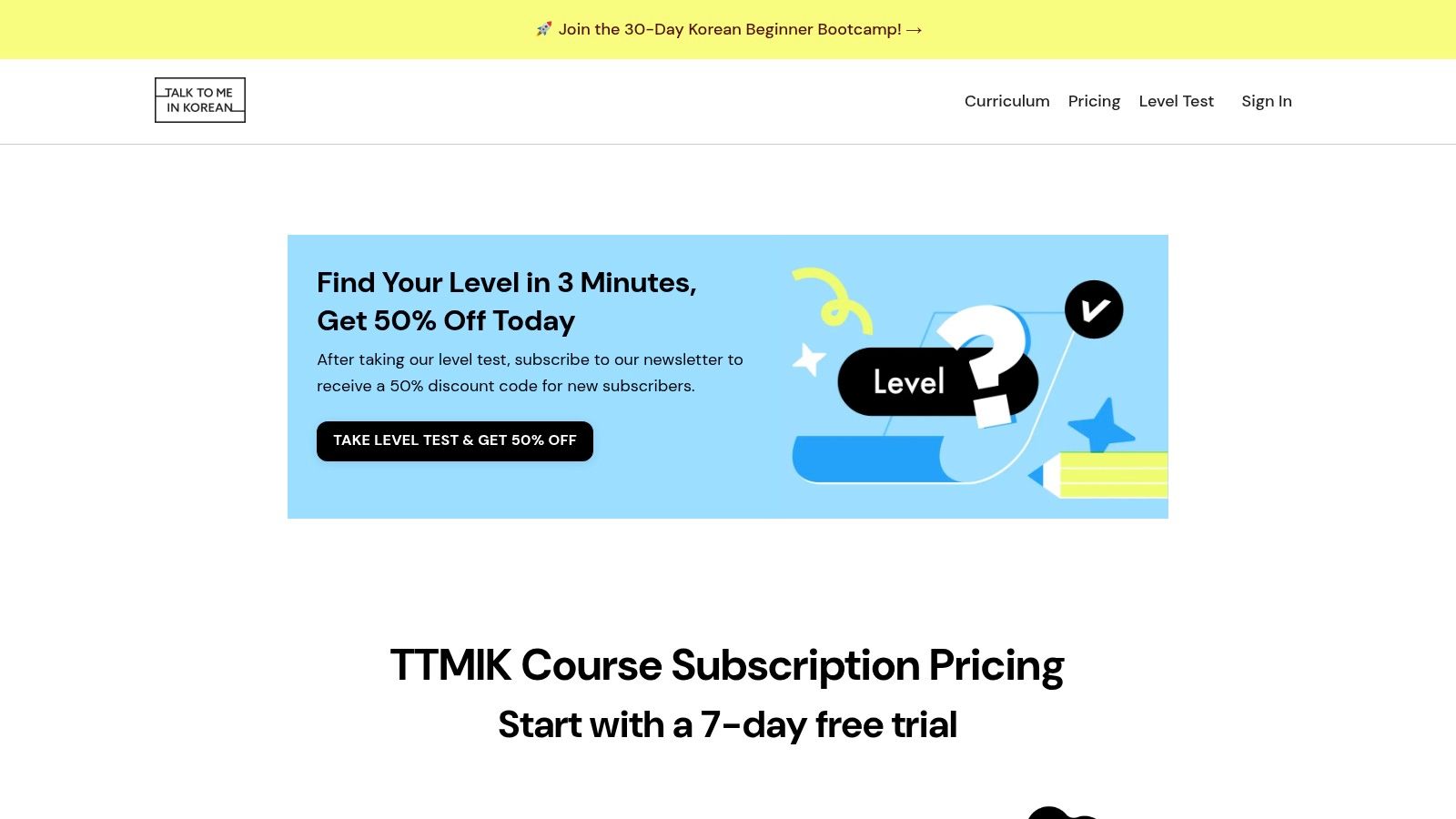
Talk To Me In Korean offers a comprehensive, structured curriculum that guides learners from absolute beginner to advanced levels. Its major strength is the integrated ecosystem; the online courses, physical textbooks, graded readers (TTMIK Stories), and audio lessons are all aligned. This cohesion removes the guesswork of what to study next, creating a clear pathway for learners who want to know how to speak Korean fluently by building a solid foundation first. The English explanations are exceptionally clear and beginner-friendly, making complex grammar accessible.
Key Features and Usage Tips
To maximise TTMIK, pair the core grammar lessons with their dialogue books and a subscription to their new speaking practice app. This combination ensures you are actively applying what you learn. While the core curriculum is excellent for grammar and vocabulary, you must intentionally seek out the speaking components for a well-rounded practice.
- Pros: Highly structured curriculum, beginner-friendly explanations, integrated books and audio.
- Cons: Various components (courses, books, apps) are often sold separately. Physical book shipping can be costly and slow depending on your location.
Website: https://courses.talktomeinkorean.com/store
3. King Sejong Institute (KSI)
The King Sejong Institute is a global network of government-supported centres offering a standardised curriculum focused on practical communication. Its strength lies in providing structured, interactive group classes, both online and in-person, that prioritise speaking and listening. For those wondering how to speak Korean fluently, KSI offers a classroom environment with certified teachers that is often more accessible and affordable than university programmes. The 'Sejong Korean' textbooks are designed for real-world scenarios, moving learners efficiently from foundational greetings to more complex conversations.
Key Features and Usage Tips
To get the most out of KSI, be proactive in class participation and use the small-group setting to practise speaking with peers and your instructor. Supplement the official coursework with their online e-Class portal for self-study and review. Because enrollment is session-based and seats are limited, it's crucial to register as soon as a new semester opens at your local centre or online.
- Pros: Standardised curriculum focused on usable speaking, typically lower tuition than university programmes, widespread global availability.
- Cons: Seats can fill quickly and enrollment is session-based, fewer 1:1 options and schedules are fixed by semester.
Website: https://mngr.iksi.or.kr/lms/main/sejongClassGateCrseList.do
4. Yonsei University Korean Language Program (KLP/KLI)
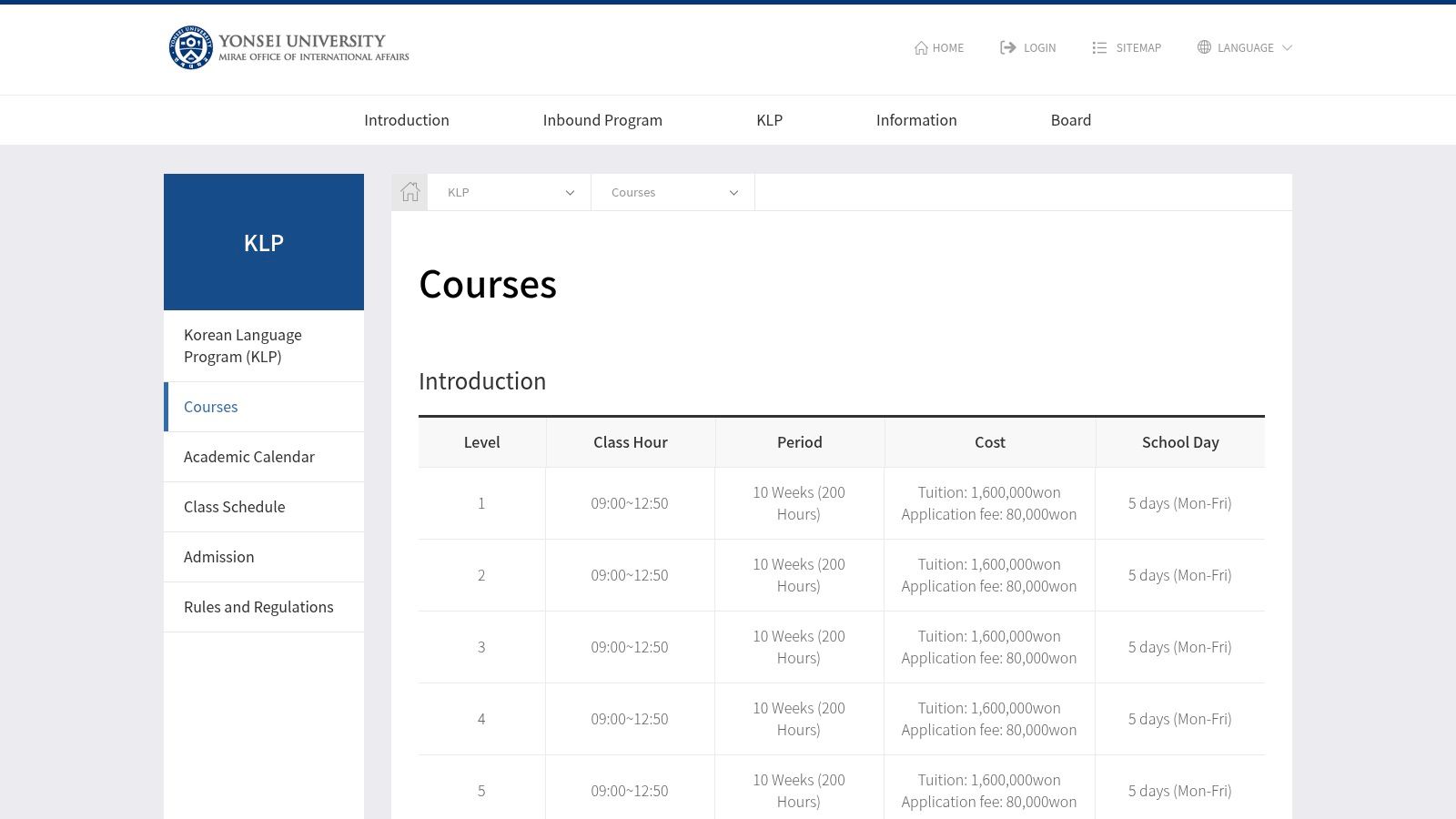
For learners seeking an immersive and academically rigorous path, the Yonsei University Korean Language Program offers an intensive curriculum renowned for its focus on all four language skills. Its major strength is the daily live class structure, which guarantees consistent speaking and interaction with qualified instructors and peers. This environment is ideal for those who need accountability and a structured classroom setting to truly understand how to speak Korean fluently. The program’s well-established textbooks and clear level progression provide a reliable roadmap from beginner to advanced proficiency.
Key Features and Usage Tips
To maximise this programme, fully engage in all class activities and supplement lessons with campus language exchange opportunities if studying in Korea. While the course is comprehensive, you must proactively review material daily due to its fast pace. This intensive format demands a significant time commitment but offers unparalleled progress in a short period, especially for speaking and listening comprehension.
- Pros: Highly reputable programme, consistent daily speaking/interaction time, clear progression and regular assessment.
- Cons: Time-intensive and more expensive than app-based options. Requires additional textbook/fees and visa/admin steps if studying in Korea.
Website: https://yiec.yonsei.ac.kr/yiec_en/korean/ko-course.do
5. Sogang University Korean Language Education Center (KLEC)
Sogang University’s KLEC is renowned for its conversation-centric, task-based approach. Unlike traditional grammar-heavy programmes, Sogang’s curriculum is built around pair and group speaking activities that simulate real-life situations. This method is incredibly effective for learners who want to know how to speak Korean fluently by prioritising practical communication from day one. The focus on active participation forces students to use the language immediately, helping to build confidence and reduce hesitation. The availability of various schedules, including evening and online options, makes it accessible even for working professionals.
Key Features and Usage Tips
To get the most from Sogang’s programme, you must actively engage in all speaking tasks, even if you feel unsure. The learning environment is designed for making mistakes and receiving feedback. Prospective students should be prepared to navigate a website that is primarily in Korean and proactively enquire about specific term dates and fees, as this information can vary.
- Pros: Strong track record for improving speaking fluency, multiple scheduling options that suit working learners.
- Cons: Seats are limited and much of the site is in Korean; fees and detailed info often require direct enquiry.
Website: https://ttc.sogang.ac.kr/
6. Kyobo Book Centre
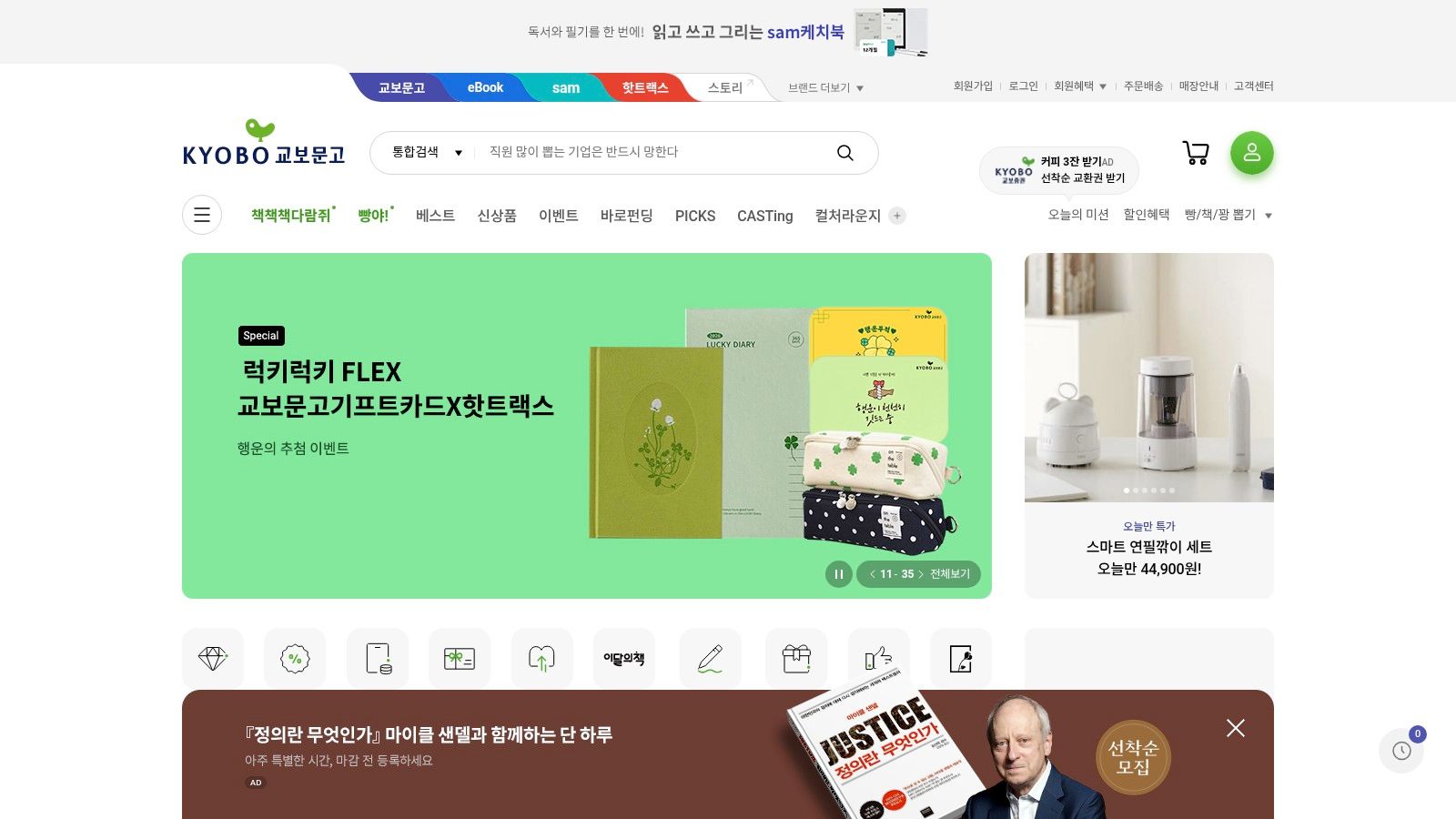
Kyobo Book Centre is Korea’s largest bookstore and a goldmine for learners seeking authentic, Korean-published learning materials. It offers direct access to the most widely used university curricula (Yonsei, Sogang, Sejong) and a vast range of specialised conversation, pronunciation, and phrasebooks not easily found elsewhere. This makes it an essential resource for serious learners who want to know how to speak Korean fluently using the same materials native instructors use, providing a more immersive and academically rigorous foundation.
Key Features and Usage Tips
To use Kyobo effectively, have a specific textbook series in mind before you browse, as the sheer volume can be overwhelming. Using a browser translator extension is highly recommended to navigate the purchasing and shipping process. While it requires more effort than English-based retailers, the reward is access to high-quality, authentic Korean-language resources that can significantly accelerate your speaking practice and formal understanding of the language.
- Pros: First access to many Korea-published conversation and pronunciation titles, reliable retailer with a wide selection.
- Cons: Website is primarily in Korean which can make navigation/payment difficult, international shipping cost and delivery time vary.
Website: http://www.kyobobook.co.kr/
7. YES24 Global
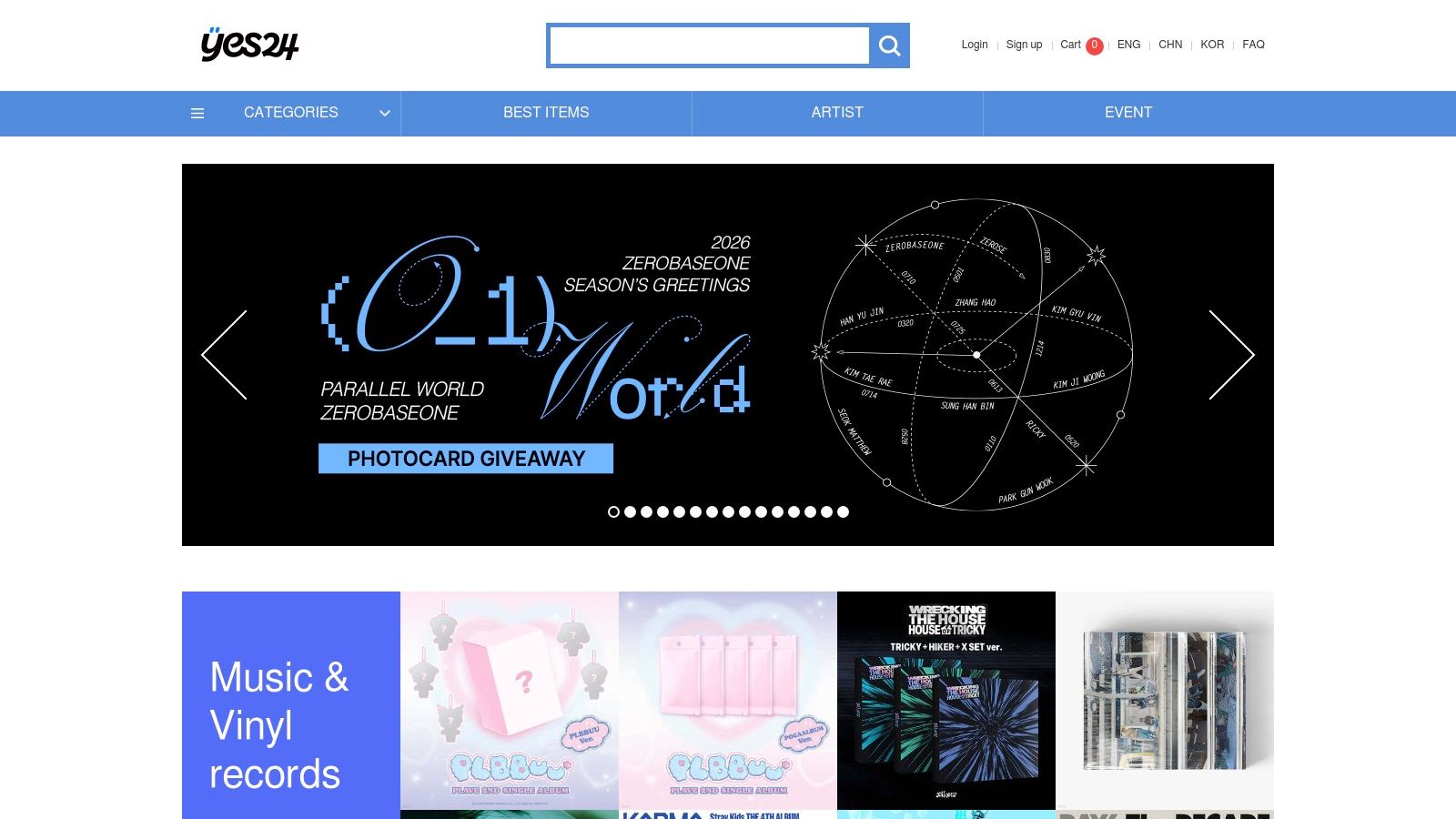
YES24 Global is the international storefront for one of Korea's largest online booksellers, making native Korean learning materials accessible worldwide. While not a learning platform itself, it is an essential resource for acquiring physical books, from university textbooks to conversation readers and graded storybooks that are otherwise hard to find. For learners wondering how to speak Korean fluently, having access to materials designed for native speakers or in-country students provides authentic vocabulary, sentence structures, and cultural context that digital-only resources sometimes lack. Its English interface and global payment options bridge the gap for international buyers.
Key Features and Usage Tips
To use YES24 effectively, search for book titles in Hangul for the most accurate results, as English translations can vary. It is best used to supplement a structured course like TTMIK by purchasing the corresponding physical workbooks or advanced topic books from publishers like Darakwon. Be mindful of shipping costs, which can be significant, so planning larger, consolidated orders is more economical.
- Pros: Wide selection of Korean-published books, accepts various global payment methods.
- Cons: Shipping can be expensive and slow; the global site's catalogue is smaller than the domestic version.
Website: https://global.yes24.com/
8. Gmarket Global
While not a direct learning platform, Gmarket Global is a vital resource for sourcing physical study materials that are often difficult to find internationally. It’s Korea’s largest online marketplace, and its global site allows you to buy a vast range of textbooks, workbooks, speaking flashcards, and graded readers directly from Korean sellers. This is particularly useful for finding specific editions or supplementary materials recommended by tutors that aren't available on Amazon. For learners wondering how to speak Korean fluently, having access to the same high-quality, native-level materials used in Korea provides a significant advantage. It allows you to build a physical library that supports your digital learning journey.
Key Features and Usage Tips
To use Gmarket effectively, search for book titles or learning topics using their Korean names (e.g., “한국어 문법”) for better results. Bundle items from the same seller to save on shipping, which is often calculated per item. Gmarket is the best place to find older or discontinued textbooks that are still highly recommended but no longer in mainstream circulation.
- Pros: Huge selection of materials directly from Korea, ability to compare prices from different sellers, ships directly to many countries.
- Cons: Shipping can be expensive and is often charged per-item, seller reliability can vary, and some payment restrictions may apply to foreign cards.
Website: https://global.gmarket.co.kr/
9. Duolingo (Korean)
Duolingo’s Korean course uses a gamified, mobile-first approach to build a daily learning habit. Its strength lies in making the initial steps of language learning highly accessible and engaging. For those starting their journey on how to speak Korean fluently, its bite-sized lessons and microphone-based pronunciation exercises provide a low-pressure environment to practise basic sounds and phrases. The app excels at drilling foundational vocabulary and simple sentence structures through repetition, which can be a useful supplement to more in-depth study methods. Its large user base also means the course is frequently updated with new content.
Key Features and Usage Tips
To use Duolingo effectively, focus on its speaking exercises as quick, daily pronunciation drills rather than comprehensive conversation practice. Treat it as a tool for habit-building and vocabulary reinforcement. To progress towards fluency, you must combine its use with resources that explain grammar in detail and provide real-world conversational context.
- Pros: Free core access and an easy way to build a daily practice habit. Speaking practice is quick and easy to fit into spare moments.
- Cons: Not a complete conversation course and needs supplementation for fluency. Premium pricing varies by platform and location.
Website: https://www.duolingo.com/course/ko/en/Learn-Korean
10. Memrise (Korean)
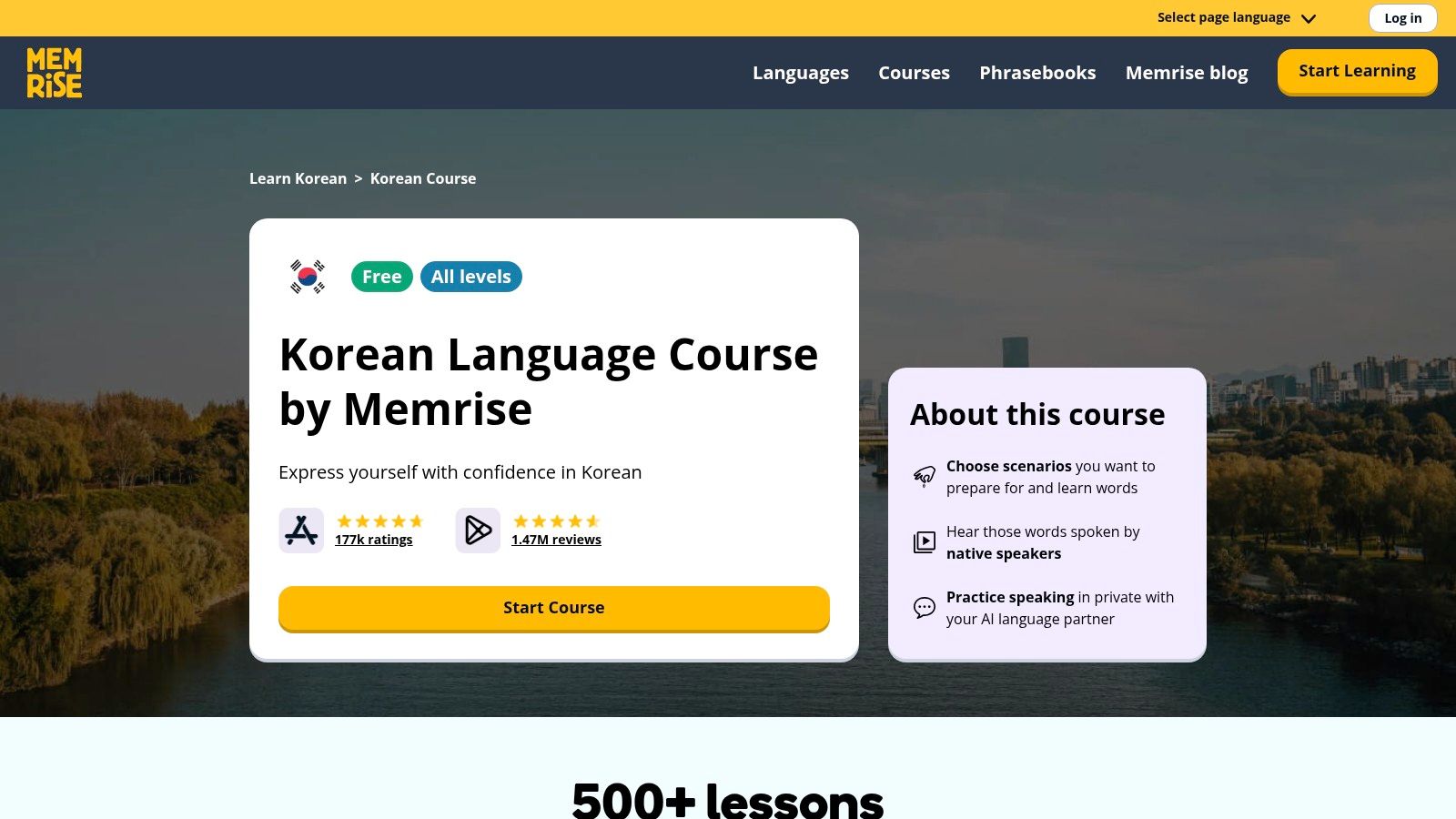
Memrise shifts the focus from academic grammar to practical, real-world communication by immersing you in thousands of video clips featuring native speakers. This approach is powerful for tuning your ear to natural intonation, speed, and pronunciation from day one. Rather than just memorising vocabulary, you learn phrases in context, which is a critical step if you want to understand how to speak Korean fluently in authentic conversations. The platform is designed to get you speaking immediately through scenario-based learning and mimicry.
Key Features and Usage Tips
To get the most out of Memrise, actively use the AI speaking partner to rehearse dialogues without pressure. This feature provides a safe space to practise pronunciation and build confidence before talking to real people. Use the app to complement a more structured grammar resource; Memrise provides the conversational context that textbooks often lack, bridging the gap between theoretical knowledge and practical application.
- Pros: Strong focus on real-life phrases and native speaker audio/video, complements grammar-heavy learning well.
- Cons: Full experience with unlimited video clips and the AI partner requires a Pro subscription. The mobile app offers a better user experience than the web version.
Website: https://www.memrise.com/en-us/learn-korean/korean-course
11. italki
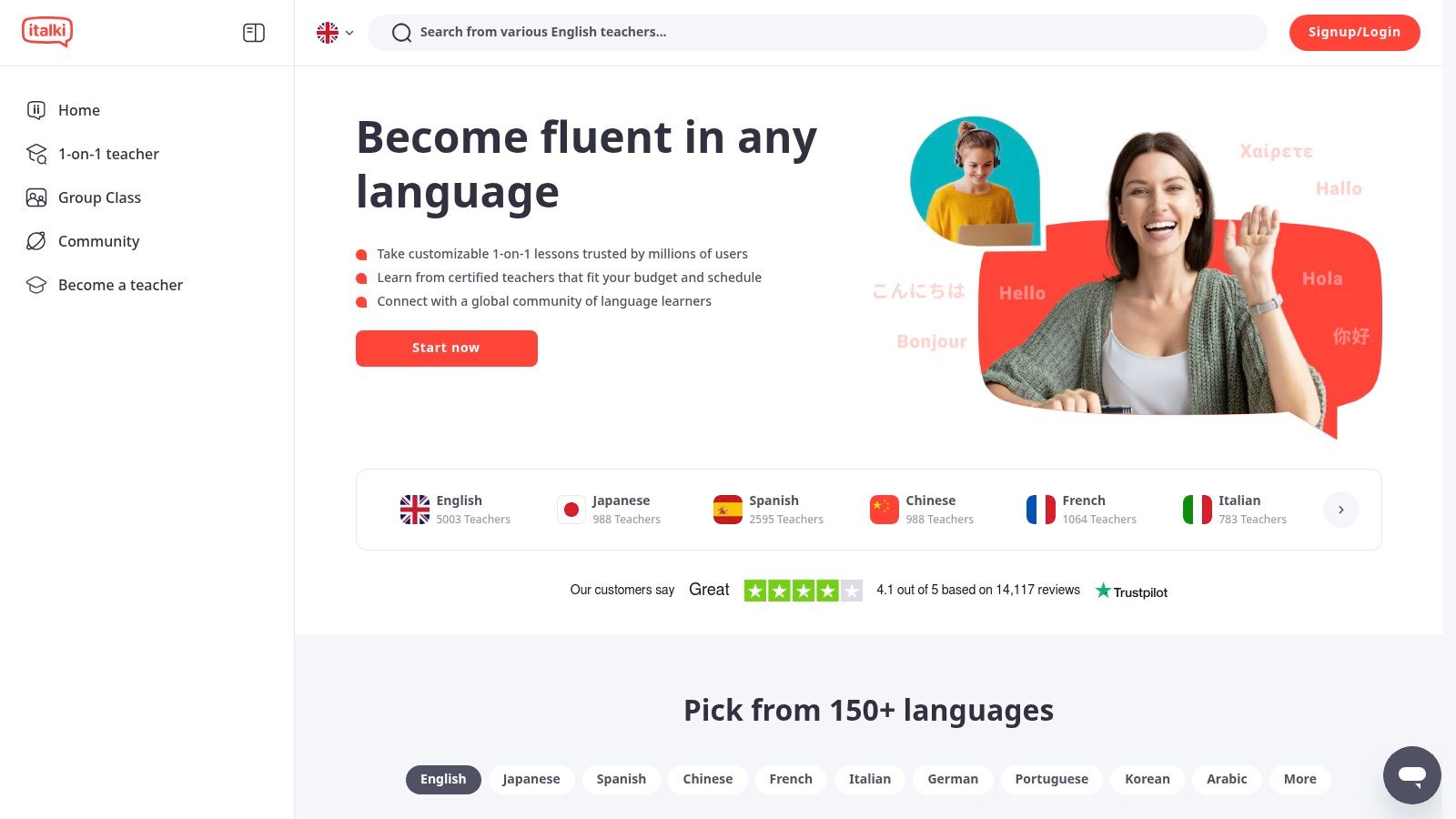
italki is a global marketplace connecting language learners with thousands of Korean tutors for 1:1 lessons. Its greatest advantage is providing direct, personalised speaking practice, which is crucial for anyone serious about how to speak Korean fluently. You can find professional teachers with structured plans or community tutors for casual conversation, filtering by price, availability, and specialty. This customisation allows you to focus on specific weaknesses, whether it's pronunciation, conversational fillers, or formal speech, accelerating your progress far more quickly than self-study alone.
Key Features and Usage Tips
To get the most out of italki, book trial lessons with 3-4 different tutors to find a teaching style that matches your learning preferences. Come prepared for each lesson with specific questions or topics you want to discuss. This proactive approach ensures your paid time is used efficiently to practise speaking, not just passively receiving information.
- Pros: Fastest path to real speaking through 1:1 tutor time, highly customisable to individual needs and topics.
- Cons: Quality and teaching methods vary by tutor; trial lessons are important to find a good fit. Uses credits and may include processing fees; refunds are generally platform credit.
Website: https://www.italki.com/
12. Pimsleur Korean
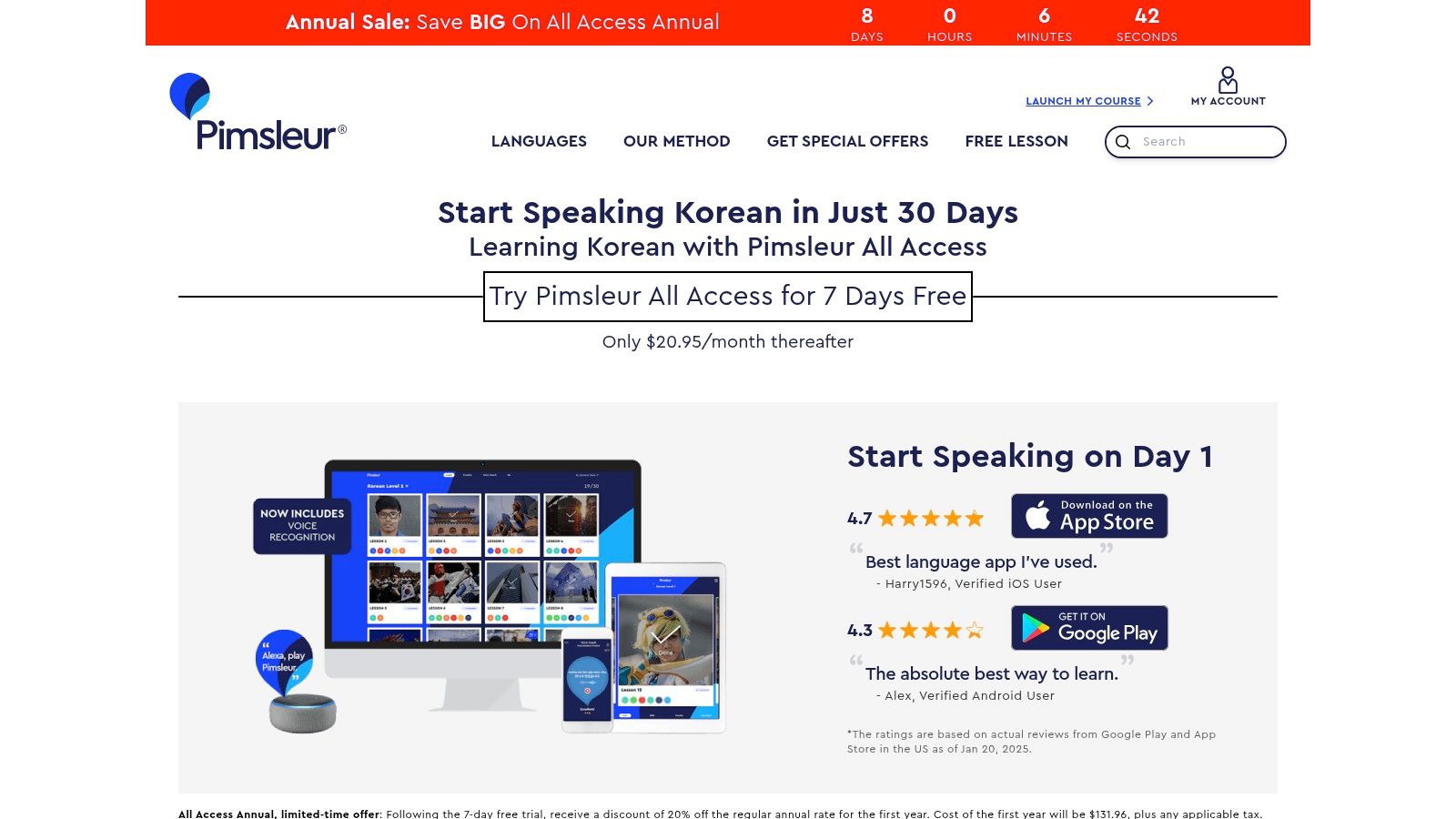
Pimsleur Korean is an audio-first course designed to build conversational skills through listening and speaking rather than reading. Its method focuses on graduated interval recall, prompting you to remember and use new words at increasing intervals. This spaced repetition is highly effective for moving vocabulary into long-term memory and developing automatic spoken responses. For learners wondering how to speak Korean fluently while commuting or exercising, Pimsleur's 30-minute, hands-free audio lessons are an ideal tool for building core conversational patterns and excellent pronunciation from day one.
Key Features and Usage Tips
To get the most out of Pimsleur, commit to one lesson per day and always speak your responses aloud. The method's power lies in active participation. While it excels at building a speaking foundation, its lack of explicit grammar explanations means it should be paired with a more structured resource, like a textbook or grammar-focused website. The premium subscription tiers add useful supplementary materials like reading practice and quizzes.
- Pros: Strong for pronunciation and response speed, excellent for commute/walk practice, builds speaking confidence.
- Cons: Limited explicit grammar explanation, best used as a supplement rather than a sole resource.
Website: https://www.pimsleur.com/learn-korean
How to Speak Korean Fluently — 12-Resource Comparison
| Product | Core features | User quality ★ | Price / Value 💰 | Audience 👥 | Unique selling point ✨ |
|---|---|---|---|---|---|
| K-talk Live 🏆 | Live Zoom classes; max 6 learners; 3×50min/wk; free 100-min trial | ★★★★☆ (interactive, personalized) | 💰 US$144 / 4 wk + free trial | 👥 Beginner→Advanced; speaking-focused | ✨ Small-group live practice + free trial |
| Talk To Me In Korean (TTMIK) | Structured courses, books, audio, speaking app | ★★★★ (coherent self-study) | 💰 Subscription + paid books/apps | 👥 Self-learners; structured path | ✨ Integrated course + textbook ecosystem |
| King Sejong Institute (KSI) | Govt-supported local centers + e-Class; official textbooks | ★★★ (standardized) | 💰 Low–mid (varies by center) | 👥 Local/office learners; formal classes | ✨ Official curriculum + global centers |
| Yonsei University KLP/KLI | Intensive 10‑week terms; daily live classes; assessments | ★★★★ (reputable & intensive) | 💰 Higher (intensive program fees) | 👥 Learners seeking intensive/residential study | ✨ University reputation & certificates |
| Sogang KLEC | Conversation-first, task-based lessons; flexible schedules | ★★★★ (speaking-fluency focused) | 💰 Mid (term-based) | 👥 Working learners wanting fluency | ✨ Task-based pair/group speaking |
| Kyobo Book Centre | Large in-stock Korean titles; physical mega-stores | ★★★ (reliable retailer) | 💰 Variable; add shipping costs | 👥 Learners seeking Korea-published resources | ✨ First access to Korea-only titles |
| YES24 Global | English interface + global payments; books & media | ★★★ (convenient for intl buyers) | 💰 Variable; global fees/shipping | 👥 Overseas buyers wanting Korean books | ✨ English global storefront & payment |
| Gmarket Global | Broad marketplace; multi-seller comparison | ★★★ (varies by seller) | 💰 Variable; item/shipping pricing | 👥 Bargain hunters; niche/older editions | ✨ Wide selection & price comparison |
| Duolingo (Korean) | Gamified bite-sized lessons; speaking prompts | ★★★ (good habit-builder) | 💰 Free core; Premium optional | 👥 Absolute beginners building daily habit | ✨ Free, gamified micro-practice |
| Memrise (Korean) | Native-voice video clips; scenario-based speaking; AI partner | ★★★★ (real-voice exposure) | 💰 Pro for full features | 👥 Learners wanting listening→speaking | ✨ Real native clips + AI speaking partner |
| italki | 1:1 tutor marketplace; filters; trial lessons | ★★★★ (highly customizable) | 💰 Pay-per-lesson (varies by tutor) | 👥 Learners needing targeted 1:1 practice | ✨ Wide tutor choice & tailored lessons |
| Pimsleur Korean | Audio-first 30-min lessons; graduated recall | ★★★★ (speaking automaticity) | 💰 Subscription or per-course | 👥 Commuters & audio learners | ✨ Hands-free speaking & recall practice |
Building Your Personalised Path to Fluency
Your journey towards fluent Korean speaking is deeply personal, and the right tools will act as your compass. We have explored a wide spectrum of resources, from structured university programmes like Yonsei KLI and Sogang KLEC to flexible platforms such as italki and self-study apps like TTMIK and Memrise. Each tool serves a unique purpose in your learning ecosystem. The key takeaway is that no single resource is a magic bullet; true progress comes from strategic combination.
The most critical step in learning how to speak Korean fluently is transitioning from passive consumption to active production. While grammar books and vocabulary apps build your foundation, genuine fluency is forged in real conversations. This means you must prioritise speaking practice from day one, even when it feels challenging. Combine a core curriculum for structure with dedicated tools for speaking, listening, and vocabulary reinforcement to create a comprehensive and effective routine.
Ultimately, your success depends on choosing resources that align with your individual needs, budget, and learning style.
- For structured, academic learning: University programmes offer unparalleled depth and immersion.
- For flexible 1:1 practice: Tutors on italki provide personalised feedback and conversation.
- For foundational self-study: TTMIK offers a well-regarded, comprehensive curriculum.
- For a balanced, interactive approach: A live, small-group class provides the ideal mix of professional instruction, peer practice, and consistent motivation.
The secret isn't just about finding resources; it's about building a sustainable system that keeps you engaged and, most importantly, speaking. Start by selecting one primary resource to guide your learning, supplement it with one or two others for daily practice, and commit to a consistent schedule. Your personalised path to fluency begins not with knowing everything, but with the courage to speak your first sentence today.
Ready to put theory into practice in a supportive, live environment? K-talk Live offers the perfect blend of a structured curriculum and essential speaking practice with native instructors in small groups. Experience how interactive learning can accelerate your journey to speaking Korean fluently by booking your free 100-minute trial class today at K-talk Live.
Article created using Outrank
Ready to stop reading and start speaking?
Practice what you just learned with a native Korean teacher — free for 100 minutes. No card, no commitment.