
Want to practice this with a native Korean teacher?
100-min free trial — no card required.
Ever dream of ordering bibimbap like a local in Seoul or understanding your favorite K-drama without subtitles? Learning Korean might seem challenging at first, but with the right approach, it becomes a fun and rewarding journey! The best part? You can start today without spending a single won. While the internet is full of resources, finding high-quality, structured free Korean classes can feel overwhelming.
That’s where this guide comes in. We’ve done the research for you, creating a list of the 12 best free platforms available online. Whether you're an absolute beginner taking your first step (첫걸음 - cheotgeoreum), a K-pop fan wanting to connect deeper with the culture, or a busy professional looking for flexible learning, there's a perfect option waiting for you. Let's explore the best resources that will take you from ‘annyeonghaseyo’ to conversational confidence.
1. K-talk Live
K-talk Live secures the top spot for learners seeking an authentic classroom experience without the initial financial commitment. Its standout feature is the free, 100-minute live trial class, which offers a genuine taste of its teaching methodology and interactive group dynamics. This isn't a pre-recorded taster; it's a real-time Zoom session where you actively participate, making it one of the most substantial free korean classes available for trial purposes. This unique approach allows you to assess the platform’s value firsthand before enrolling in a paid cohort.
The platform is engineered around small-group learning, capping classes at just six students. This intimate format is its core strength, maximising individual speaking time and enabling tutors to provide personalised, real-time feedback. For learners who find self-study isolating or large online classes ineffective, this structure provides the accountability and engagement needed for consistent progress. New cohorts begin every Monday, offering a clear and predictable schedule that is ideal for busy professionals and students.
Key Strengths & Practical Benefits
- No-Risk Trial: The weekly 100-minute free trial is perfect for absolute beginners or pre-intermediate learners to experience the interactive environment directly. Practical Tip: Sign up a week in advance, as popular time slots can fill up quickly.
- High-Engagement Learning: With a maximum of six learners per class, you are guaranteed significant speaking practice in every session, accelerating conversational fluency.
- Structured Progression: Courses follow a well-defined curriculum from absolute beginner to advanced. Paid cohorts run for four weeks at US$144 (three 50-minute sessions per week), making budgeting straightforward.
While the fixed schedule might pose a challenge for those with irregular routines, the benefits of a structured, interactive, and low-risk entry point make K-talk Live an exceptional choice for serious learners.
Find out more at: https://ktalk.live
2. Online King Sejong Institute (KSI)
For learners seeking an official, government-backed curriculum, the Online King Sejong Institute (KSI) is an unparalleled resource. Operated by the King Sejong Institute Foundation, this platform offers a comprehensive, structured path from absolute beginner to advanced levels, all completely free. Think of it as the digital equivalent of a formal language school, but with the flexibility to learn at your own pace.
These free Korean classes stand out because their curriculum is systematically organised and aligns directly with the official Sejong Korean textbooks used worldwide. This ensures a high-quality, credible learning experience. While most content is self-paced, KSI occasionally offers tutor-supported cohorts, providing opportunities for guided learning and interaction. The platform is accessible via web and mobile, making it convenient for studying anytime.
However, the live teacher-supported courses are not always open for enrolment and depend on specific cohort schedules. The interface, while offering multilingual support, may not cover every learner's native language.
Best for: Learners who thrive on structure and want a formal, university-style curriculum from a highly credible public institution.
- Access: 100% free courses available after creating an account.
- Link: Online King Sejong Institute
3. Nuri – King Sejong Institute (Nuri KSI)
While the Online King Sejong Institute is a direct learning management system, Nuri KSI serves as the official central gateway to the vast universe of Sejong’s learning resources. It functions as a comprehensive, well-organised directory, aggregating and directing learners to a wide range of free online Korean materials and current course offerings. Think of it as the main information hub where you can discover all the learning opportunities the Sejong Institute Foundation provides.
These free Korean classes and materials are easily searchable through Nuri KSI’s portal. The platform excels at helping you find level-appropriate resources, from self-study assets to live online courses offered by various global branches. Its multilingual user interface makes navigation simple for learners from diverse backgrounds, ensuring you can quickly locate what you need.
However, Nuri KSI is primarily a directory, meaning it often links out to other KSI websites or platforms where the actual learning takes place. This can sometimes require separate registrations for different courses or resources, which may feel a bit disconnected.
Best for: New learners looking for a central, official starting point to explore all available free Sejong Institute courses and self-study materials.
- Access: 100% free to browse and access linked resources.
- Link: Nuri – King Sejong Institute
4. Quick Korean (Cyber University of Korea)
For learners who prefer a university-backed curriculum delivered in a flexible, micro-learning format, Quick Korean by the Cyber University of Korea is an excellent choice. This long-running programme offers a structured yet accessible path through the fundamentals of the language. It breaks down complex topics into manageable, bite-sized video lessons, making it ideal for those with busy schedules who want to fit learning into short breaks.
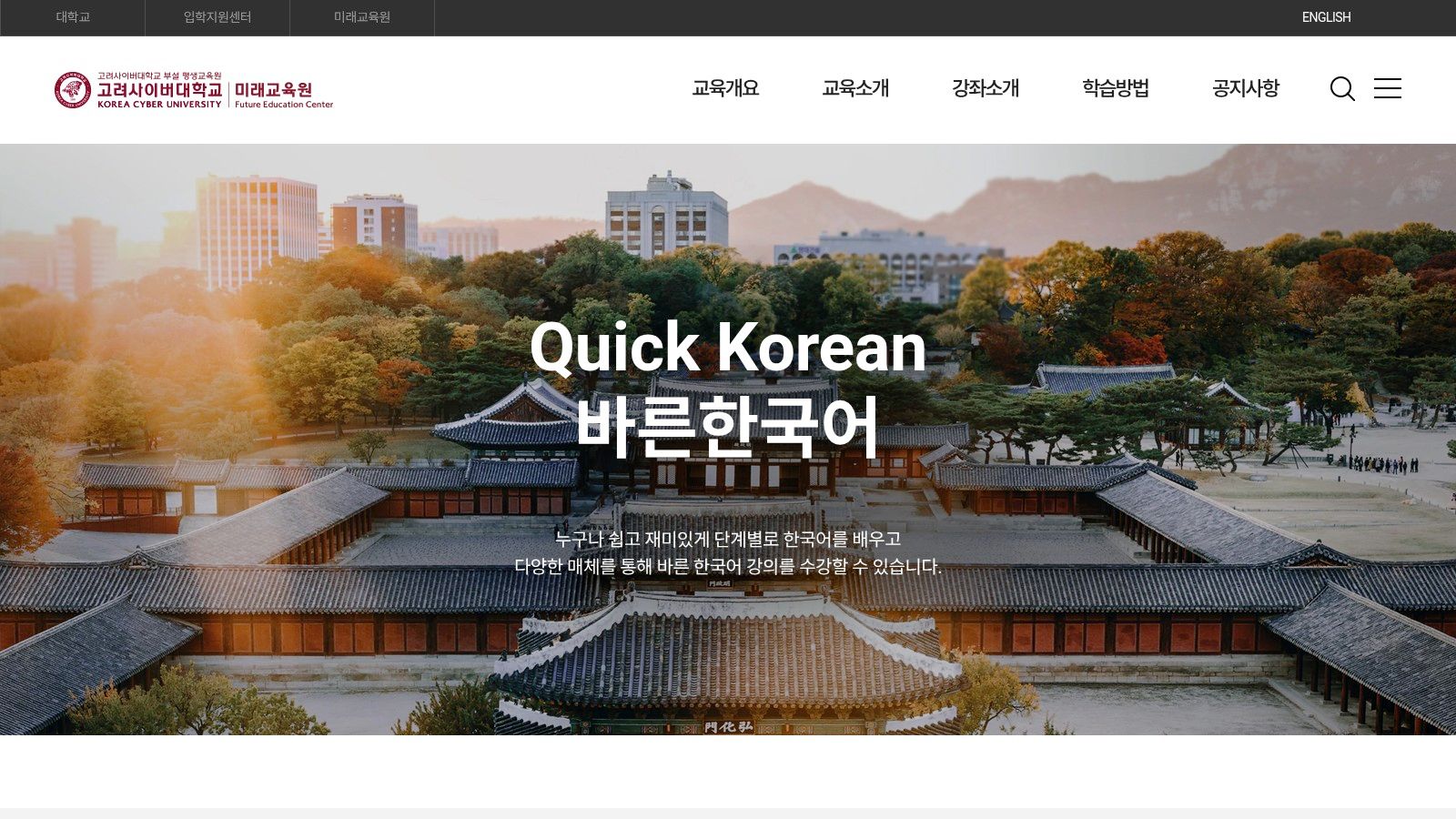
These free Korean classes are organised into four distinct levels, guiding learners systematically from basic greetings to more complex conversational skills. A standout feature is its collection of '3-minute Korean' videos, which cover specific thematic topics for quick and effective study sessions. The entire platform is hosted by a reputable university, ensuring the educational content is consistent and of high quality, with lectures available in English.
While the course content is robust, the platform does not offer formal certificates of completion. Additionally, opportunities for community interaction or instructor feedback are quite limited, making it a primarily self-directed learning experience.
Best for: Busy learners who want a free, university-quality curriculum broken down into short, easily digestible video lessons.
- Access: 100% free courses and materials available after simple registration.
- Link: Quick Korean
5. Seoul Global Center / Global Village Centers
For learners physically located in Seoul, the Seoul Global Center and its affiliated Global Village Centers offer an invaluable resource for community-based learning. Run by the Seoul Metropolitan Government, these centres provide free or very low-cost in-person Korean classes designed to help foreign residents integrate into local life. This approach offers a unique blend of formal language instruction and practical cultural immersion, creating a supportive classroom environment.
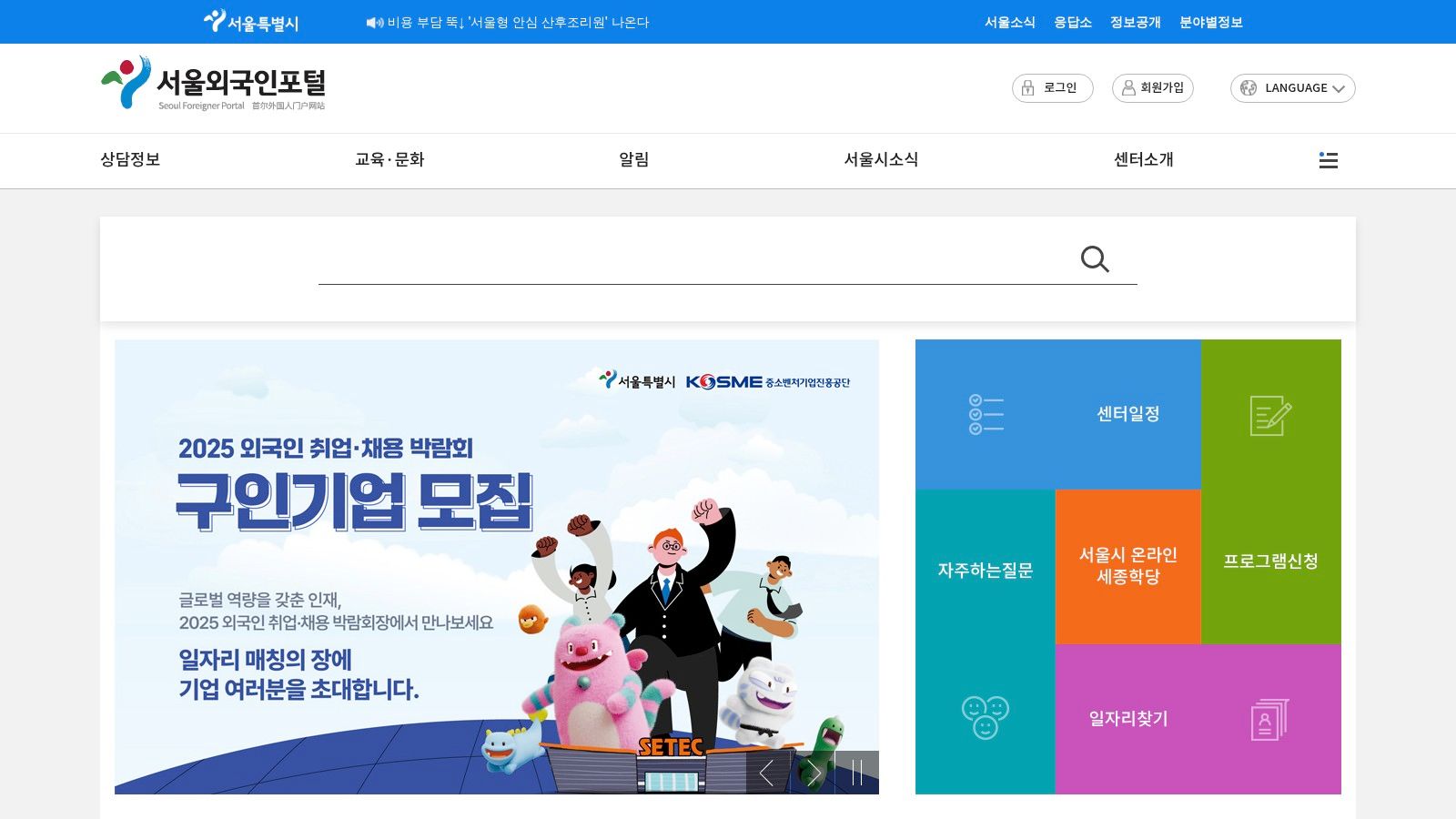
These free Korean classes are particularly beneficial as they are organised into regular semesters, providing a structured and consistent learning schedule from beginner to intermediate levels. Beyond standard grammar and conversation, some centres occasionally offer specialised courses like TOPIK preparation or business Korean. While many classes are in-person, some centres have adapted to offer online options, increasing accessibility for those with busy schedules.
However, the primary limitation is geographical; these courses are almost exclusively for residents of Seoul, and proof of residency is often required for registration. Additionally, high demand means that seats fill up extremely quickly once enrolment opens. While the tuition is free, students are typically required to purchase their own textbooks and materials.
Best for: Foreign residents in Seoul seeking a structured, community-focused classroom experience to learn Korean and connect with other locals.
- Access: Free classes available upon successful registration; proof of Seoul residency is often necessary.
- Link: Seoul Global Center
6. Korea Immigration & Integration Program (KIIP)
For foreign residents in Korea, the Korea Immigration & Integration Program (KIIP) offers a unique and highly practical path to language proficiency. Managed by the Ministry of Justice, this programme provides structured Korean language and culture courses designed specifically for long-term integration. It is one of the most valuable free Korean classes available because successful completion offers tangible benefits for visa extensions, permanent residency, and even naturalisation.
The curriculum is organised into levels (0–4) plus an additional ‘Understanding Korean Society’ module, creating a clear, government-approved learning pathway. Instruction is high-quality and directly supports the needs of those living and working in Korea. The programme is administered through the Social Integration Information Network (SOCI-NET), where eligible residents can register, take a placement test, and enrol in classes offered at various locations nationwide.
However, KIIP is exclusively available to eligible foreign residents physically residing in Korea. The enrolment process involves mandatory placement testing and specific registration windows, which can be strict. This is not a casual online course but a formal, state-run integration programme.
Best for: Eligible foreign residents in Korea who need a formal language education that directly integrates with their long-term residency or naturalisation goals.
- Access: 100% free for eligible foreign residents in Korea after registration and placement testing via SOCI-NET.
- Link: Korea Immigration & Integration Program Information
7. Coursera – Yonsei University 'First Step Korean'
For learners who value academic prestige and a university-level foundation, Yonsei University’s 'First Step Korean' on Coursera is an excellent starting point. This massive open online course (MOOC) provides a well-organised, high-quality introduction to Korean, guided by instructors from one of South Korea's most renowned universities. The course is designed for absolute beginners, focusing on building a solid base in Hangul, basic grammar, and essential conversational skills through video lectures and reading materials.
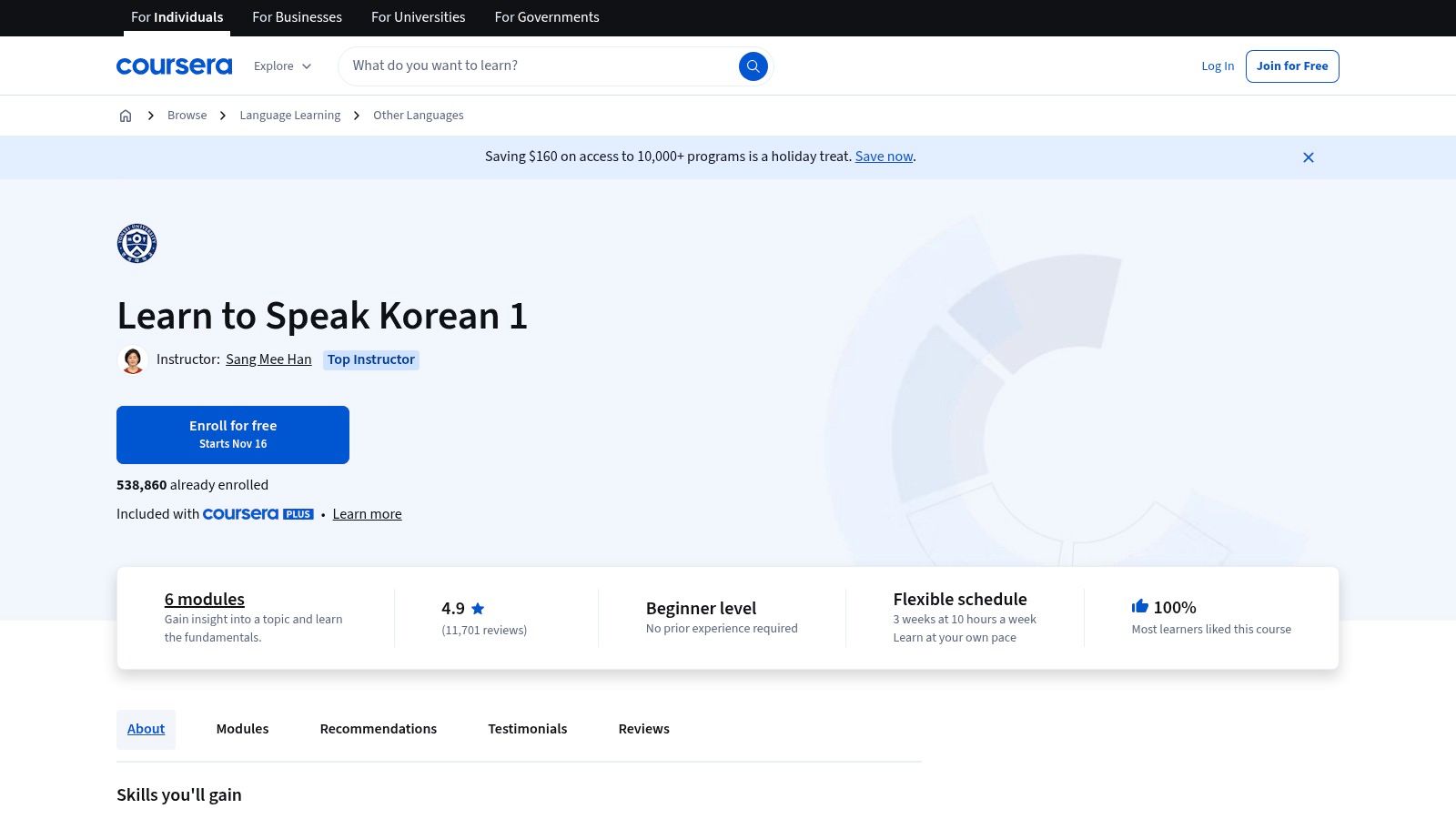
These free Korean classes are accessible by choosing the "audit" option upon enrolment, which grants access to all lecture videos and most learning materials. While this option is free, it's important to note that graded assignments, quizzes, and the final certificate require payment for the full course experience. The English-medium instruction makes the content highly accessible for a global audience, and its self-paced nature offers maximum flexibility for busy schedules.
The main limitation is the paywall for interactive elements and certification, which might deter learners seeking formal recognition without cost. Additionally, the level of community support through forums can vary depending on when you join the course.
Best for: Self-motivated beginners who want a university-structured introduction to Korean and prioritise high-quality video lectures from a top institution.
- Access: 100% free to audit all video lectures and most materials; paid track required for certificates and graded assignments.
- Link: Coursera - First Step Korean
8. FutureLearn – Hanyang University 'Introduction to Korean'
For learners who prefer the structured, cohort-based environment of an online university course, Hanyang University's offerings on FutureLearn are an excellent choice. These courses provide a well-paced introduction to Korean, combining language fundamentals with cultural context. Organised into multi-week modules, the format encourages steady progress alongside a global community of peers, creating a supportive and interactive classroom-like experience.
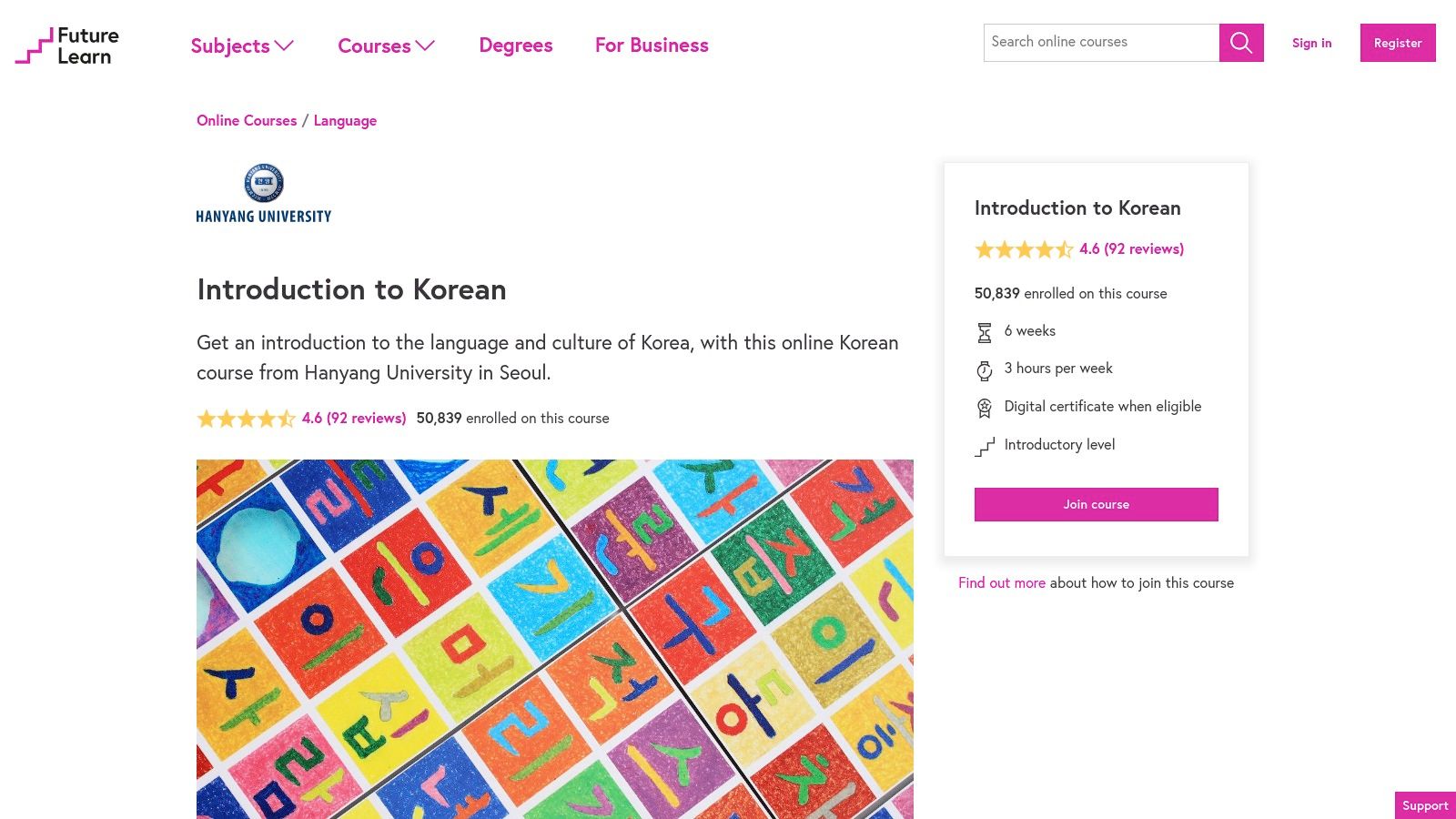
These free Korean classes stand out due to their Massive Open Online Course (MOOC) format, which includes video lectures, quizzes, and discussion forums to foster peer-to-peer learning. The lessons, delivered in English by university instructors, are designed to be completed within a set timeframe, typically six weeks, which helps maintain learning momentum.
However, the free access track is time-limited, usually only lasting for the duration of the course plus a short grace period. To gain unlimited access to the course materials or to receive a certificate of completion, learners must upgrade to a paid plan. This makes it less ideal for those who need long-term, flexible access without a subscription.
Best for: Beginners who benefit from a paced, semester-style learning schedule with community interaction and university-backed content.
- Access: Free access to course materials for the duration of the course run; paid upgrade required for certificates and unlimited access.
- Link: FutureLearn – Introduction to Korean
9. Duolingo – Korean
For those who want to turn language learning into a daily habit, Duolingo is a global phenomenon. Its gamified approach transforms Korean studies into a fun, rewarding activity that fits into even the busiest schedules. The platform excels at introducing core vocabulary and basic sentence structures through quick, bite-sized lessons that feel more like a game than a chore. This makes it an incredibly popular entry point for absolute beginners.
These free Korean classes are designed for consistency, using features like daily streaks and leaderboards to keep you motivated. Duolingo’s methodology relies heavily on repetition and recall exercises, covering listening, speaking, and translation to build a foundational understanding. Its accessibility across web, iOS, and Android makes it easy to practise your Korean for a few minutes anytime, anywhere.
However, Duolingo is not a comprehensive grammar curriculum and often lacks the in-depth explanations needed for complex concepts. Don’t worry if you make mistakes—what matters most is progress. The free version also includes ads, with some features locked behind a subscription. It is most effective when paired with a more structured learning resource.
Best for: Beginners building a consistent daily study habit and acquiring foundational vocabulary in a fun, gamified environment.
- Access: Free with ads; an optional "Super Duolingo" subscription removes ads and adds features.
- Link: Duolingo Korean
10. How to Study Korean
For learners who prefer a traditional, textbook-style approach to grammar, How to Study Korean is an indispensable free resource. This website presents a massive, meticulously organised curriculum that takes you from learning Hangul to understanding complex advanced grammar points. It is essentially a comprehensive digital textbook, breaking down the mechanics of the language in a way that is incredibly detailed and systematic, perfect for dedicated self-studiers.
These free Korean classes are structured into units and lessons, much like a school curriculum, complete with vocabulary lists, audio recordings for pronunciation, and quizzes to test your understanding. The platform's core strength lies in its exhaustive grammar explanations, providing a depth that is often hard to find without purchasing expensive books. While it is text-heavy and lacks interactive features, its systematic progression makes it an excellent primary resource or a powerful supplement for grammar clarification.
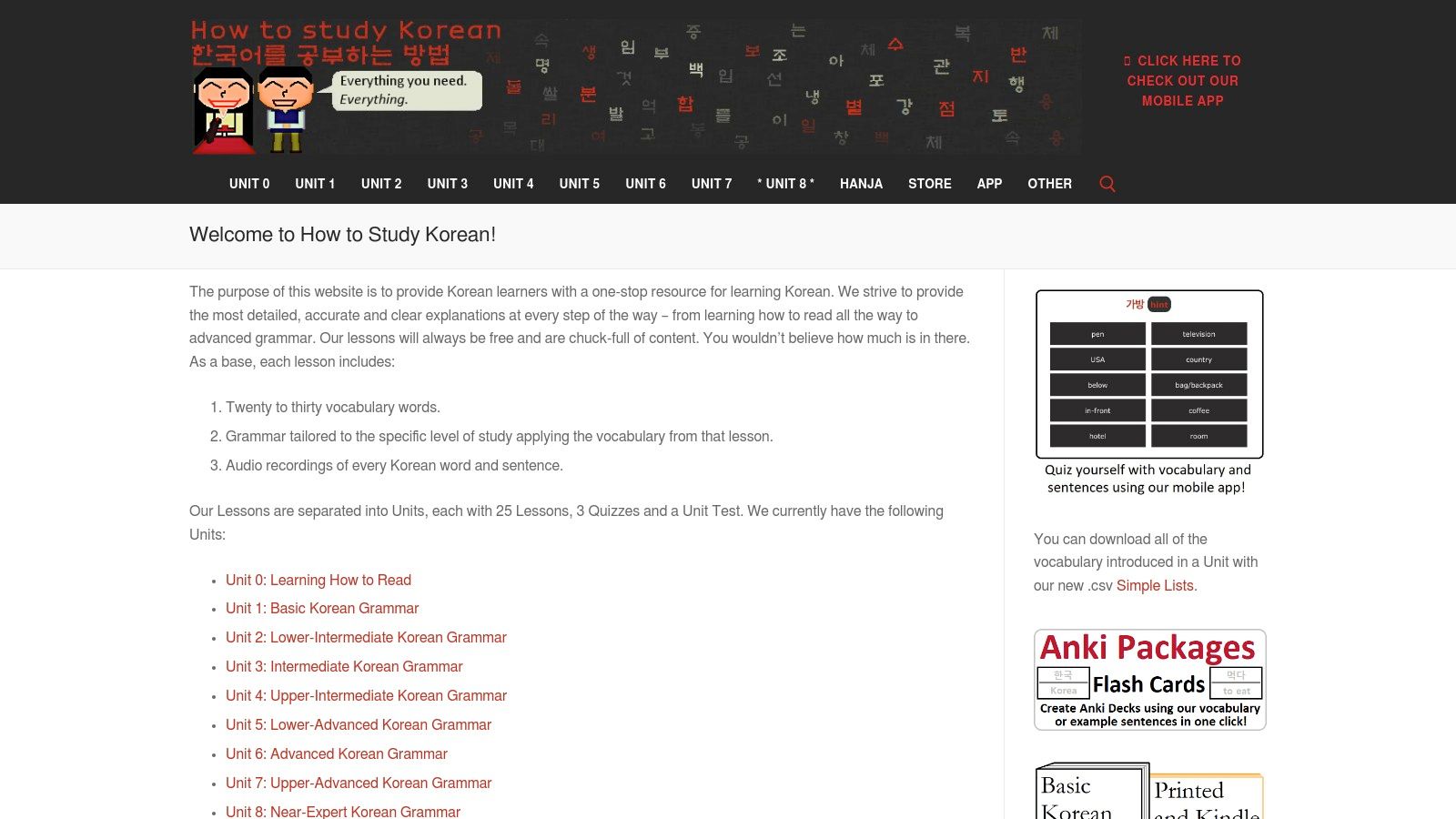
The main drawback is its lack of built-in speaking or conversational practice, as it is purely a self-study reference tool. The interface is functional but very text-dense, which may not appeal to visual learners seeking a more dynamic, app-like experience.
Best for: Diligent, self-motivated learners who want an in-depth, free digital textbook for mastering Korean grammar from the ground up.
- Access: 100% free lessons available directly on the website.
- Link: How to Study Korean
11. Talk To Me In Korean (TTMIK)
Talk To Me In Korean (TTMIK) is one of the most well-known and beloved platforms in the Korean learning community. It excels at breaking down complex grammar and vocabulary into bite-sized, engaging lessons. While the complete, organised curriculum is behind a subscription, TTMIK offers a substantial amount of free material, making it an excellent starting point for beginners.
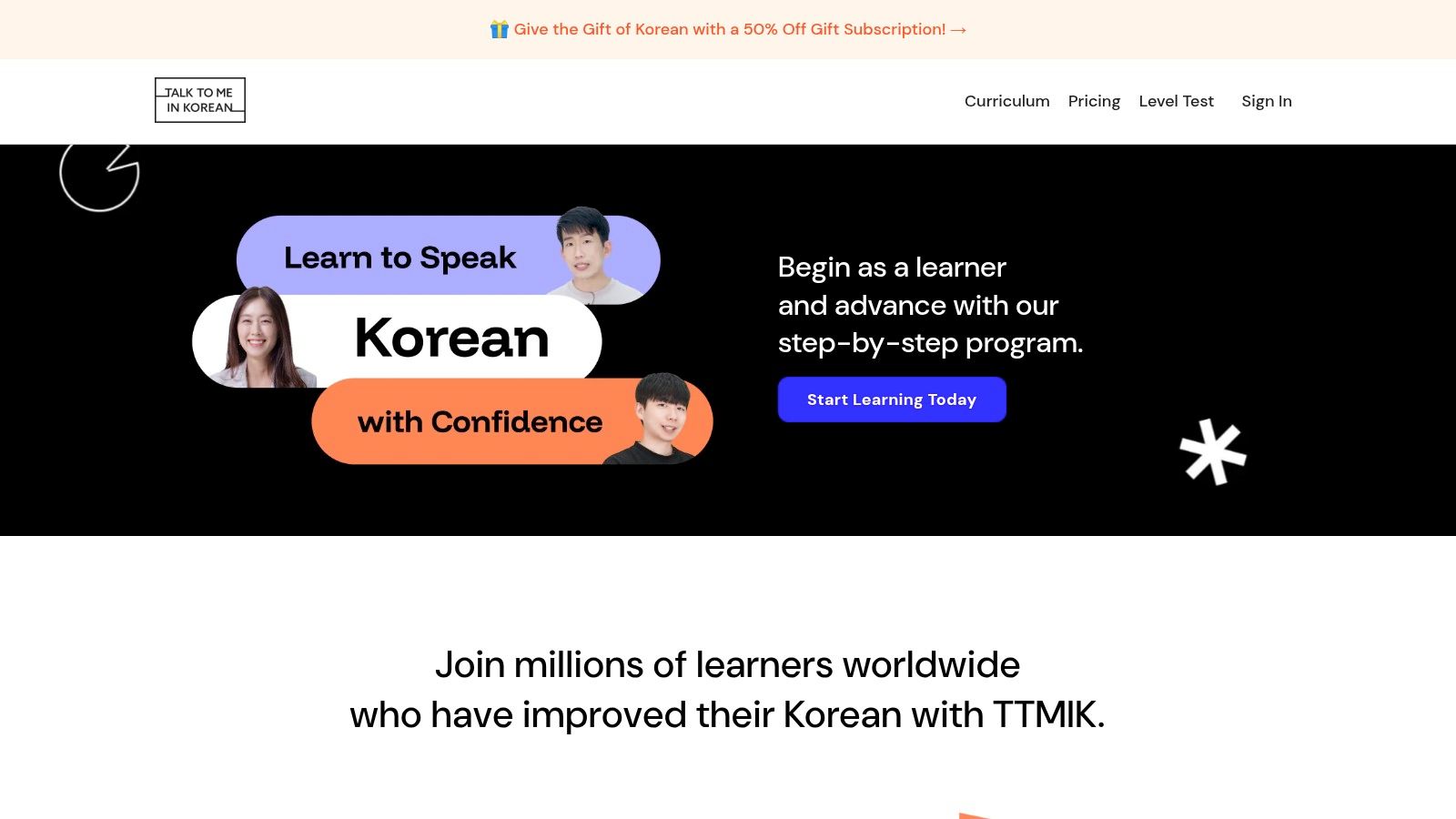
These free Korean classes come primarily in the form of sample lessons from their core grammar curriculum and extensive podcast episodes. Learners can access the foundational levels through the website or mobile app without payment, allowing them to build a solid base before deciding to commit. The platform’s friendly, conversational teaching style makes learning feel less like a chore and more like chatting with knowledgeable friends.
However, to unlock the full potential of TTMIK, including over 1,700 lessons, video courses, and community features, a paid subscription is necessary. The free content, while excellent, only covers a fraction of the entire structured pathway, and premium features like live practice sessions are gated.
Best for: Beginners who appreciate a friendly, podcast-style approach and learners wanting to test a highly-regarded curriculum before committing financially.
- Access: Free sample lessons and podcasts available. Full access requires a subscription, with a 7-day free trial offered.
- Link: Talk To Me In Korean
12. KoreanClass101 (Innovative Language)
For learners who enjoy a podcast-style approach, KoreanClass101 offers a dynamic freemium model built around audio and video lessons. While it’s primarily a subscription service, its ‘Free Lifetime Account’ provides a surprising amount of valuable content. This makes it an excellent platform to sample a structured, teacher-led format before committing financially, offering a taste of lessons from absolute beginner to advanced levels.
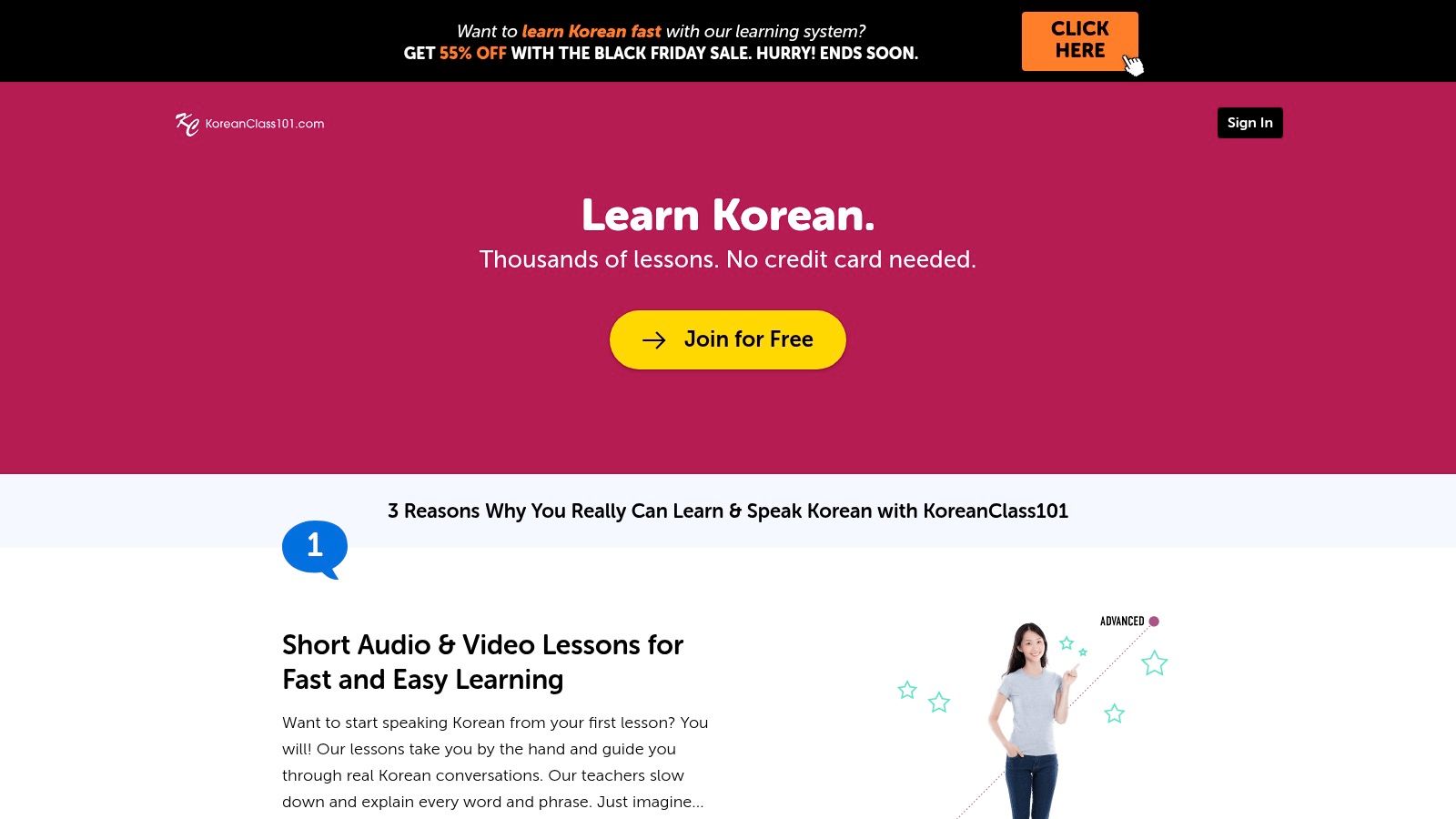
These free Korean classes are delivered through a rotating selection of lessons, with new ones published weekly. Free account holders gain access to the first few lessons of many different learning pathways, alongside daily vocabulary emails like 'Word of the Day'. The core strength of the free tier is the high-quality audio instruction from native speakers, which is perfect for improving listening skills and pronunciation on the go via their mobile apps.
However, the full learning experience, including complete lesson archives, in-depth lesson notes, line-by-line audio dialogue, and advanced tools like spaced-repetition flashcards, is locked behind a paid subscription. The lesson progression on the free plan can also feel somewhat disjointed compared to a traditional textbook curriculum.
Best for: Auditory learners and those who want to "try before they buy" with high-quality, podcast-style lessons from native-speaking teachers.
- Access: Free Lifetime Account gives access to a rotating selection of lessons and features; premium plans unlock the full library.
- Link: KoreanClass101
12 Free Korean Learning Resources — Side-by-Side Comparison
| Platform | Key features ✨ | Quality ★ | Price & value 💰 | Target audience 👥 |
|---|---|---|---|---|
| 🏆 K-talk Live | Live small groups (≤6), weekly 100‑min free trial, structured Monday cohorts | ★★★★★ | 💰US$144 / 4 weeks; free trial | 👥 Beginners→Advanced; conversation‑focused learners |
| Online King Sejong Institute (KSI) | Official Sejong curriculum, web & mobile, certificates | ★★★★ | 💰Free (public) | 👥 Learners seeking accredited, systematic content |
| Nuri – King Sejong Institute | Central portal to Sejong courses & resources | ★★★ | 💰Free (directory) | 👥 Learners finding level‑appropriate Sejong materials |
| Quick Korean (Cyber Univ.) | 4 levels + "3‑minute Korean" micro‑lessons | ★★★★ | 💰Free (university) | 👥 Busy learners who prefer bite‑sized lessons |
| Seoul Global Center / Global Village | In‑person community classes; occasional online terms | ★★★★ | 💰Free/low‑cost (residency often required) | 👥 Residents in Seoul seeking cultural integration |
| KIIP (Immigration & Integration) | Structured levels + society modules; tied to residency | ★★★★★ | 💰Free for eligible residents | 👥 Long‑term/eligible residents (integration/naturalization) |
| Coursera – Yonsei "First Step Korean" | 6‑module university MOOC, video lectures | ★★★★ | 💰Audit free; certificate paid | 👥 Self‑paced learners wanting university content |
| FutureLearn – Hanyang "Intro to Korean" | 6‑week, culture‑infused instructor‑led MOOC | ★★★★ | 💰Free limited access; certs paid | 👥 Learners preferring paced, cohort-based MOOCs |
| Duolingo – Korean | Gamified short lessons, spaced repetition | ★★★★ | 💰Free; Premium optional | 👥 Casual/habit learners, mobile-first users |
| How to Study Korean | Extensive textbook‑style grammar lessons & audio | ★★★★★ | 💰Free (deep reference) | 👥 Grammar-focused self‑studiers & advanced readers |
| Talk To Me In Korean (TTMIK) | 1,700+ lessons, podcasts, app, subscription option | ★★★★ | 💰Free samples; subscription for full access | 👥 Learners wanting structured audio/text resources |
| KoreanClass101 (Innovative Language) | Rotating free audio/video lessons; apps | ★★★ | 💰Freemium (paid tools for SRS/downloads) | 👥 Audio/video learners sampling teacher content |
Your Next Step to Korean Fluency
The journey to mastering Korean is a marathon, not a sprint. This list of free Korean classes proves that your budget shouldn't be a barrier to starting. From official government programs and university courses to interactive apps, each platform offers a unique path into the language. The key isn't just knowing these resources exist—it's combining them to fit your personal learning style.
Choosing Your Ideal Learning Path
To make the most of this guide, it's time to move from browsing to action. Think about your goals and choose the right tools.
For the Structured Learner: If you thrive on clear grammar rules, combine How to Study Korean for in-depth lessons with a university course like Yonsei's 'First Step Korean' on Coursera. This will build a rock-solid foundation.
For the Social, Interactive Learner: If you learn best by speaking, start with a free trial class at K-talk Live for real-time practice. Supplement it with Duolingo for daily vocabulary and KoreanClass101 to train your ear.
For the Self-Paced, Flexible Learner: If your schedule is unpredictable, you need resources that adapt to you. The bite-sized lessons from Talk To Me In Korean (TTMIK) are perfect for learning on the go, while the Nuri-King Sejong Institute lets you explore specific topics anytime.
Start Your Korean Journey Today
Simply knowing about these free Korean classes isn't enough; taking action is what matters. A great strategy is to "stack" your resources. Pick one primary tool, like the Online King Sejong Institute, to be your main curriculum. Then, add a supplementary tool, like Duolingo for quick vocabulary practice or a TTMIK podcast for your commute. This approach keeps you engaged without feeling overwhelmed.
Every word you learn brings you one step closer to confidence. Keep going—your Korean journey starts now!
🌟 Ready to start your Korean journey? Join Ktalk.live — where global learners connect, speak, and grow together
Ready to stop reading and start speaking?
Practice what you just learned with a native Korean teacher — free for 100 minutes. No card, no commitment.