Want to practice this with a native Korean teacher?
100-min free trial — no card required.
Have you ever wondered how to describe a beautiful sunset over Seoul or the vibrant outfits in a K-drama? Learning the colors in Korean is more than just memorizing vocabulary; it's a doorway to understanding Korean culture, art, and daily life. It might seem like a small step, but mastering colors helps you describe the world around you, express your tastes, and connect more deeply with the language. This guide is your perfect starting point for adding a splash of vibrancy to your conversations. Learning Korean might seem challenging at first — but with the right approach, it becomes a fun and rewarding journey!
1. 빨강 (Ppalgang) - Red
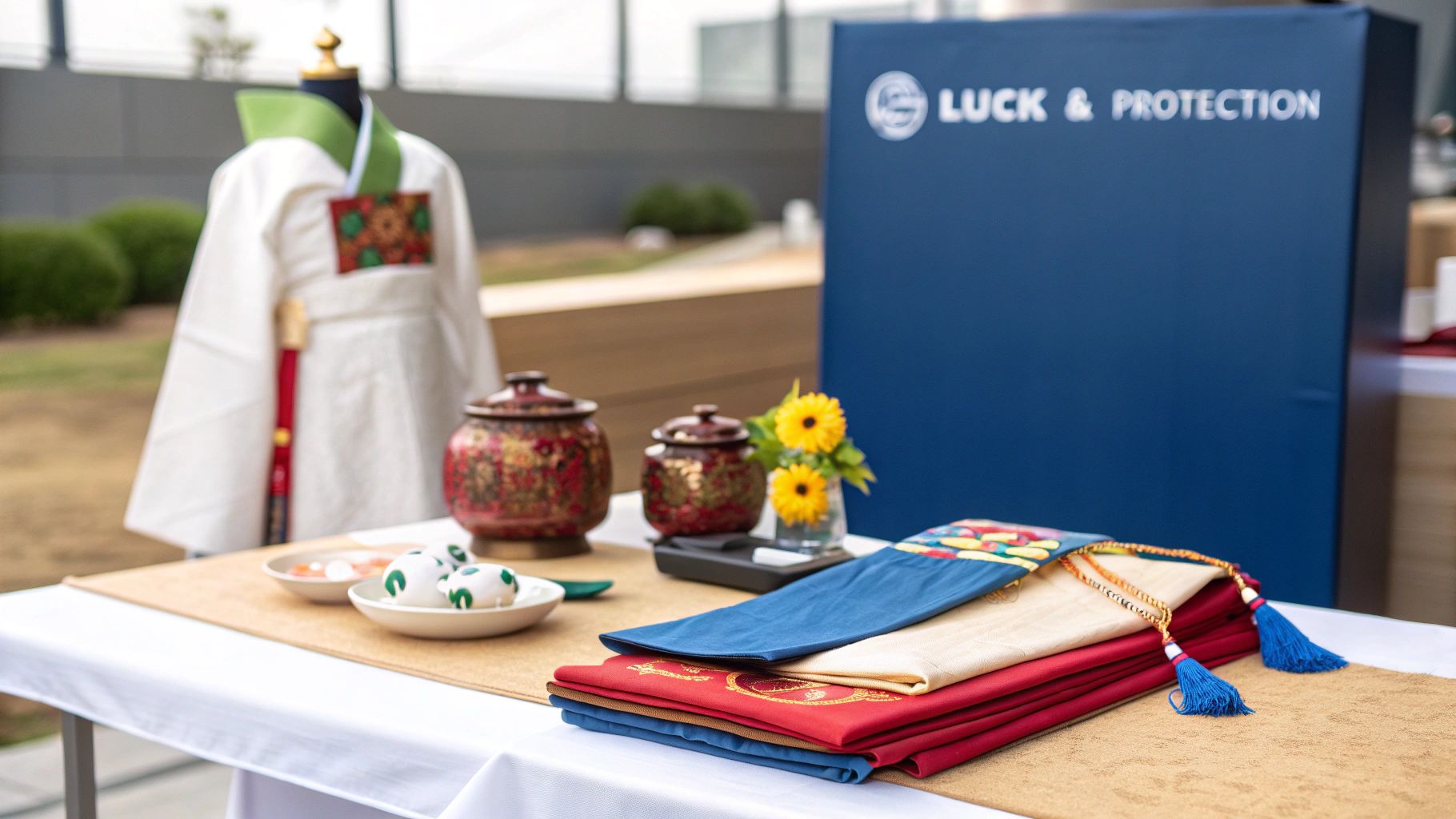
The color red, or 빨강 (ppalgang), is a foundational and vibrant part of the Korean language and culture. It symbolizes energy, passion, and good fortune. This color is deeply woven into Korean traditions, making it an essential vocabulary word for anyone interested in the country's rich heritage. You will frequently encounter red during major holidays like Lunar New Year (Seollal) and Chuseok, where it represents blessings and protection from harm.
Grammar and Usage Tips
To use red correctly, it’s important to understand its different forms. 빨강 (ppalgang) is the noun "red," while 빨간색 (ppalgansaek) means "the color red." When you want to describe something as red, you use the adjective form 빨간 (ppalgan).
- Noun: 빨강을 좋아해요. (Ppalgang-eul joahaeyo.) - I like red.
- Adjective: 빨간 사과를 먹고 싶어요. (Ppalgan sagwa-reul meokgo sipeoyo.) - I want to eat a red apple.
A fantastic way to practice this is by describing the South Korean flag, the 태극기 (Taegeukgi). The red upper half of the central circle symbolizes positive cosmic forces. You can say, "태극기에는 빨간색이 있어요." (Taegeukgi-eneun ppalgansaek-i isseoyo), meaning "There is red in the Korean flag."
2. 파랑 (Parang) - Blue
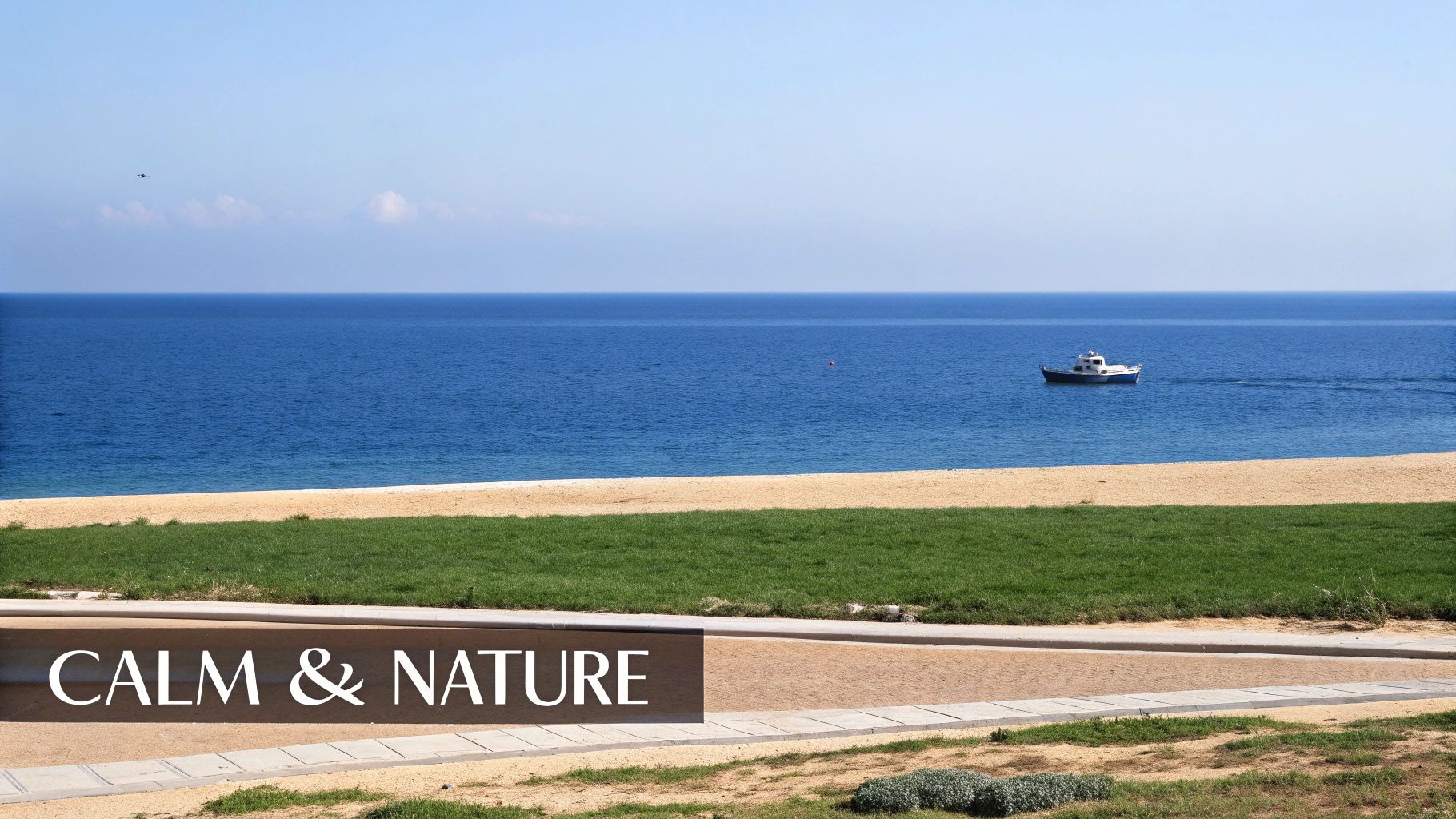
The color blue, or 파랑 (parang), often represents calmness, stability, and the vastness of the natural world. It’s one of the most essential colors in Korean for beginners to learn as it appears frequently in everyday conversations about nature, objects, and even emotions. For learners, blue provides excellent practice for mastering descriptive language patterns.
Grammar and Usage Tips
Like other colors, blue has different forms for different grammatical functions. The noun for "blue" is 파랑 (parang), and "the color blue" is 파란색 (paransaek). To describe something as blue, you use the adjective form 파란 (paran). This is a crucial distinction when forming sentences.
- Noun: 저는 파랑을 좋아해요. (Jeoneun parang-eul joahaeyo.) - I like blue.
- Adjective: 저 파란 하늘을 보세요. (Jeo paran haneur-eul boseyo.) - Look at that blue sky.
A common way to practice is by describing the lower half of the circle in the South Korean flag. You can say, "태극기에는 파란색이 있어요." (Taegeukgi-eneun paransaek-i isseoyo), meaning "There is blue in the Korean flag." This practical exercise helps connect vocabulary with cultural symbols.
3. 노랑 (Norang) - Yellow
The color yellow, or 노랑 (norang), brings a sense of warmth, happiness, and energy to the Korean language. As a primary color, it is essential for beginner learners and appears frequently in daily conversations, especially when discussing nature, food, and design. You will notice yellow used prominently in Korean packaging and cultural symbols, reflecting its cheerful and positive connotations.
Grammar and Usage Tips
Understanding the different forms of yellow is key to using it correctly. The noun "yellow" is 노랑 (norang), while "the color yellow" is 노란색 (noransaek). When describing something as yellow, the adjective form to use is 노란 (noran).
- Noun: 저는 노랑을 가장 좋아해요. (Jeoneun norang-eul gajang joahaeyo.) - I like yellow the most.
- Adjective: 저 노란 우산을 사고 싶어요. (Jeo noran usan-eul sago sipeoyo.) - I want to buy that yellow umbrella.
A practical way to practice is by describing things you see every day, such as a banana. You can say, "바나나는 노란색이에요." (Banana-neun noransaek-ieyo), which means "Bananas are yellow." This simple exercise helps build your foundational vocabulary by connecting words to real-world objects.
4. 초록 (Chorok) - Green
The color green, or 초록 (chorok), is deeply connected to nature, growth, and freshness in Korean culture. It evokes images of lush forests and new beginnings, symbolizing life, harmony, and renewal. This color is essential for learners who want to discuss outdoor environments, plants, and healthy lifestyles. Don’t worry if you make mistakes — even Koreans do sometimes! What matters most is progress.
Grammar and Usage Tips
To use green correctly, it’s helpful to know its different forms. The noun for "green" is 초록 (chorok), and "the color green" is 초록색 (choroksaek). When describing an object as green, you use the adjective form, which is also 초록색 (choroksaek), or you can use 초록 (chorok) followed by a noun.
- Noun: 저는 초록색을 가장 좋아해요. (Jeoneun choroksaek-eul gajang joahaeyo.) - I like the color green the most.
- Adjective: 저 초록 나무를 보세요. (Jeo chorok namu-reul boseyo.) - Look at that green tree.
A great way to practice using this vocabulary is to talk about food and nature. You could describe healthy eating habits by saying, "초록색 채소를 많이 먹어야 해요." (Choroksaek chaeso-reul mani meogeoya haeyo), which means "You should eat a lot of green vegetables."
5. 검정 (Geomjeong) - Black
The color black, or 검정 (geomjeong), is a powerful and versatile part of the Korean lexicon. It often represents formality, modernity, and elegance, particularly in fashion and design. While it can sometimes be associated with solemnity, its primary modern connotation is one of sophistication. You will see black used extensively in formal wear, technology, and minimalist aesthetics, making it a crucial vocabulary word.
Grammar and Usage Tips
To use black correctly in sentences, it’s important to know its different forms. The noun for "black" is 검정 (geomjeong), while 검은색 (geomeunsaek) specifies "the color black." The adjective form used to describe a noun is 검은 (geomeun).
- Noun: 저는 검정을 좋아해요. (Jeoneun geomjeong-eul joahaeyo.) - I like black.
- Adjective: 저 검은 고양이는 귀여워요. (Jeo geomeun goyangi-neun gwiyeowoyo.) - That black cat is cute.
A great way to practice is to talk about fashion. You could describe a classic outfit by saying, "그녀는 검은색 정장을 입고 있어요." (Geunyeoneun geomeunsaek jeongjang-eul ipgo isseoyo), which means "She is wearing a black suit." This practical application is exactly the kind of real-world speaking skill you can build.
6. 흰색 (Huinsaek) - White
The color white, or 흰색 (huinsaek), holds a particularly profound significance in Korean culture. Traditionally, it represents purity, innocence, peace, and truth. Historically, Koreans were often called the "white-clad people" (백의민족, baegui minjok) because of their preference for simple, white clothing in daily life. This historical and cultural depth makes it an essential color to understand.
Grammar and Usage Tips
To use white correctly, you must know its different forms. The noun for "white" is 하양 (hayang), while 흰색 (huinsaek) means "the color white." To describe something as white, you use the adjective form 하얀 (hayan) or 흰 (huin).
- Noun: 저는 하양을 좋아해요. (Jeoneun hayang-eul joahaeyo.) - I like white.
- Adjective: 저 하얀 강아지가 귀여워요. (Jeo hayan gangaji-ga gwiyeowoyo.) - That white puppy is cute.
A great way to practice is by talking about weddings. You can describe a wedding dress by saying, "그녀는 흰색 웨딩드레스를 입었어요." (Geunyeoneun huinsaek wedingdeureseu-reul ibeosseoyo), which means "She wore a white wedding dress."
7. 보라색 (Borasaek) - Purple
The color purple, or 보라색 (borasaek), represents luxury, creativity, and contemporary trends. While not as deeply rooted in ancient tradition as colors like red or blue, purple has become incredibly popular, especially within K-pop. Its sophisticated and mysterious vibe resonates strongly with current styles, making it one of the essential colors in Korean to learn for fans of modern culture.
Grammar and Usage Tips
To use purple in your sentences, remember the distinction between the noun and adjective forms. 보라 (bora) is the noun "purple," and 보라색 (borasaek) means "the color purple." When describing an object as purple, you use the adjective form 보라색 (borasaek).
- Noun: 저는 보라색을 가장 좋아해요. (Jeoneun borasaek-eul gajang joahaeyo.) - I like purple the most.
- Adjective: 그 아이돌은 보라색 머리를 했어요. (Geu aidol-eun borasaek meori-reul haesseoyo.) - That idol has purple hair.
A fun way to practice is by discussing K-pop. You could say, "방탄소년단은 보라색으로 유명해요." (Bangtan Sonyeondan-eun borasaek-euro yumyeonghaeyo), meaning "BTS is famous for the color purple." This directly connects your language learning with a major cultural phenomenon.
8. 주황색 (Juhwangsaek) - Orange
The color orange, or 주황색 (juhwangsaek), brings a warm and energetic feel to the Korean color palette. It's often associated with enthusiasm, creativity, and the natural sweetness of foods like oranges and persimmons. Its vibrant presence in daily life, especially during autumn, makes it an essential part of the modern lexicon of colors in Korean.
Grammar and Usage Tips
The word for orange is most commonly used in its full form, 주황색 (juhwangsaek), which means "the color orange." The adjectival form is also 주황색 (juhwangsaek), which simplifies its usage.
- Noun/Adjective: 이 셔츠는 주황색이에요. (I syeocheu-neun juhwangsaek-ieyo.) - This shirt is orange.
- Adjective: 주황색 오렌지를 좋아해요. (Juhwangsaek orenji-reul joahaeyo.) - I like orange oranges.
A practical way to use this word is by describing seasonal changes. You can say, “가을에는 주황색 단풍이 아름다워요.” (Gaeul-eneun juhwangsaek danpung-i areumdawoyo), meaning "The orange autumn leaves are beautiful in the fall." This real-world application helps solidify vocabulary.
9. 회색 (Hoesaek) - Gray
The color gray, or 회색 (hoesaek), is a neutral and practical color essential for more nuanced descriptions in Korean. It is often associated with modern urban aesthetics, technology, and sometimes a sense of melancholy or calmness. This color is especially useful for expanding your descriptive vocabulary beyond the basics, allowing for more detailed conversations.
Grammar and Usage Tips
In Korean, 회색 (hoesaek) acts as both the noun "gray" and the adjective "gray". This makes it slightly simpler to use than other colors that have separate forms. To describe something as gray, you can place 회색 (hoesaek) directly before the noun.
- Noun: 저는 회색을 좋아해요. (Jeo-neun hoesaek-eul joahaeyo.) - I like gray.
- Adjective: 저는 회색 옷을 입고 있어요. (Jeo-neun hoesaek os-eul ipgo isseoyo.) - I am wearing gray clothing.
A common and practical way to use this word is by talking about the weather. You can describe a cloudy day by saying, "오늘 하늘은 회색이에요." (Oneul haneul-eun hoesaek-ieyo), which means "The sky is gray today."
10. 분홍색 (Bunhongsaek) - Pink
The color pink, or 분홍색 (bunhongsaek), holds a special place in modern Korean culture, particularly within K-beauty and K-fashion. It represents youthfulness, romance, and cuteness, making it a dominant color in products targeting younger demographics. For learners interested in modern Korea, especially trends in beauty or pop culture, understanding pink's cultural significance is key.

Grammar and Usage Tips
The noun for pink is 분홍 (bunhong), while 분홍색 (bunhongsaek) specifically means "the color pink." To describe something as pink, use the adjective form 분홍색 (bunhongsaek), which conveniently doesn't change form like other colors.
- Noun: 분홍은 제가 제일 좋아하는 색이에요. (Bunhong-eun jega jeil joahaneun saeg-ieyo.) - Pink is my favorite color.
- Adjective: 저는 분홍색 립스틱을 샀어요. (Jeoneun bunhongsaek lipseutik-eul sasseoyo.) - I bought a pink lipstick.
A great way to practice using colors in Korean like pink is to discuss K-pop and K-beauty. You can talk about the packaging of brands like ETUDE HOUSE. For example, "에뛰드하우스는 분홍색 포장을 많이 사용해요." (Ettwideuhauseu-neun bunhongsaek pojang-eul mani sayonghaeyo.), meaning "ETUDE HOUSE uses a lot of pink packaging."
How to Practice Learning Korean Colors
Mastering these color words is more than a vocabulary exercise; it’s about gaining the ability to describe the world around you with greater precision. True mastery comes from active, consistent practice. Here are some immediate steps you can take to integrate these color words into your active vocabulary:
- Label Your World: For the next week, actively name the colors of objects you see throughout your day in Korean. Your green jacket is now a 초록색 재킷 (choroksaek jaekit). This simple act builds rapid recall.
- Listen for Color: Pay close attention when watching K-dramas or listening to K-pop. How are colors mentioned? Are they used to describe clothing, set a mood, or in an expression? Jot down any new phrases you hear.
- Create Colorful Sentences: Challenge yourself to write five new sentences each day using different color words. Try describing your outfit, the food you're eating, or the weather. For example, "오늘은 회색 하늘에 비가 와요" (Oneul-eun hoesaek haneul-e bi-ga wayo).
You've just learned the essential colors in Korean, from the fiery passion of 빨강 (ppalgang) to the calm serenity of 파랑 (parang). By understanding the grammar and cultural nuances, you're not just learning words—you're learning to paint a picture with your language. Every word you learn brings you one step closer to confidence. Keep going — your Korean journey starts now!
🌟 Ready to start your Korean journey? Join Ktalk.live — where global learners connect, speak, and grow together
Ready to stop reading and start speaking?
Practice what you just learned with a native Korean teacher — free for 100 minutes. No card, no commitment.